Mera and Island peak climbing via Amphu Lapcha pass -


Mera and Island Peak climbing via the Amphu Lapcha Pass
Mera and Island Peak climbing via Amphu Lapscha Pass: the trek is an exciting adventure trip that combines two famous peaks with one of the most challenging high mountain passes. This journey begins with the ascent of Mera Peak (6,470 m), offering beautiful views of the world’s highest mountain, Everest, Lhotse, Makalu, Cho Oyu, and Kanchenjunga.
Mera and Island Peak with Amphu Lapcha Pass Trek: after a successful summit, the route crosses the spectacular Amphu Lapcha Pass (5,845 m), featuring glacier travel and dramatic Himalyan scenery. After the difficult adventure, continue climbing toward Island Peak (6,189 m), which is one of the most popular trekking peaks. This Island Peak expedition combines trekking, mountaineering, and high-altitude adventure, making it an ideal challenging experience for trekking & and climbers seeking a complete mountain climbing experaince.
Day 01: Upon arrival at Tribhuvan International Airport, Kathmandu, transfer to the hotel,
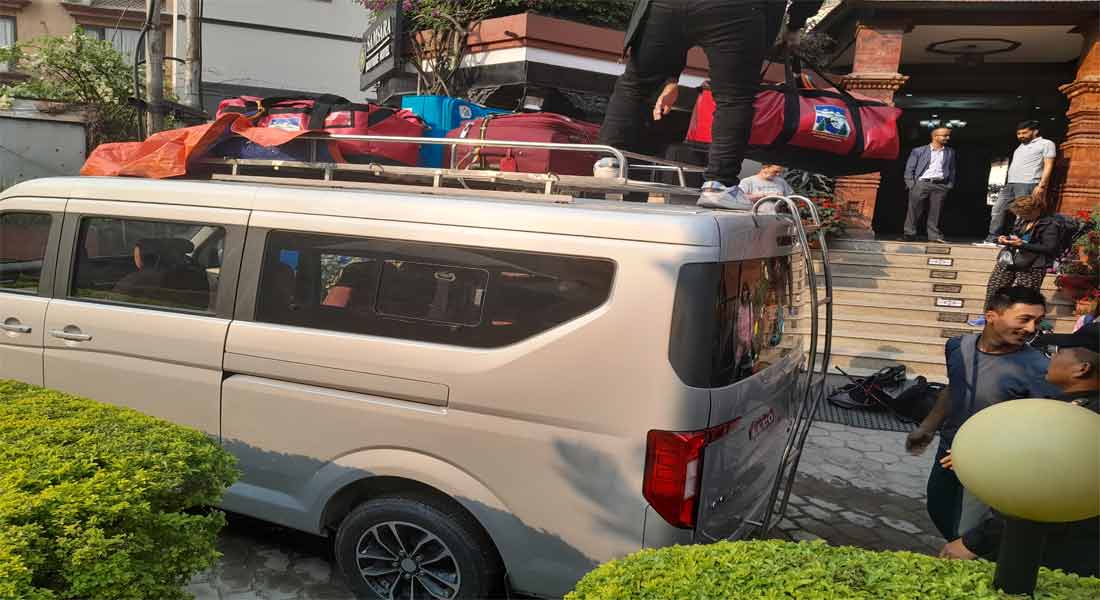
Our Guide will brief you about the Mera Peak climbing, the Amphu Lapcha pass, and the Island Peak climbing trip.
Day 02: Mera and Island Peak Permits preparation day in Kathmandu Hotel
This day is managed for Mera and Island Peak Climbing permits, before heading into the mountains. It’s an important and practical day to ensure a smooth and well-organized trek
Trekking Permit arrangement: Guide, both peak climbing permits, and other necassary things.
We need the following documents: your passport photocopy with a Nepali visa and two passport-size photos with your Travel insurance details.
You need time to check your trekking & Climbing gear, what you need for the Mera and Island Peak.
Trekking equipment, such as trekking boots, a down jacket, and a sleeping bag, you need to buy or rent; you will get them in the Thamel Trekking shop.
Overnight: Hotel in Kathmandu.
including: Breakfast service.
Day 03: Lukla flight and trek to Chutok
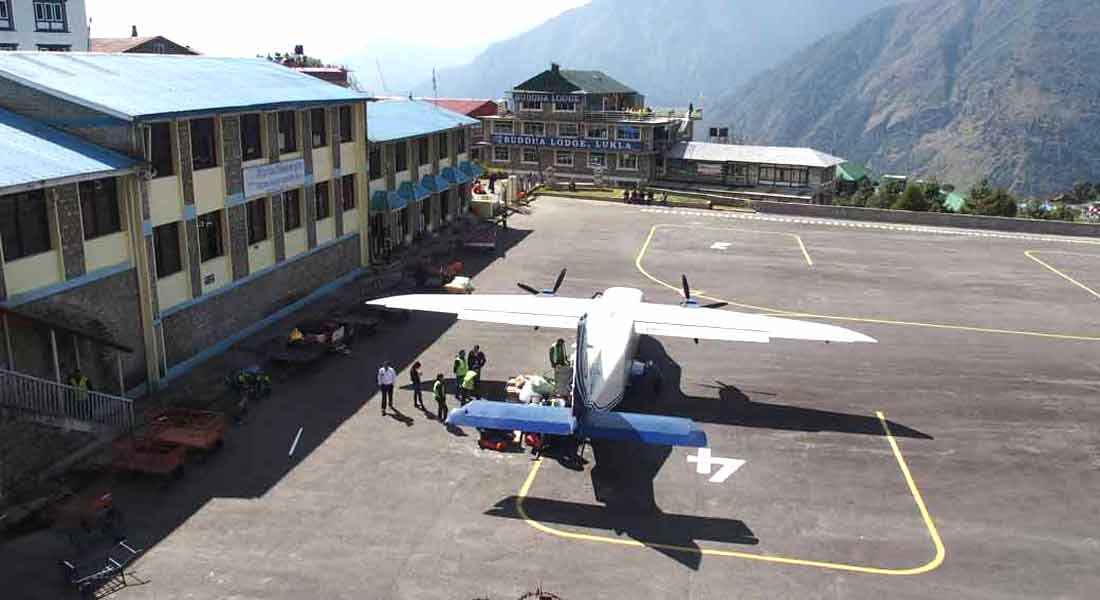
From Kathmandu, take a scenic flight to Lukla, one of the world’s most exciting Himalaya airtrips. From Kathmandu to Lukla, 35 minutes short flight, you enjoy amazing views of the mountains, with green hills, Rivers, and tradidional Himalayan villages.
After thirty-five minutes, you will land at Lukla airport (2,800m), meet with our trekking staff, and the trek will start through the beautiful Himalayan Sherpa villages. You walk through pine forests, prayer walls, and suspension bridges. The trail gradually descends and follows the Dudh Kosi river valley. You pass Sammal village, and here is a local teahouse; then we coontinue or trek to Chutok.
Distance: Lukla to Chutok.
Duration: 3-4 hours walking from Lukla.
Altitude: (2,945m) Chutok.
Accomodaition: Tea House Lodge.
Mera and Island Peak Expedition package includes: Breakfast, Lunch, and Dinner with Tea or Coffee.
Mera Peak climbing, Amphu Lapsa Pass, Island Peak climbing cost Including: Climbing Guide and porters.
Day 04: Trek from Chutok to Pangom
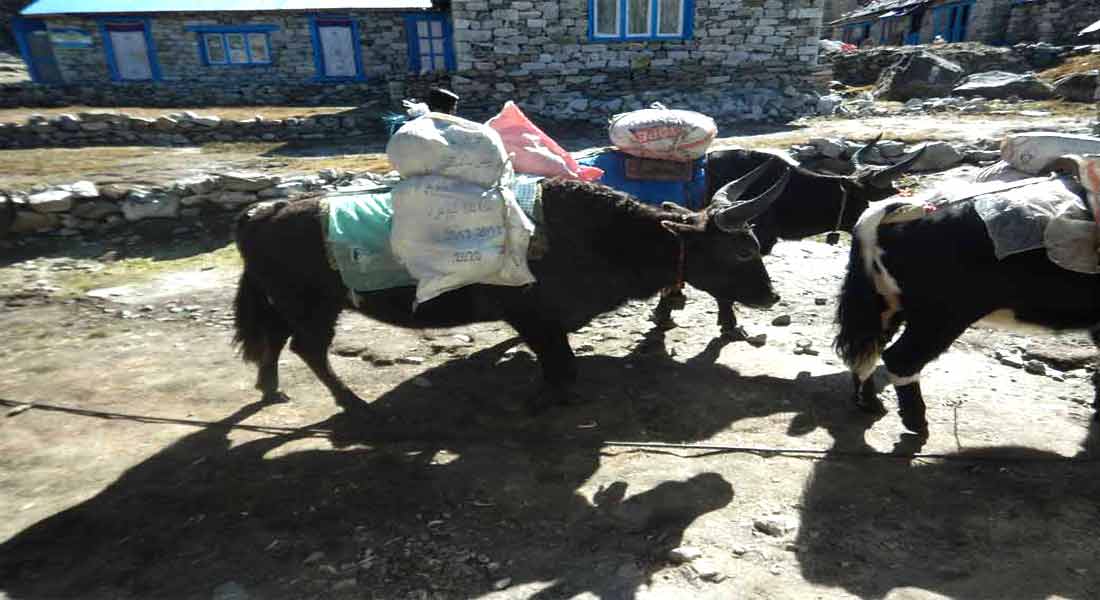
Your Breakfast in Chutok, your trek starts through peaceful forests and mix village of Sherpa and Rai people. The trek trail follows a mountain path with the best views of rolling hills and white Himalayan peaks.
From here, the trekking route is a gradual ascent and descent through the Rhododendron and pine forests. From here, we cross a small village and a suspension bridge, and then we continue on the trek, climbing to the beautiful village of Pangom. This place is a tradidional settlement located on a hillside with impressive Himalayan views.
Pangom is known for its rich local culture with stone houses, and the people are very friendly. Therefore, after arriving here, you will enjoy the peaceful atmosphere and the beautiful Himalayan landscapes.
Mera region Permit: Mera peak climbing permit from Nepal Mountaineering Association (NMA
Park: Barun Naitional park permit
Distinction: Chutok to Pangom.
Duration: 5-6 hours walking from Chutok.
Altitude: (2,8505m) Pangom.
Accomodaition: Tea House Lodge.
Meals: Breakfast, Lunch, and Dinner with Tea or Coffee.
Mera and Island Peak climbing via Amphu Lapcha Pass price Including: Climbing Guide and porters.
Day 05: Trek from Pangom to Nimsow.
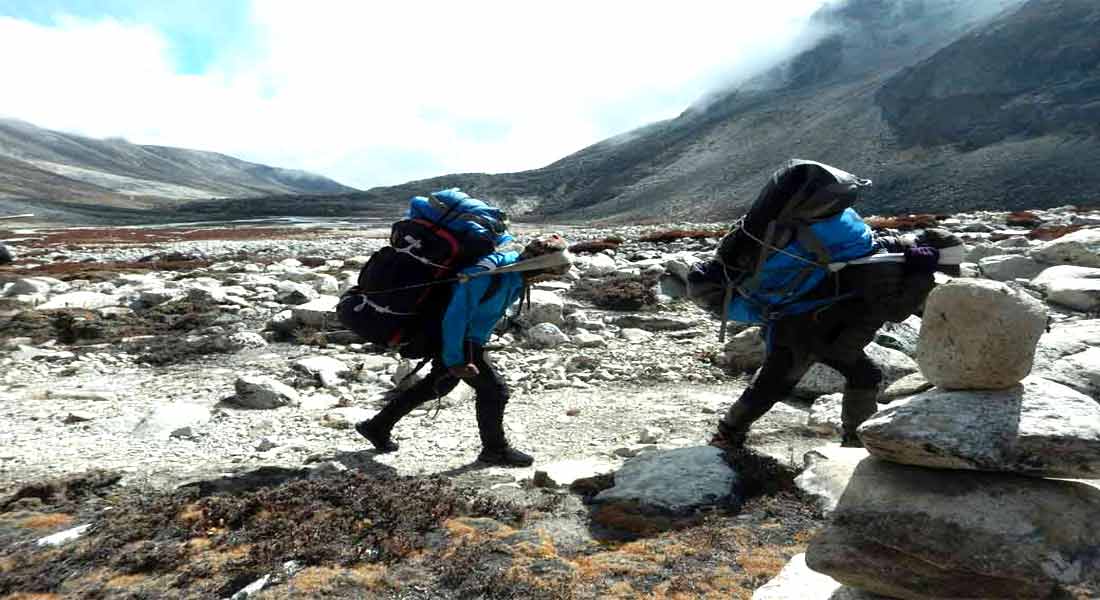
After your breakfast, the trek begins on a peaceful trail throgh the Rhododendron and bamboo forest. The trekking route includes an uphill and a downhill part with amazing views of hills, Rivers, and tradidional Sherpa villages along the trail.
Now your trek descends toward the River Cross suspension bridges, and the trail gradually climbs throgh the forest paths to reach the small settlement of Ningsow. This very quiet place is surrounded by nature and offers a peaceful village at night, here before heading to the high alpine area of Mera Peak.
Mera region Permit: Mera Peak climbing permit from Nepal Mountaineering Association (NMA
Park: Barun Naitional park permit
Distinction: Chutok to Nimsow
Duration: 5-6 hours walking from Pangom.
Altitude: (2,863m) Chutok.
Accomodaition: Tea House Lodge.
Meara with Island Peak cost includes: Breakfast, Lunch, and Dinner with Tea or Coffee.
Mera and Island Peak climbing package, including: Climbing Guide and porters.
Day 06: Trek from Nimso to Chhtre Khola
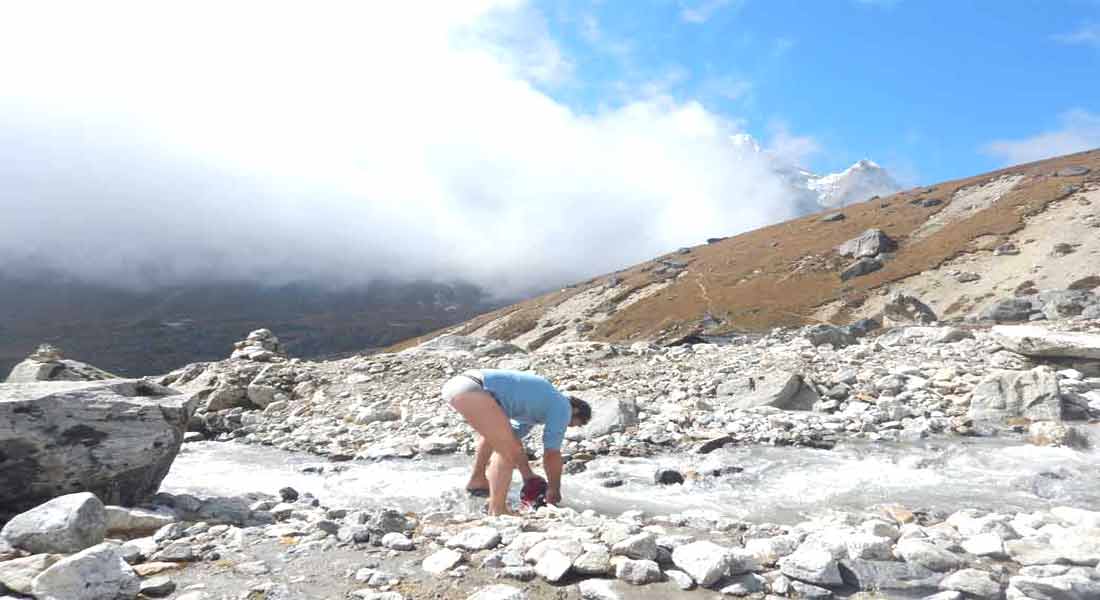
Mera and Island Peak climbing via the Amphu Lapcha pass | Your Breakfast at Nimsow, and the trek begins with beautiful bamboo, pine, and Rhododendron forests. This trekking trail gradually climbs toward Ramilo Danda, which offers an impressive view of Mera Peak and the other Himalayan ranges in clear weather.
From here, we descend through the dense forest and mountain landscapes. Along the trail, you may encounter local wildlife and tradidional Sherpa shelters; then the trek continues downhill and through narrow forest until we reach Chhatre Khola. Here is a small riverside settlement surrounded by natural beauty.
Mera region Permit: Mera peak climbing permit from Nepal Mountaineering Association (NMA
Park: Barun Naitional park permit
Distance: Nimsow to Chhatre Khola.
Duration: 5-6 hours walking from Nimsow.
Altitude: (3,150m) Chhatre Khola.
Accomodaition: Tea House Lodge.
Trekking and Climbing Package price includes: Breakfast, Lunch, and Dinner with Tea or Coffee.
Mera and Island Peak expedition cost Including: Climbing Guide, and porters.
Day 07: Trek from Chhatre Khola to Kothe
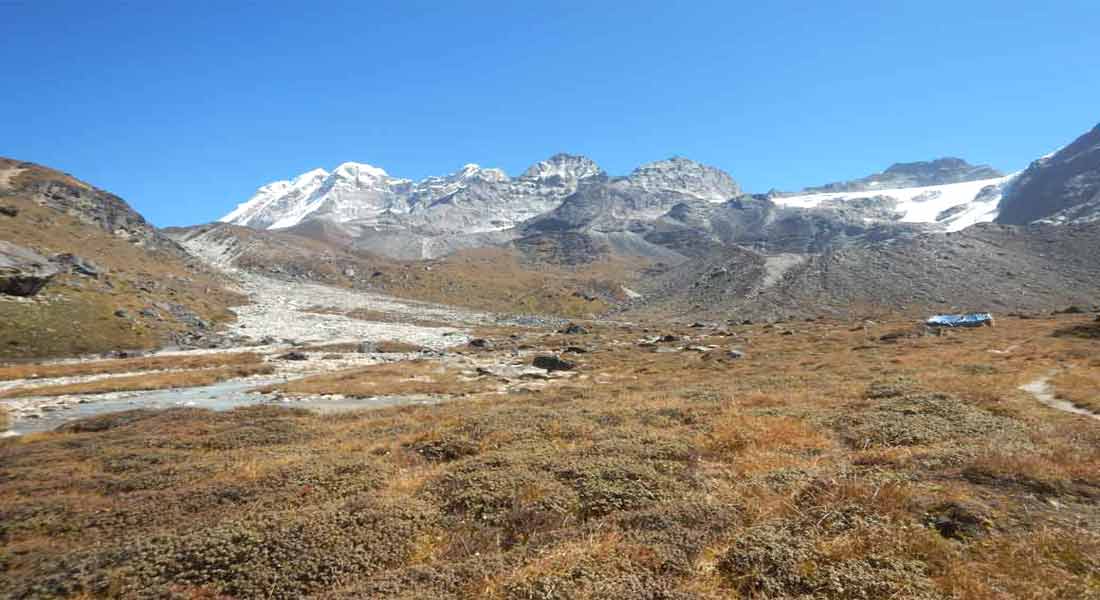
Your morning breakfast at Chhatre Khola; the trail follows the amazing Hinku valley through Rhododendron and dense pine forests. The trail is very peaceful and less crowded. offer us an unforgettable Himalayan wilderness scenery with chances to spot local wildlife.
Mera and Island Peak climbing via Amphu Lapcha Pass | The trekking trail descends to the Hinku River, and the trek continues along the river with several small ups and downs on the riverbank. We pass the seasonal tea shop and grazing areas and continue trekking deeper into the valley of the Kothe.
Kothe is a small settlement located beside the Hinku River, and a very important stop for the clients who are going to climb Mera Peak.
Mera region Permit: Mera Peak climbing permit from Nepal Mountaineering Association (NMA
Park: Barun Naitional park permit
Distinction: Chhatre Khola to Kothe
Duration: 5-6 hours walking from Chhatre Khola.
Altitude: (3,600m) Kothe.
Accomodaition: Tea House Lodge.
Meals: Breakfast, Lunch, and Dinner with Tea or Coffee.
Mera Peak Amphu Lapcha Pass price Including: Climbing Guide and porters.
Day 08: Trek from Kothe to Thagnak
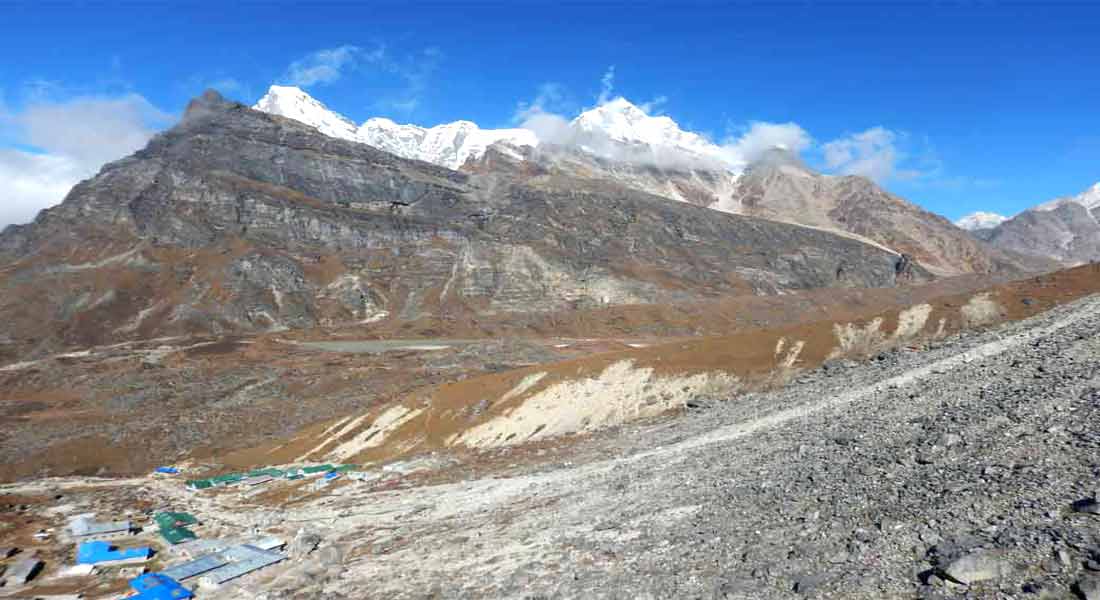
Morning breakfast in Kothe, then trekking walking to Hinku Valley. From here, the trail follows the west bank of the Hinku River, gradually ascending through the Alpine forest and open grazing pastures with spectacular views of Mera Peak and the snowcapped Himalaya range.
Mera and Island Peak climbing via Amphu Lapcha Pass | From here, you pass the small settlement of Godishung and the historical Lungsumgba Gompa, where an ancient prayer inscription can be seen on the rocks, and continue along the river through increasingly rugged alpine landscapes. The scenery becomes more dramatic as you approach the Upper Valley’s towering peak and glacial terrain.
Now you have arrived at Thangnak, a small summer grazing settlement and an important acclimatisation stop for climbers before heading toward Mera with the Amphu Lapcha pass.
Mera region Permit: Mera peak climbing permit from Nepal Mountaineering Association (NMA
Park: Barun Naitional park permit
Distinction: Kothe to Thangnak.
Duration: 4-5 hours walking from Kothe.
Altitude: (4,358m) Chutok.
Accomodaition: Tea House Lodge.
Two Peak climbing Package includes: Breakfast, Lunch, and Dinner with Tea or Coffee.
Mera and Island Peak climbing via Amphu Lapsa Pass, including: Climbing Guide, and porters.
Day 09: Trek from Thagnak to Khare.
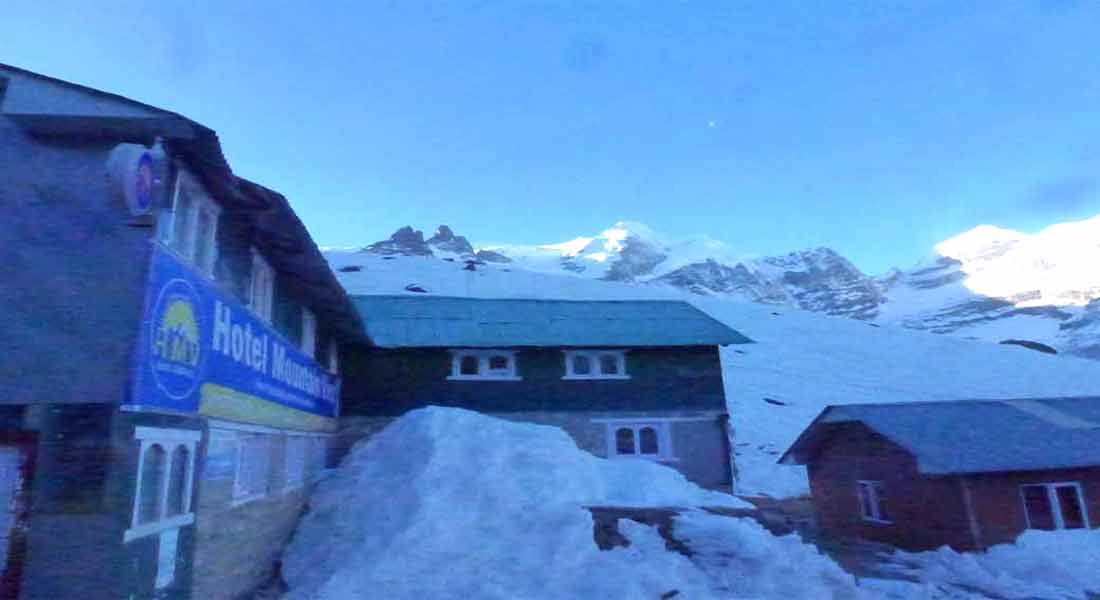
Trek from Thagnak, the trail deeper into the upper Hinku valley, here from the trek along the lateral moraine of the Dig Glacier while enjoying spectacular views of snow-covered mountain peaks and rugged Himalayan landscapes.
Mera and Island Peak climbing via Amphu Lapcha Pass | The trek trail gradually climbs through rocky paths and Alpine terrain with breathtaking views of Kusum Kanguru, Mera Peak, and a nearby Himalayan glacier. From here, the altitude increases, the vegetation becomes sparse, and the scenery turns more dramatic and icy.
After a few hours of ascent, arrive at Khare, the last teahouse settlement before going to Mera High Camp. When you arrive in Khare, you will enjoy the mountain atmosphere and prepare for climbing Mera Peak.
Mera region Permit: Mera Peak climbing permit from Nepal Mountaineering Association (NMA
Park: Barun Naitional park permit
Distance: Thagnak to Khare.
Duration: 3-4 hours walking from Thagnak
Altitude: (5,045m) Khare.
Accomodaition: Tea House Lodge.
Two Peak climbing cost includesludes: Breakfast, Lunch, and Dinner with Tea or Coffee.
Expedition Mera and Island Peak Including: Climbing Guide, and porters.
Day 10: Acclimatization at Khare
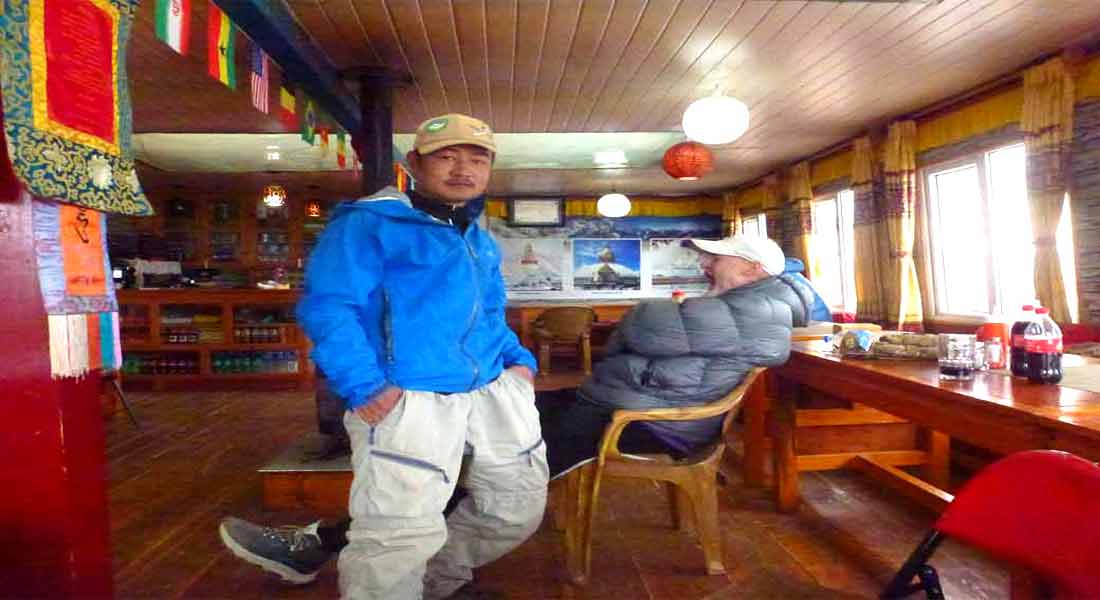
Khare is the best place for acclimatization and a partition day here before heading to Mera Peak High Camp. Proper acclimatization helps the body adjust to the high altitude and increases the chances of a successful and safe summit.
Mera and Island Peak climbing via the Amphu Lapcha Pass trek: Having breakfast at Khare, you enjoy a short hike around the glacier and Mera La areas for altitude adaptation while taking in the beautiful views of Mera Peak, Kusum Kanguru, and other mountain giants.
Today, your climbing guide will provide basic mountaineering training, including the use of crampons, an ice axe, a climbing harness, ropes, and other climbing equipment.
Today in Khare, you can relax, check the mountaineering gear, and prepare mentally and physically for the ascent of Mera Peak.
Mera region Permit: Mera Peak climbing permit from Nepal Mountaineering Association (NMA
Park: Barun Naitional park permit
Distinction: Khare
Duration: (Around 3-4 hours.
Altitude: (50,45m) Khare.
Accomodaition: Tea House Lodge.
Two-Peak climbing price includes: Breakfast, Lunch, and Dinner with Tea or Coffee.
Mera expedition Including: Climbing Guide and porters.
Day 11: Khare to Mera High Camp
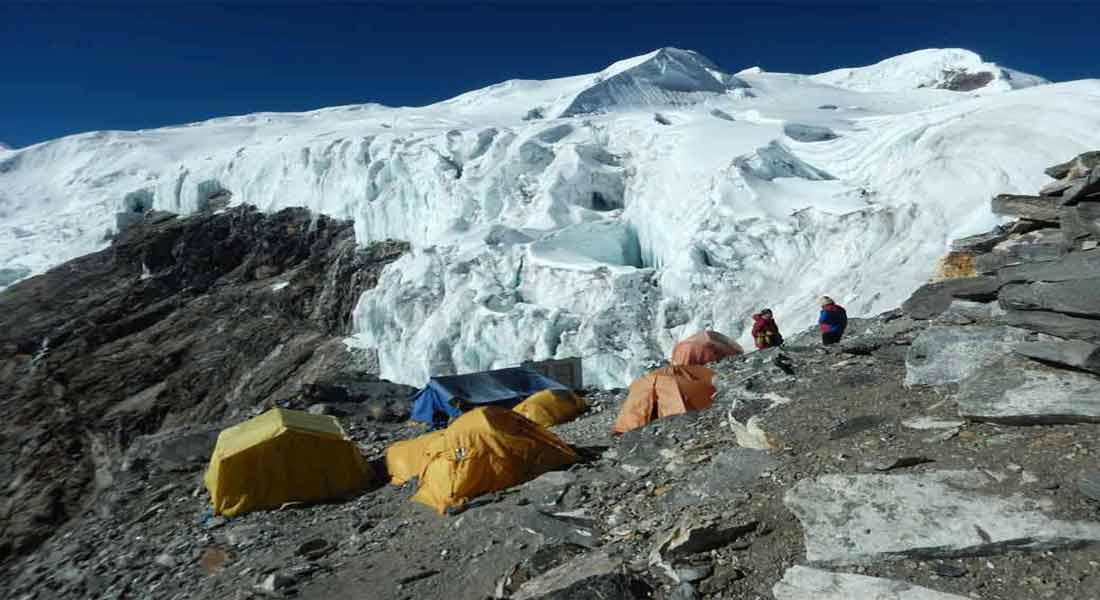
Early morning breakfast in Khare; the trek starts with a challenging climb toward Mera Peak High Camp. From here, the trek trail ascends over rocky paths and glacier terrain before reaching the Mera glacier. Used with crampons and climbing gear, continue carefully across the glacier under your guidance as your climbing leader.
During the trek from Mera La Pass, offering breathtaking panoramic views of the world’s highest mountain, Mount Everest, including Lhotse, Makalu, Cho-Oyu, and Kanchenjunga. . From the Mera La Pass, we continue ascending to the Mera Peak High Camp, located on a rocky ridge with spectacular mountain scenery all around. Now that you have arrived at High Camp, the climbing crew will be preparing for the summit push while climbers rest and enjoy the unforgettable sunset views over the Himalayas.
Mera region Permit: Mera peak climbing permit from Nepal Mountaineering Association (NMA
Park: Barun Naitional park permit
Distinction: Khare to High Camp.
Duration: 4-5 hours walking from Khare.
Altitude: (5,780) High Camp Mera.
Accomodaition: Tent Camping.
Mountain pass trek cost includes: Breakfast, Lunch, and Dinner with Tea or Coffee.
Mera to Island Peak cost Including: Climbing Guide,
Day 12: High camp to Mera Peak Summit, descend back to Kongma Dingma
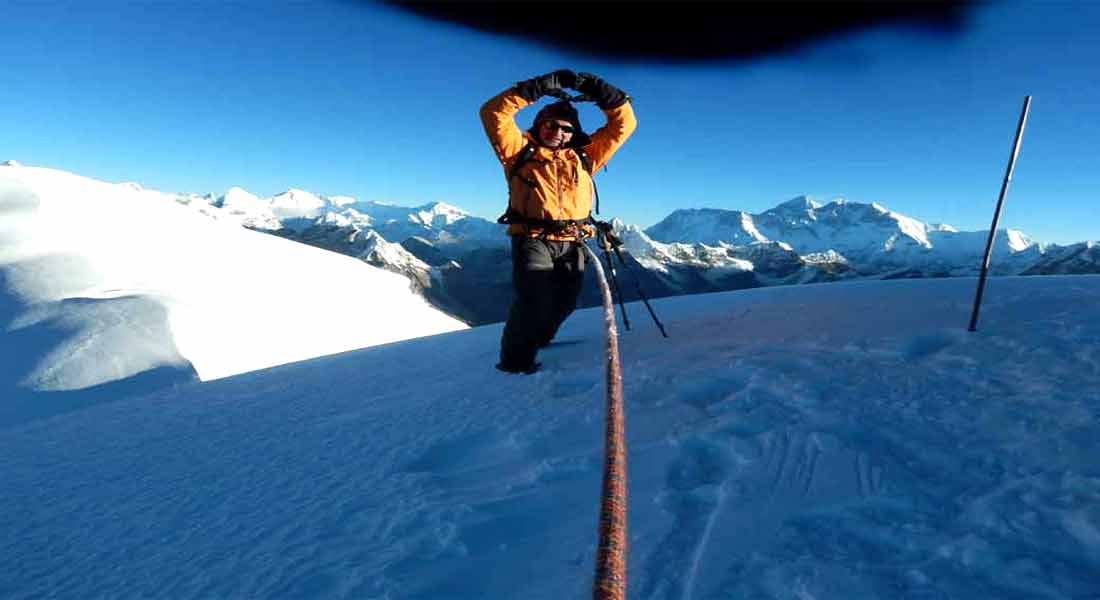
Today, very early in the morning (around 2-3 AM), begins the Summit push to Mera Peak, from High Camp, with headlamps, following your climbing Sherpa Guide. The climbing routes steadily traverse the snow slope and glacier terrain, it requires the use of a harness, crampons, and rope for technical safety.
Mera and Island Peak climbing via the Amphu Lapcha Pass | As you ascend to higher places, the sunrise reveals incredible views of the Himalayas. From the summit of Mera Peak, you will have fantastic panoramic mountain views of Everest, Lhotse, Makalu, Cho-Oyu, and Kanchenjung.
You espending some hours at the Summit (6,470 m), beginning the careful descent back down the same route to High Camp for a rest. Then, from High Camp, the trek continues descending to Kongma Dingma, a lower campsite, where you spend the night. here.
Distinction: From High Camp to Mera Peak Summit (6,470m)
Duration: 10-12 hours walking from High Camp to Mera Peak summit and back to Kongma Dingma..
Altitude: (4,800) Kongma Dingma.
Accomodaition: Very Normal teahouse.
Climbing Peak and High Pass trek price includes: Breakfast, Lunch, and Dinner with Tea or Coffee.
Mera Peak with Island Peak price Including: Climbing Guide and porters.
Day 13: Rest day at Kongma Dingma
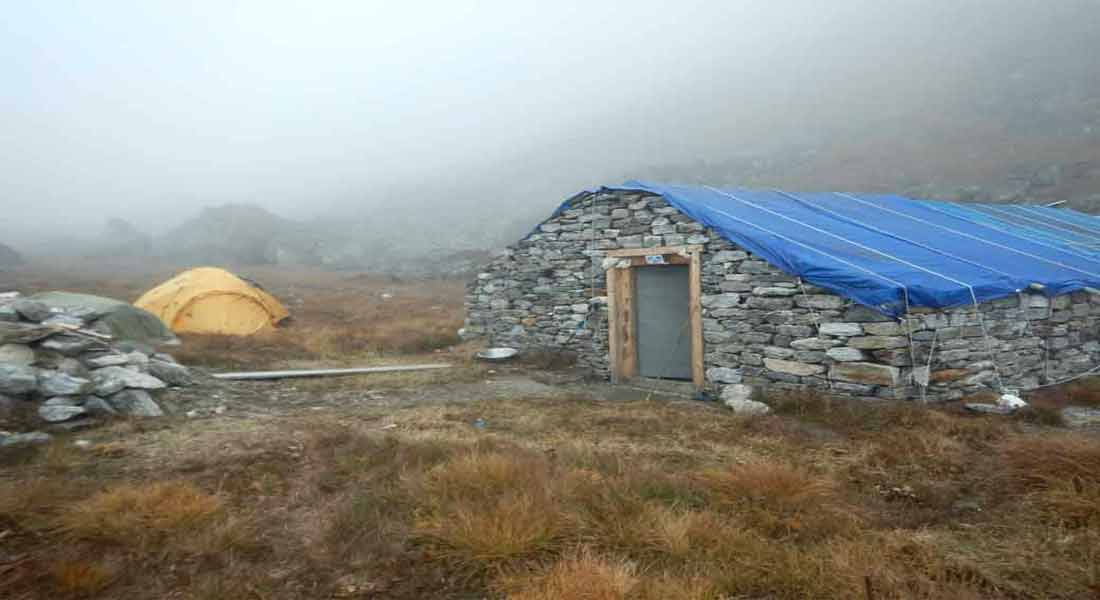
Rest day at Kongma Dingma. After a long summit of Mera Peak, you need a rest day –mainly for recovery, rehydration, and letting the body regain strength after high-altitude exertion.
Spending a day at Kongma Dingma, drinking warm fluids, and eating meals to restore energy. Here is surroundind envionment is quiet and remote, with dramatic views of snowy Himalayan Peaks, glacier valley, and the Regget Mountain terrain.
Mera and Island Peak climbing via the Amphu Lapcha Pass trek | If the weather is good, a short, gentle walk around the nearby moraine area helps improve circulation and aid recovery of your body.
Distinction: Konma Dingma.
Duration: 2-3 hours hiking
Altitude: (4,800m) Kongma Dingma.
Accomodaition: Very Normal Teahouse.
Climbing and mountain pass cost includes: Breakfast, Lunch, and Dinner with Tea or Coffee.
Amphu Lapcha Pass cost including: Climbing Guide and porters.
Day 14: Kongma dingma to Seto pokhari
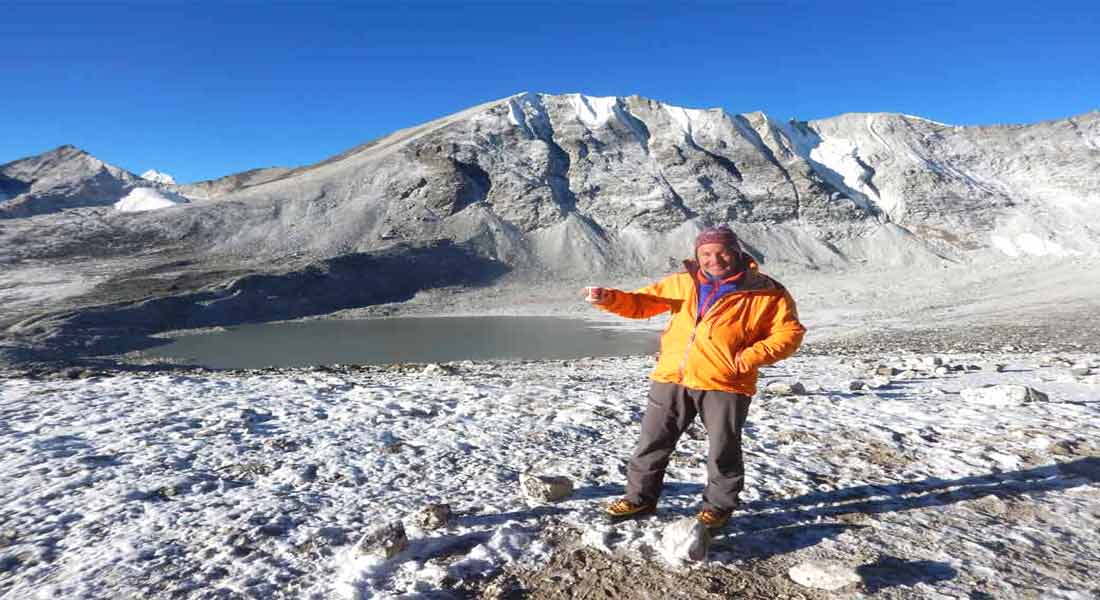
From Kongma Dingma, the trek starts the gradual ascent toward the high alpine Lake region. The trekking trail follows glacial moraines and rocky terrain, surrounded by a dramatic view of a mountain peak and vast open wilderness. The environment becomes more remote and Alpine as you move away from the Mera Peak descent route.
Mera and Island Peak with the Amphu Lapcha pass | The Trek ascent is an occasionally flat section of the moraine ridge. We walk alongside glacial streams and cyclical formations, with a constant view of Mountain giants. This is a quiet and isolated place f the trek, offering a real wilderness experaince.
Finaly we arrive at Seto-Pokhari, an amazing high-altitude white Lake area surrounded by glaciers and towering Himalayan peaks. The Lake area is cold and serene, making it a unique, memorable campsite in the high mountains.
Distance: From Kongma Dingma to Seto-Pokhari.
Duration: 5- 6 hours walking from Kongma Dingma.
Altitude: (5,100m) Seto Pokhari.
Accomodaition: Very Normal Teahouse.
Meals: Breakfast, Lunch, and Dinner with Tea or Coffee.
Mera & Island Peak package cost including: Climbing Guide and porters.
Day 15 Seto Pokhari to Amphu Lacha Base Camp
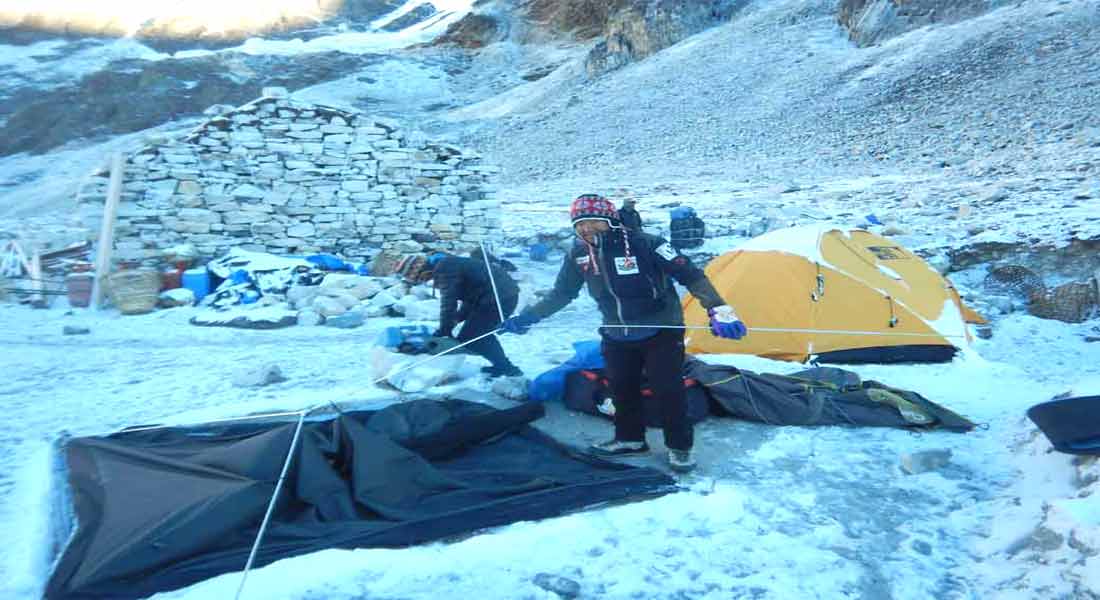
From Seto Pokhari, the trek begins toward the Amphu Lapcha Base Camp. The trail continues through extremely remote high-altitude terrain, crossing rocky moraines, glacial valleys, and icy landscapes surrounded by towering mountain peaks.
Mera and Island Peak climb with Amphu Lapcha Pass | mostly graduall but can be demanding due to thin air and rough terrain. From here, you will pass near frozen Lakes, glacial streams, and barren alpine zones with very limited vegetation. This offers a true wilderness experaince in the upper Mountain area.
Mera Peak climb and Amphu Lapcha Pass, Island Peak | As you approach Amphu Lapcha Pass, one of the most difficulty passease in the Everest region.
Distance: Seto Pokhari to Amphu Lapcha Base Camp.
Duration: 5-6 hours walking from Seto Pokhari.
Altitude: (5,200m) Base camp, Amphu Lapcha.
Accomodaition: very normal tea house.
Meals: Breakfast, Lunch, and Dinner with Tea or Coffee.
Mera to sland peak Including cost: Climbing Guide and porters.
Day 16: From Base Camp, Amphu Lapcha Pass, and trek to Island Peak Base Camp.
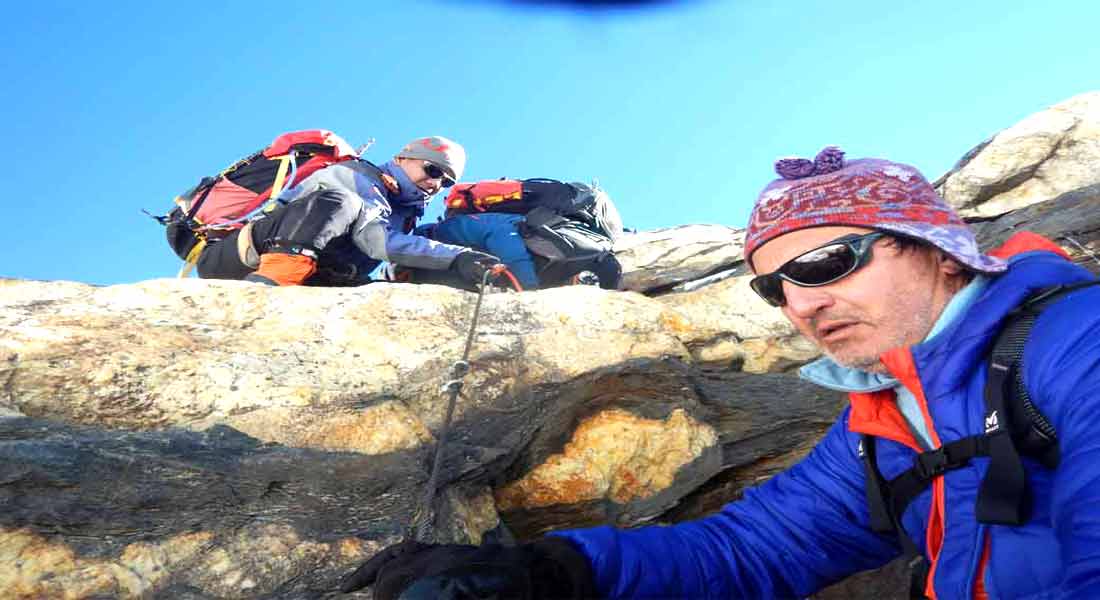
From the Amphu Lapcha Base Camp, the trek begins with the most technical challenging place of the entire crossing. Today involves a glacier climb over steep snow, ice, and mixed terrain, so you will use full climbing gear such as Crampons. Set harness, ropes, and ice axe.
Amphu Lapcha Pass Trek
The climbing route steadily climbs toward Amphu Lapcha Pass (5,845 m), one of the most technical high-pass treks in Nepal. The trek ascent is steep and requires fixed ropes, especially on icy or exposed sections.
From the Amphu Lapcha Pass, enjoy dramatic views of the Everest region, including peaks like Lhotse, Ama Dablam, and the surrounding glaciated valleys. After a short break, begin a careful descent on the Khumbu Valley, which is steep and rope-assisted.
After Amphu Lapch Pass, we descend to Island Peak Base Camp
After crossing the Amphu Lapcha Pass, the trail continues walking down to Imja Valley, gradually becoming less technical as you approach a lower altitude. After the High Pass trek, the glacial moraine and rocky terrain before reaching the crowded trekking area near the Chhukung Valley.
Finaly you arrive at the Island Peak Base Camp, where climbers rest for the Island Peak climb. This place is a well-established climbing base with tens of support staff
Distance: From the Amphu Lapcha crossing to the Island Peak Base Camp.
Duration: 7-9 hours walking from Amphu Lapcha Base Camp.
Altitude: (4,900m) Island Peak Base Camp.
Accomodaition: Tent Camping.
Meals: Breakfast, Lunch, and Dinner with Tea or Coffee.
Including: Climbing Guide and porters.
Day 17: From Base Camp Summit to Island Peak Base Camp and back to Chhukung.
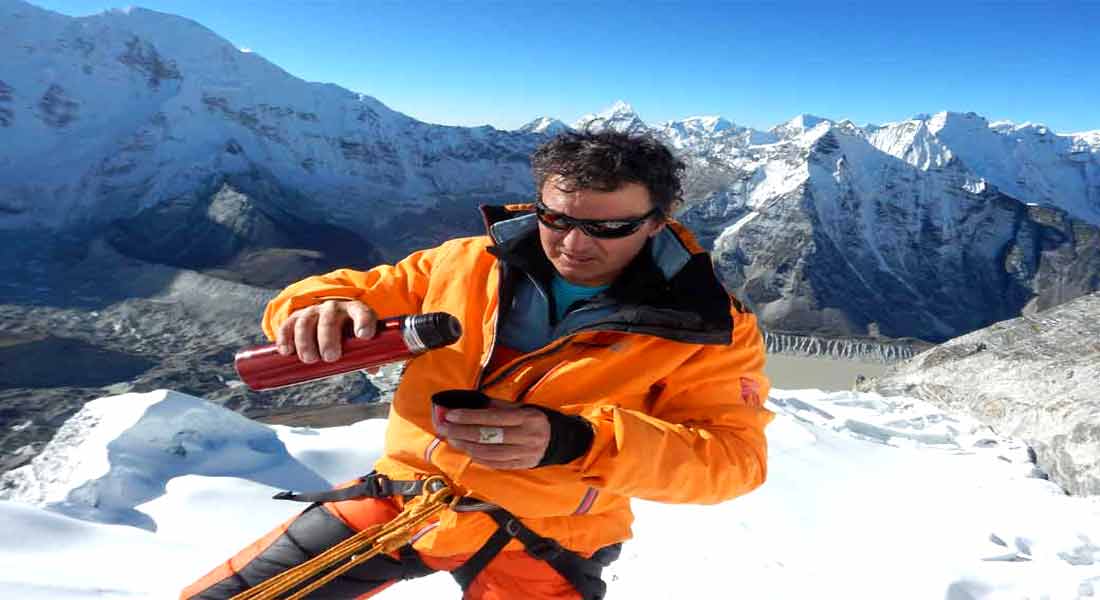
Today, from the Island Peak base camp, the summit push starts very early in the morning (around 2-3 AM). The climbing follows a rocky path, then transitions onto glacier terrain, where you use Crampons, a set of harnesses, ropes, and an ice axe.
From Base Camp to the Island Peak summit push
The climbing route gradually steepens as you approach the headwall, which is the most technical part of the climb. Fixed ropes are used to ascend the steep ice slope leading to the summit ridge.
At the top of Island Peak Imja Tse (6,189 m), you are rewarded with stunning close-up views of Everest, Lhotse, Ama Dablam, Makalu, and the other beautiful Khumbu Himalayan peaks. After short photo sections, we carefully descend to Base Camp.
Return to Base Camp and trek continues to Chhukung village
From Island Peak Base Camp, we descend back to the same route, retracing our steps over the glacier and rocky terrain to Island Peak Base Camp. After a short break and packing your bag, trek down the Imja Valley toward Chhukung village.
After the Base Camp trail becomes easier at a lower altitude, passing through alpine meadows and yak grazing areas. Chhukung is a nice village, and you will get comfortable accommodation.
Permit: Island Peak climbing Permit, which is from the Nepal Mountaineering Association (NMA)
Distinction: Summit Island Peak and return to Chhukung
Duration: 10-12 hours walking from the Island Peak summit (6189 m) and back to Chhukung.
Altitude: (4,730 m) Chhukung
Accomodaition: Tea House Lodge.
Meals: Breakfast, Lunch, and Dinner with Tea or Coffee.
Including: Climbing Guide and porters.
Day 18: Chhukung to Deboche
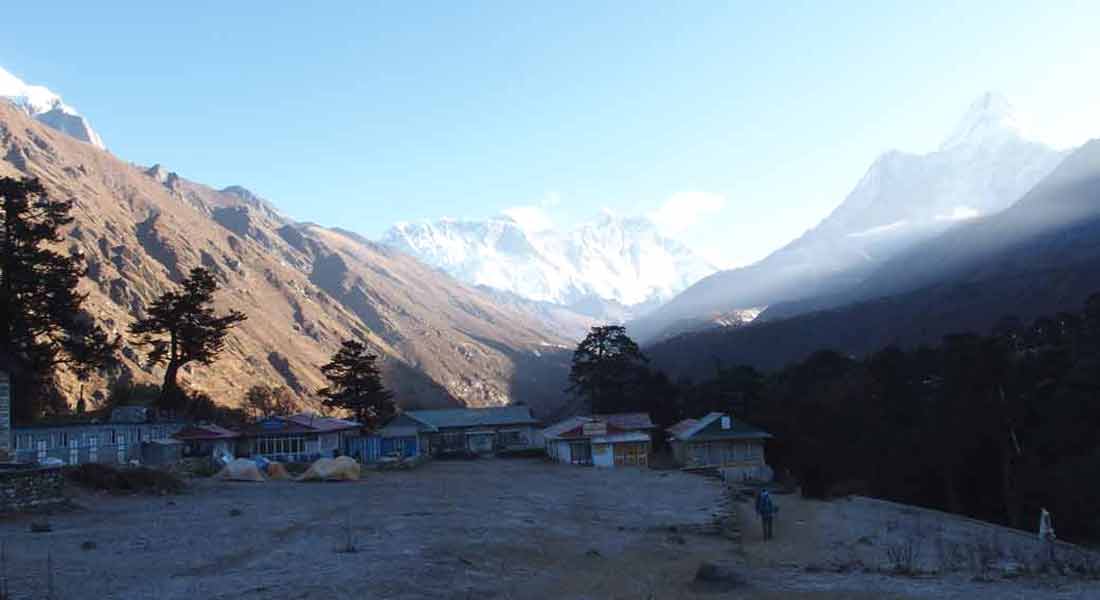
The trek from Chhukung to Deboche is a long descent route that takes the high alpine valley of the Imja region down into the forested lower Khumbu, passing through key villages of the Evererest region trek
Duration: 6-7 hours, Chhukung to Deboche.
Altitude: 3,820 meters. Deboche Trek starts with a gradual descent from the Imja Valley, traverses wide-open alpine terrain, and joins the main trekking trail to Dingboche.
Accommodation: Tea House Lodge.
Including: Breakfast, Lunch, and Dinner with coffee or tea, plus a guide and a porter.
Day 19 Deboche -Namche Bazaar
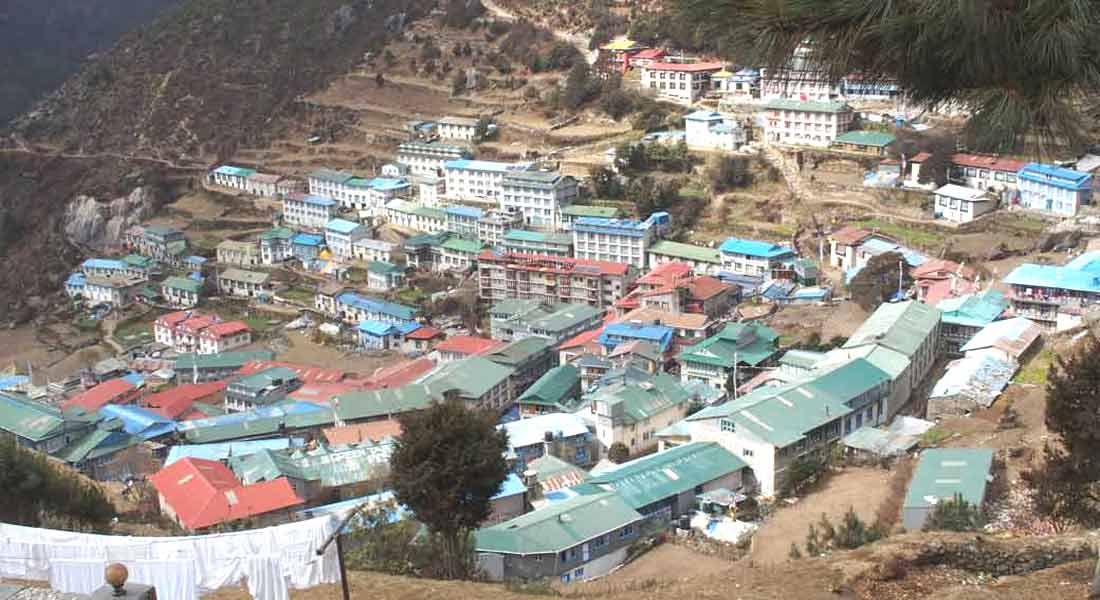
The Deboche to Namche Bazaar section is a beautiful downhill forest walk through the heart of the Khumbu region, part of the classic Everest Base Camp Trekking route.
Sagar Matha Naitional Park Permit
Duration: 5-6 hours.
Difficulty: Moderate -Long uphill after crossing the river.
Accommodation: Tea House Lodge.
Including: Breakfast, Lunch, and Dinner with coffee or tea, plus a guide and a porter.
The Trek is a gentle walk through the rhododendron forest, a peaceful trail with possible wildlife sightings, reaching Tengboche Monastery.
Day 20: Namche to Lukla
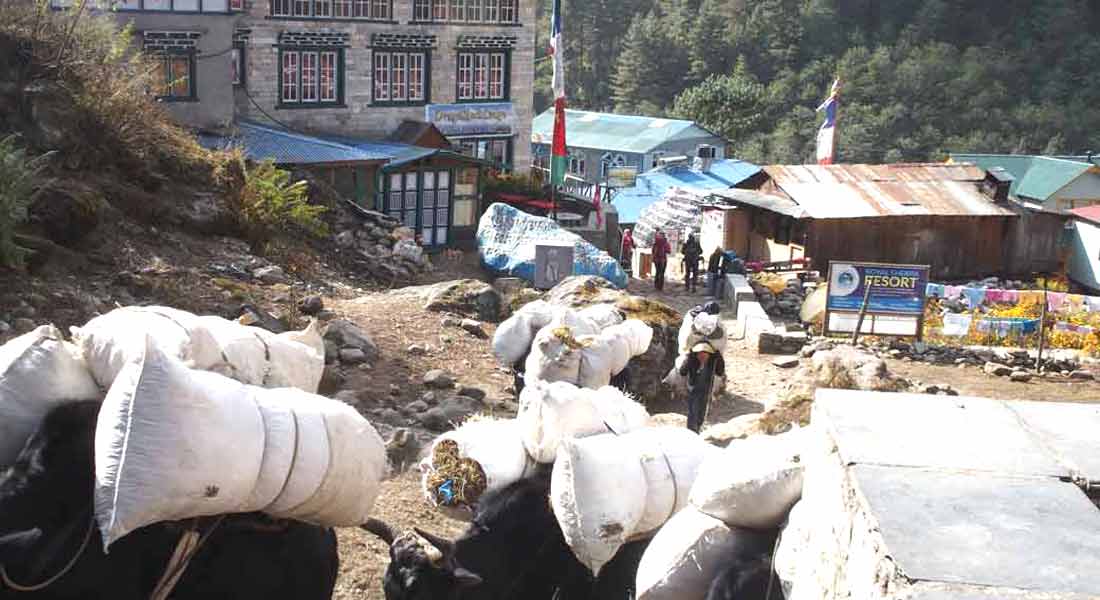
From Namche to Lukla is the final walking section of the classic descent from the Everest region and part of the Everest Base Camp trekking route.
Duration: 7-8 hours walking from Namche.
Difficulty: Moderate (Mostly) downhill and some uphill.
Altitude: 2,800 meters, Lukla.
Accommodation: Tea House Lodge.
Including: Breakfast, Lunch, and Dinner with coffee or tea, plus a guide and a porter.
Day 21: Lukla to Kathmandu
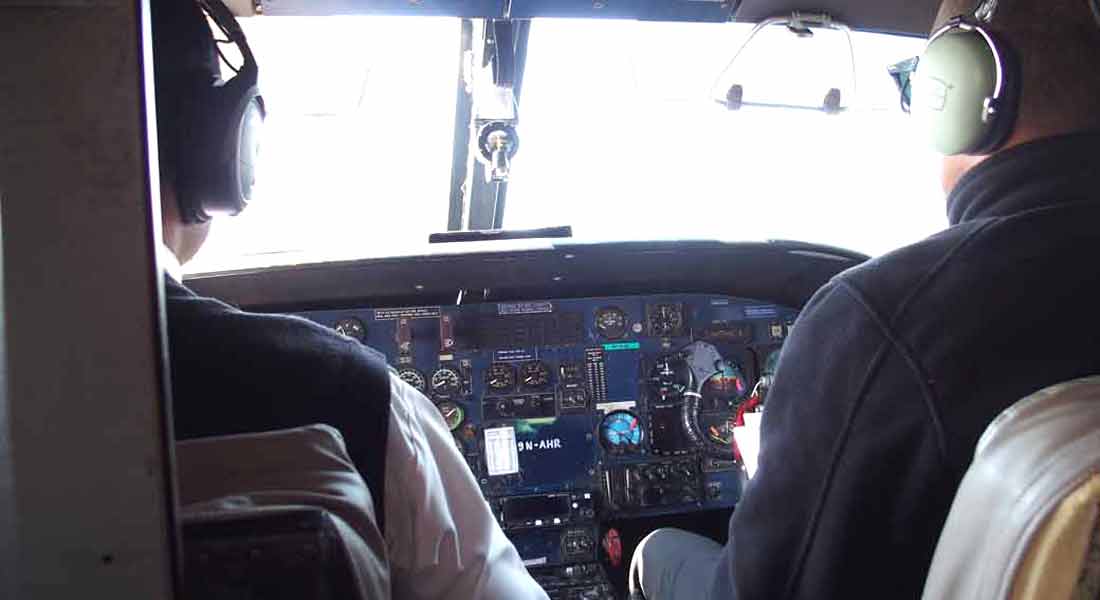
From Lukla, flight back to Kathmandu and transfer to the hotel in Thamel. Flight departure from Tenzing Hillary Airport in Lukla.
Accommodation: Hotel in Kathmandu.
Day 22: Kathmandu
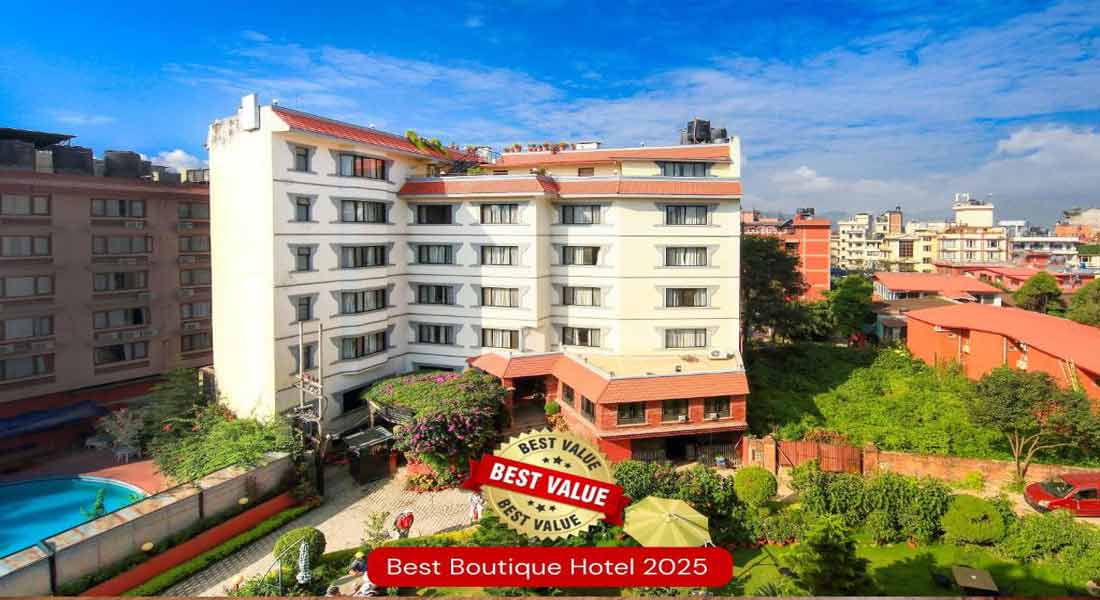
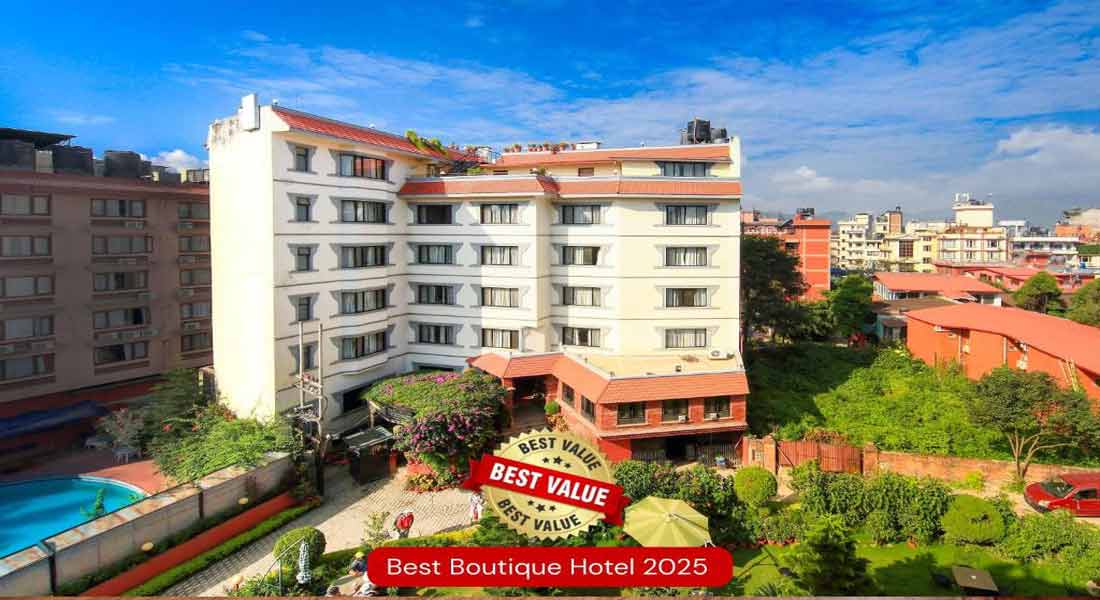
Your safety day in Kathmandu, the Samsara Boutique Hotel includes breakfast service. Which is the best hotel in Thamel with a Garden |
23- Departure day
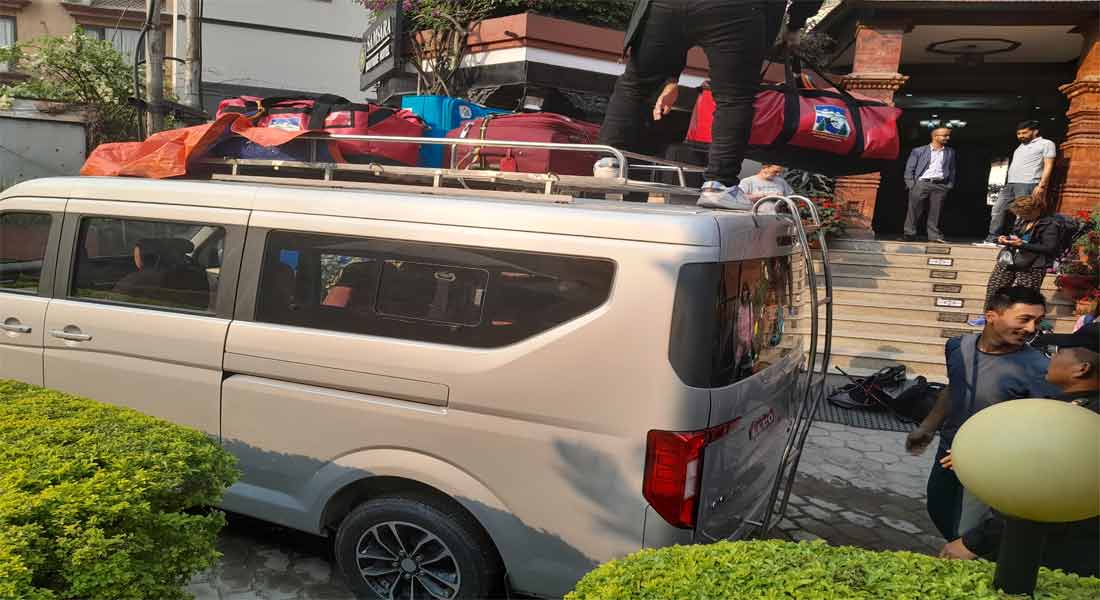
After breakfast, drive to Kathmandu Tribhuvan International Airport for your final departure from Nepal.
Mera and Island Peak climbing with Amphu Lapcha Pass: | Best time for travel in the Khumbu region Khumbu region travel is best during the autumn (September 15 November and the spring season (April to May). This season offers excellent views of the Khumbu Himalaya range with landscapes, providing the trekkers with the best trekking experience. The Temperature during these periods is moderate, striking a balance between hot and cold.
Mera and Island Peak climbing costs include food items.
Trek Cost includes typical foods such as Noodles, Rice, Pasta, Potato dishes, fresh vegetables, eggs, and Chicken items at the same time for dinner and Lunch. Breakfast items: Tibetan bread, Pancake, muesli, Porridge, and toast with peanut butter. Honey and jam.
Mera and Island Peak climbing cost
The cost of climbing Mera and Island Peak with the Amphu Lapcha Pass depends on group size. We require a minimum of two people in the group. The package travel costs 3,345 USD per person. But if the group is more than six Pax, the cost will be discounted.
Single climber cost: 3,600 USD
Mera and Island Peak climbing equipment
Climbing boots (we reccumend you double boots, Crampons, ice axe, Harness, Helmet, Down jacket, Sleeping bag (-20 °C)), rope, sunglasses, headlamp, and other necessary equipment.
Mera and Island Peak climbing equipment
Climbing boots (we reccumend you double boots, Crampons, ice axe, Harness, Helmet, Down jacket, Sleeping bag (-20 °C)), rope, sunglasses, headlamp, and other necessary equipment.
| Day | Destination | Altitude | Walking Hour | Accommodation |
|---|---|---|---|---|
| 1 | Arrival Kathmandu and transfer to hotel | 1300 | one hour drive from airport to hotel | Hotel in Kathmandu |
| 2 | Day Free at Kathmandu | 1300 | Free visit in Kathmandu | Hotel with B&B Service |
| 3 | Flight to Lukla and Trek to Chutok | 2800 | 3-hours | Lodge |
| 4 | Chotok-Pangom | 2846 | 5-6-hours | Lodge |
| 5 | Pongoom -Nimso | 2863 | 5-6-hours | Lodge |
| 6 | Nimso -Chhatre Khola | 3691 | 5-6-hours | Lodge |
| 7 | Chhatre Khola - Kothe | 3691 | 5-6-hours | Lodge |
| 8 | Kothe -Tangnak | 4360 | 5-hours | Lodge |
| 9 | Tangnak -Khare | 5100 | 4-hours | Lodge |
| 10 | Acclimatize at Khare | 5100 | 2-3-hours visit to Glacier | Lodge |
| 11 | Khare -high camp | 5780 | 4-hours | Tent Camping |
| 12 | Summit to Mera peak (6470m) & Back to Kongma Dingma | 4900 | 8-9-hours | Tent or Tea house Lodge |
| 13 | Kongma Dingma - Rest day | 4900 | Day acclimations | Tent or Tea house |
| 14 | Kongmadingma- Seto Pokhari | 5.053 | 5-6-hours | Tent Camping or Tea house |
| 15 | Seto Pokhari-Amphu Lapcha Base camp | 5400 | 5-6-hours | Lodge or tent |
| 16 | Crossing Amphu Lapcha pass (5843m) and trek to Island peak base camp | 4970 | 7-8 hours | Tent |
| 17 | Base camp summit to Island Peak (6,189m) and back to Chhukung. | 4730 | 10-912hours | Tent Camping |
| 18 | Chhukung to Deboche | 3840 | 5-6 hours | Lodge |
| 19 | Deboche to Namce | 3440 | 5-6 hours | Lodge |
| 20 | Namche Bazaar to Lukla | 2800 | 7-hours | Lodge |
| 21 | Flight back to Kathmandu, | 1300 | Thirty five menuets | Hotel in Kanthmandu |
| 22 | Free Day at Kathmandu | 1300 | Free visit | Hotel in Kathmandu |
| 23 | Departure Day | Flight ou from Nepal | By your plane | At the your home |
Mera and Island peak via Amphu Labtsa trek cost 3,345 $ Per Person
Cost Includes
- Arrival and departure Transport Car/ Van/ Hiace.
- Hotel in Kathmandu with breakfast as per our itinerary.
- Full board meals Lunch-dinner Such as Nepali, Indian. Chinese and Italian, much more European food. with tea or coffee during the trek.
- Lodge and Tented accommodation during the trek.
- The license holder, Climbing Guide, Insurance, Equipment, day Salary, Food, and Accommodation.
- The required number of Porters, Including Salary, Insurance, Food, Accommodation, and Equipment.
- Everest National Park permits.
- Mera and Island Peak climbing permit fees.
- Garbage deposit Fees 1000 USD Both peak.
- General Climbing equipment such as fixed Rope, Ice Screw, Snow Bar, etc.
- Kathmandu - Lukla – Kathmandu Plane ticket.
- High Medical Insurance.
Mera and Island peak via Amphu Labtsa Cost Excludes
- Lunch and Dinner in Kathmandu.
- Your Travel Insurance Policy encase if the accident and high altitude Sickness Rescue operation.
- Nepal entry visa fee 15 Daya 30 US$ and for the 30 Days 50 US$, But you can obtain your visa in Kathmandu airport if you have not taken from your country.
- Tips for trekking staff.
- Your personal equipment such as Sleeping.Bag / Crampons / Harness ice ax, and ice hammer.
- Please don't forget to bring with you 2 passport of size pictures.
- Sleeping bag rental and down Jacket if needed.
- All the meals are included on the trek but we only include breakfast while you are in Kathmandu.
(6,461m) Mera peak (5,845m) Amphu Lapcha pass and (6,189m) Island peak
September to 10 November and March to May
Day time normal and during Night 5-15 degrees at the high camp
Trekking and climbing cost Per person US$ 3,145 Per person minimum 2 pax in the group.
Fixe rope-main rope-Ice C row, Snow bag, Ice hummer, Jummar, Harness, and other equipment.
5 to 11- hours per day we walked during the trek
Passport photocopy (should be very clear with color scan) and validity minimum 6 months. 2 passport size photo. Occupation. Home details address. Insurance copy
Normally, you need to bring with you flowing equipment. + walking boot If possible Gore tax boot is better. + Warm socks and Gaiters in case of rain or snow. + Day carry bag and Down Jacket over 3,000 meters you get very cold. + Sleeping bag and others which are not mansions here.
No, you can hire climbing equipment at Khare and Chhukung.
Feels like hangover & Feeling not good/ Headache/ Shortness of Breath/ Loss of appetite/ Sleep not good/ vomiting/ fevers etc.
Yes, Peak climbing is not very easy but depends on trekking peaks the same peak is less technical same peak is very steep, and much technical climbing + but you need good mountaineering equipment. We suggest that before the climbing peak you need to do a minimum 5,000 meters high trekking pass
No problem for a woman traveling alone to Nepal as long as she hires a trekking company to provide a guide or porter because the trekking company is responsible for trekking and mountain climbing. Our agency staff always take care of you, and they will provide you a single room single tent during the tea house trek and during the climbing trek. But if you contact a freelance Guide then you get many problems they try to make a chit for a single woman. Therefore if you book a guide porter with un agency then it is good safe your Holyday travel to Nepal.
Namaste, Frist inquiry from your trip you will have direct access to experienced and professional climbing guides advice or to ask questions on your arrival in Kathmandu meet with us we will brief you how to climbing Nepal trekking peaks. If you travel with us then, of course, we will provide qualified Guides who have experience high altitude trekking and climbing guides. We provide all the trekking and climbing staff insurance as well. You can speak directly with us about your proposed climbing Nepal Trekking peaks the will brief you on our experience climbing guide who has many times summit Nepal Trekking peaks
1: Mera Peak highest trekking peak with a relatively non-technical ascent From Mera Peak panoramic Summit of five 8,000 m giants, Everest, Lhotse, Makalu, Cho-Oyu, and Kanchenjunga, ideal for progressive acclimatization before harder technical sections. Glacier travel, basic rope work, and crampon skills in a stunning alpine setting.
2: Amphu Lapcha Pass (5,845m) High pass Amphu Lapcha is one of the most challenging high pass treks with Technical descent fixed rope, ice walls, and steep snow slopes. It is a style of Expedition adventure and dramatic transition from the wild Hinku valley of the Khumbu:
3: Islang Peak (Imja Tse) Climbing highlight A classic Himalayan climbing Peak with a technical summit push, steep headwall wall exposed ridge, and fixed rope ascent to the summit. Rerathtaking close-up views of Lhotse, Nuptse, Ama Dablam, and Makalu. Perfect steep up the Peak after Mera for climbers seeking a more technically challenging.
4: overall climbing and high pass experience
Altitude Chart
Reviews

Mera Peak and Island peak 2018 October Bonjour, je souhaitais faire les...
Read More