Renjo La Pass Trek -
The Renjo La Pass Trek is one of the most spectacular high-altitude trekking adventures in the Everest region of Nepal. It combines dramatic Himalayan landscapes, traditional Sherpa villages, ancient monasteries, turquoise glacial lakes, and panoramic mountain views with the challenging crossing of Renjo La Pass at approximately 5,360 meters. This trek is an excellent choice for experienced trekkers who want to explore the quieter side of the Everest region while enjoying some of the best views of the Himalayas.
Renjo La is one of the three major high passes of the Everest region, together with Cho La and Kongma La. Unlike the classic Everest Base Camp route, the Renjo La route takes trekkers through the beautiful Gokyo Valley, where the chain of Gokyo Lakes provides one of the most memorable landscapes in the Khumbu.
The trek generally begins with a scenic flight from Kathmandu to Lukla. From Lukla, the trail follows the Dudh Koshi Valley through Phakding and Namche Bazaar before heading toward Thame and the remote Nangpa Valley or directly toward the Gokyo region, depending on the itinerary. After proper acclimatization, trekkers cross Renjo La and descend toward Gokyo Valley. From Gokyo, the route can continue toward Namche Bazaar and Lukla, or it can be combined with Gokyo Ri, Everest Base Camp, Cho La, and the other Everest high passes.
Renjo La Trek is particularly attractive for travelers looking for spectacular mountain scenery without following the busiest Everest Base Camp trail for the entire journey.
Renjo La Pass Trek Highlights
- Cross the spectacular Renjo La Pass at about 5,360 meters.
- Enjoy panoramic views of Everest, Lhotse, Makalu, and Cho Oyu.
- Explore the beautiful Gokyo Valley.
- Visit the turquoise Gokyo Lakes.
- Enjoy the incredible mountain scenery from Gokyo Ri.
- Experience traditional Sherpa culture and hospitality.
- Explore Namche Bazaar, the commercial center of the Khumbu region.
- Walk through Sagarmatha National Park.
- Experience Buddhist monasteries, prayer flags, mani walls, and chortens.
- Explore the quieter Thame Valley and surrounding mountain landscapes.
- Walk through rhododendron, pine, and alpine landscapes.
- Experience high-altitude trekking in the Everest region.
Where Is Renjo La Pass?
Renjo La Pass is located in the Everest region of northeastern Nepal, within the Khumbu area. The pass connects the Gokyo Valley with the Thame Valley and provides a historic crossing route through the high Himalayas.
At an elevation of approximately 5,360 meters, Renjo La is one of the highest trekking passes in Nepal. From the top of the pass, trekkers can enjoy an extraordinary Himalayan panorama including Mount Everest, Lhotse, Makalu, Cho Oyu, Gyachung Kang, and numerous other peaks.
The pass is surrounded by rugged mountains, glaciers, snow-covered slopes, and high-altitude wilderness. Weather can change rapidly, making preparation and proper acclimatization essential.
Renjo La Pass Trek Route
The standard Renjo La trek starts from Lukla and follows the Dudh Koshi Valley toward Namche Bazaar. After acclimatization in Namche, the route heads toward Thame or the Gokyo region depending on the selected itinerary.
The trekking & Climbing route is:
Kathmandu → Lukla -Phakding -Namche Bazaar -Thame → Lungden- Renjo La Pass -Gokyo -Dole-Namche Bazaar -Lukla to Kathmandu
Some itineraries approach Renjo La from the Gokyo side and cross the pass toward Lungden and Thame. Others combine Renjo La with Gokyo Ri and the Everest Base Camp route.
The route can therefore be customized according to the traveler’s available time, experience, fitness level, and interests.
Lukla to Phakding (2,610 m)
The adventure usually begins with a scenic flight from Kathmandu to Lukla. Lukla is the gateway to the Everest region and is situated at approximately 2,860 meters.
After landing at Lukla, the trek begins through beautiful mountain scenery. The trail passes through small settlements, suspension bridges, forests, and agricultural areas before reaching Phakding. Phakding is situated at around 2,610 meters and is generally the first overnight stop.
Phakding to Namche Bazaar (3,440 m)
The trail follows the Dudh Koshi River and gradually climbs toward Namche Bazaar. Trekkers cross several suspension bridges decorated with prayer flags and pass through villages and pine forests.
As the trail approaches Namche, the landscape becomes increasingly mountainous. The final climb to Namche is challenging but rewarding.
Namche Bazaar, at approximately 3,440 meters, is an important trading and tourism center of the Khumbu region.
Acclimatization in Namche Bazaar
Proper acclimatization is one of the most important aspects of the Renjo La Pass Trek. Namche is an ideal place to spend an additional night and allow the body to adjust to increasing altitude.
During the acclimatization day, trekkers can explore Namche Bazaar and hike toward the Everest View Hotel. The surrounding viewpoints provide beautiful views of Everest, Ama Dablam, Thamserku, Kongde, and other Himalayan peaks.
The acclimatization day also provides an opportunity to explore Sherpa culture, monasteries, markets, cafes, and local museums.
Namche Bazaar to Thame (3,800 m)
From Namche, the trail turns toward the quieter Thame Valley. This section offers a very different experience from the busy Everest Base Camp trail.
Thame is an important traditional Sherpa village with a strong connection to mountaineering history. The valley is surrounded by dramatic Himalayan peaks and provides a peaceful environment for trekkers.
The trail passes through alpine vegetation, small settlements, stone houses, and Buddhist monuments.
Thame to Lungden (4,368 m)
The trek continues deeper into the high Himalayas toward Lungden. The landscape becomes increasingly barren as the altitude rises.
Lungden is situated at approximately 4,380 meters and is an important overnight stop before crossing Renjo La Pass.
This section requires careful pacing because altitude becomes a significant factor. Trekkers should stay hydrated, walk slowly, and communicate with their guide if they experience symptoms of altitude sickness.
Lungden to Renjo La Pass (5,360 m)
The crossing of Renjo La is the major highlight of the trek.
The trail from Lungden gradually climbs through a rugged alpine landscape. The ascent becomes steeper as the route approaches the pass. Depending on the season and weather conditions, snow and ice may cover sections of the trail.
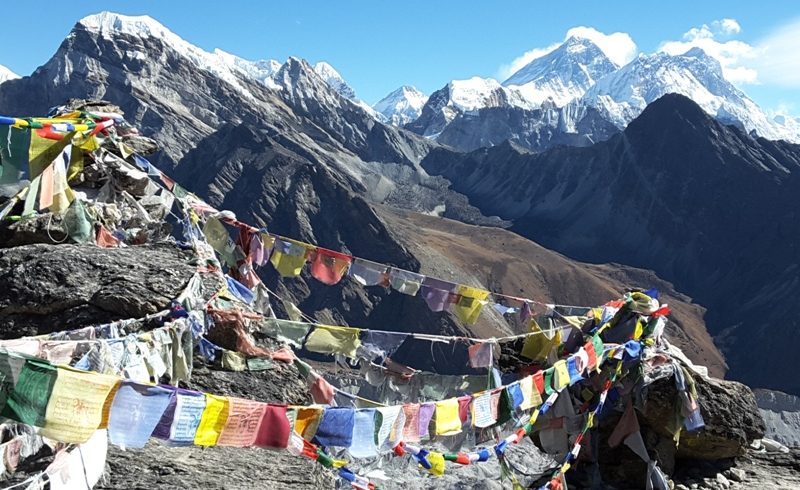
After reaching the top of Renjo La Pass at approximately 5,360 meters, trekkers are rewarded with breathtaking panoramic views.
The summit of Renjo La provides an unforgettable perspective of the Everest region. On clear days, Mount Everest, Lhotse, Makalu, Cho Oyu, and many other peaks can be seen.
After enjoying the mountain views and taking photographs, trekkers descend toward the Gokyo Valley.
Renjo La to Gokyo
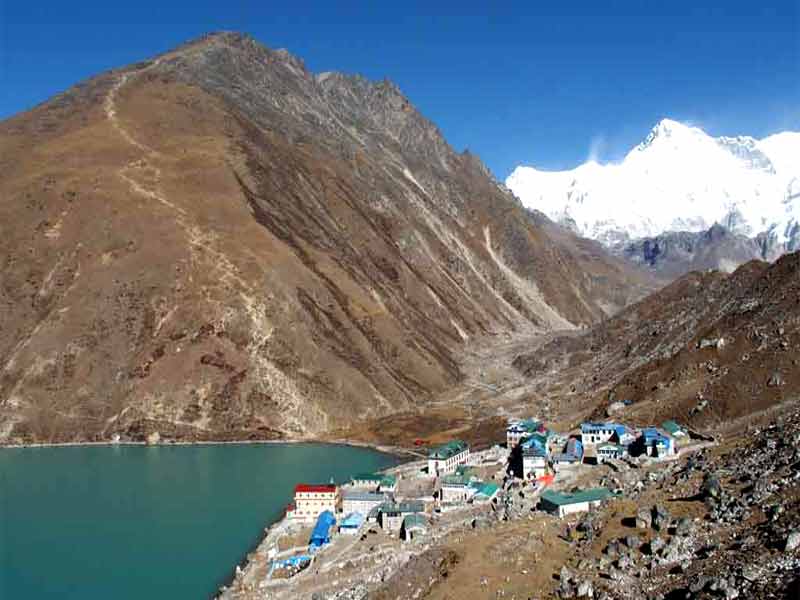
The descent from Renjo La leads into the spectacular Gokyo Valley. The trail gradually moves toward the turquoise Gokyo Lakes.
The contrast between the barren high-altitude landscape, glacial lakes, and snow-covered mountains makes this one of the most beautiful sections of the trek.
Gokyo is located beside the third Gokyo Lake and is surrounded by dramatic peaks. Trekkers can spend the night in a local lodge and enjoy the peaceful Himalayan environment.
Gokyo Lakes (4,790 m)
The Gokyo Lakes are a major attraction of the Renjo La trek. These beautiful glacial lakes are located in a high-altitude valley and are considered among the most impressive natural features of the Everest region.
The lakes have striking blue and turquoise colors, particularly under clear Himalayan skies.
Gokyo Valley is also culturally and environmentally important. The area is protected within Sagarmatha National Park and supports a unique high-altitude ecosystem.
Gokyo Ri (5,357 m)
An optional hike to Gokyo Ri, at approximately 5,357 meters, can be included in the itinerary.
The climb to Gokyo Ri is demanding but offers an extraordinary panoramic viewpoint. From the summit, trekkers can see Everest, Lhotse, Makalu, Cho Oyu, and other surrounding peaks.
Sunrise from Gokyo Ri is particularly impressive when weather conditions are favorable.
Although Gokyo Ri and Renjo La are at similar elevations, they provide different experiences. Renjo La is a high mountain pass connecting valleys, while Gokyo Ri is a viewpoint offering a wide panorama of the surrounding Himalayas.
Difficulty of Renjo La Pass Trek
The Renjo La Pass Trek is considered moderate to challenging.
- The major challenges include:
- High altitude.
- Long trekking days.
- Steep ascents and descents.
- Crossing a high mountain pass.
- Cold temperatures.
- Possible snow and icy trail conditions.
- Rapid changes in mountain weather.
- Limited facilities in remote sections.
Previous high-altitude trekking experience is helpful, but strong physical fitness, good preparation, and proper acclimatization can make the trek achievable for determined trekkers.
Altitude and Acclimatization
Altitude is one of the most important considerations on the Renjo La Pass Trek.
The route gradually rises from Lukla at approximately 2,860 meters to Renjo La at about 5,360 meters. This significant elevation gain requires a carefully designed itinerary.
- Trekkers should:
- Ascend gradually.
- Drink plenty of water.
- Avoid unnecessary physical exertion.
- Eat regular meals.
- Sleep adequately.
- Follow the guide’s advice.
- Report unusual symptoms immediately.
- Never ignore serious altitude-related symptoms.
Proper acclimatization days should be included in the itinerary, particularly around Namche and the higher sections.
Best Time for Renjo La Pass Trek
The best seasons for the Renjo La Pass Trek are spring and autumn.
Spring – March to May
Spring offers relatively stable weather, clear mountain views, and pleasant trekking conditions. Rhododendron flowers bloom at lower elevations, adding color to the landscape.
April and May are particularly popular months for Himalayan trekking.
Autumn – September to November
Autumn is another excellent season. The monsoon generally ends by September, bringing clearer skies and improved mountain visibility.
October and November are especially popular because of stable weather and excellent views.
Winter – December to February
Winter brings very cold temperatures and significant snowfall at higher elevations. Renjo La can become difficult or temporarily inaccessible because of heavy snow and icy conditions.
Experienced trekkers with appropriate equipment may undertake winter trekking when conditions are suitable, but additional preparation is required.
Monsoon – June to August
The monsoon season brings rainfall, clouds, and potentially muddy trails at lower elevations. Flight delays to Lukla can also occur because of poor weather.
For these reasons, monsoon is generally not the preferred season for Renjo La trekking.
Permits Required for Renjo La Trek
Trekkers generally need the required Sagarmatha National Park entry permit and the applicable local area or Khumbu permit required for the trekking route.
Permit requirements and fees can change, so trekkers should confirm the latest regulations before departure.
A registered trekking agency can arrange the necessary permits and documentation on behalf of clients.
Accommodation during the trek
Accommodation on the Renjo La trek is generally provided in local teahouses and lodges.
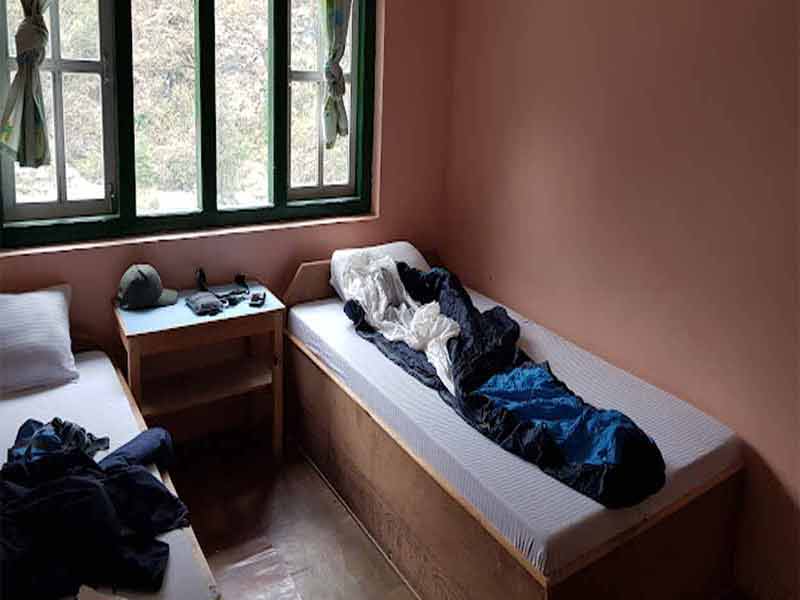
Rooms are usually simple and may include twin beds with mattresses, blankets and pillows. At higher elevations, facilities become more basic.
Bathrooms may be shared, particularly in remote villages. Hot showers may be available in some lodges for an additional charge, while facilities become increasingly limited at higher elevations.
Trekkers should carry a sleeping bag suitable for cold mountain conditions.
Food During the Trek
Teahouses provide a variety of meals designed to support trekkers during long walking days.
Common foods include:
- Dal bhat
- Rice
- Vegetables
- Noodles
- Pasta
- Soup
- Potatoes
- Eggs
- Bread
- Tibetan bread
- Momo
- Porridge
- Pancakes
- Tea
- Coffee
- Hot chocolate
Dal bhat is particularly popular because it provides a filling combination of rice, lentils, and vegetables.
At higher elevations, food choices may be more limited because supplies have to be transported from lower regions.
Guide and Porter Service
A licensed trekking guide is highly recommended for the Renjo La Pass Trek, particularly because the route crosses a remote high-altitude pass.
An experienced guide provides:
- Route navigation.
- Assistance with permits.
- Accommodation arrangements.
- Information about local culture.
- Altitude monitoring.
- Emergency support.
- Communication with lodges.
- Assistance during difficult sections.
A porter can carry the main trekking luggage, allowing trekkers to walk with a lighter daypack.
Hiring local guides and porters also directly supports communities in the Khumbu region.
Renjo La Trek Safety
Safety is a major priority on this high-altitude trek.
Trekkers should be prepared for sudden weather changes, cold temperatures, snow, steep trails, and altitude-related problems.
Before crossing Renjo La, the guide should assess weather and trail conditions. If conditions are unsafe, the crossing should be postponed rather than rushed.
Travel insurance covering high-altitude trekking and emergency evacuation is strongly recommended.
Equipment List for the Trek
- Waterproof trekking boots
- Warm trekking socks
- Base-layer clothing
- Fleece jacket
- Down jacket
- Waterproof jacket and trousers
- Warm hat
- Gloves
- Sunglasses
- Sunscreen
- Trekking poles
- Headlamp
- Sleeping bag
- Water bottles
- Water purification tablets or filtration system
- Backpack
- Duffel bag
- First-aid supplies
- Personal medications
- Toiletries
- Power bank
- Camera
- Lightweight towel
Why Choose Renjo La Pass Trek?
Renjo La is an excellent option for trekkers who want to experience the Everest region beyond the classic Everest Base Camp route.
The trek combines high mountain adventure with beautiful lakes, Sherpa culture, remote valleys, and spectacular panoramic views.
Compared with the standard Everest Base Camp route, the Renjo La trail provides a quieter and more adventurous experience. The combination of Thame, Lungden, Renjo La, and Gokyo makes the journey especially rewarding.
For experienced trekkers, Renjo La can also be combined with Cho La, Kongma La, Everest Base Camp and Gokyo Ri to create a more comprehensive Everest high-pass adventure.
Renjo La Pass Trek Cost
The cost of the trek depends on several factors, including:
- Guide and porter services.
- Accommodation standard.
- Lukla flight costs.
- Permits.
- Meals.
- Transportation.
- Insurance.
- Equipment requirements.
- Additional acclimatization days.
- Emergency evacuation arrangements.
A trekking agency can provide a detailed quotation based on the preferred itinerary and services.
Who Can Do the Renjo La Trek?
Renjo La is suitable for physically fit trekkers who are prepared for high-altitude walking.
You do not necessarily need technical mountaineering skills, but you should be comfortable walking for several hours each day on uneven and steep mountain trails.
Prior trekking experience at altitude is an advantage.
Training before the trek should include regular walking, hiking, stair climbing, and cardiovascular exercise. The goal should be to improve endurance rather than speed.
Responsible Trekking
Renjo La lies within a sensitive Himalayan environment. Trekkers should help protect the region by following responsible trekking practices.
Travelers should avoid single-use plastics where possible, carry their rubbish, respect local customs, avoid disturbing wildlife, and use established trails.
Respecting monasteries, prayer flags, mani walls, and local traditions is also an important part of responsible travel.
Conclusion of Trek
The Renjo La Pass Trek is an unforgettable Himalayan adventure that combines high-altitude trekking, spectacular mountain scenery, beautiful glacial lakes, and authentic Sherpa culture.
From the lively streets of Namche Bazaar to the peaceful Thame Valley, from the remote settlement of Lungden to the challenging crossing of Renjo La, every section of the trek offers a different experience. The spectacular descent toward Gokyo and the turquoise Gokyo Lakes provides a memorable conclusion to the high-pass adventure.
With proper acclimatization, good preparation, experienced trekking staff, and suitable equipment, Renjo La can be an extremely rewarding journey for adventurous trekkers.
For travelers seeking a quieter alternative to the standard Everest Base Camp route, Renjo La Pass Trek offers an excellent combination of adventure, culture, wilderness, and Himalayan scenery. It can also be extended into a longer Everest high-pass adventure by combining it with Gokyo Ri, Cho La, Kongma La, and Everest Base Camp.
| Day | Destination | Altitude | Walking Hour | Accommodation |
|---|---|---|---|---|
| 1 | Arrival Kathmandu and transfer to hotel | 1300 | One hour drive from airport to hotel | Hotel in Kathmandu |
| 2 | Kathmandu Lukla Flight and trek to Phakding | 2610 | 3-hours | Lodge |
| 3 | Phakding to Namche Bazaar Sherpa capital | 3440 | 5-hours | Lodge |
| 4 | Visit to Everest view hotel for Mountain view | 3440 | 2-3-hours | Lodge |
| 5 | Namche to Thame | 3800 | 5-hours | Lodge |
| 6 | Hike to Sundar peak | 5200 | 7-8-hours | Lodge at Thame |
| 7 | Thame -Lungdin | 4345 | 6-7 bhours | Lodge |
| 8 | Lungdin Gokyo via Rinjo la pass (5360) | 4790 | 6-7 hours from Lungdin | Lodge |
| 9 | Hike to Gokyo Ri (5357m) back to Labarma | 4300 | 6-8 (round trip | Lodge |
| 10 | Labarma to Namche | 3440 | 7-hours | Lodge |
| 11 | Namche to Lukla | 2800 | 7-hours | Lodge |
| 12 | Flight from Lukla | 1300 | Transferto hotel | Hotel in Kathmandu |
| 13 | Your Rest day at Kathmandu | 1300 | Free visit in Kathmandu | Hoel include with breakfast service |
| 14 | After your breakfast drive to Kathmandu airport for your depature | Departure Day | By air to country | At home |
Renjo la Gokyo RI trek cot $1290 Per Person
csost includes
- We provide arrival and departure transportation.
- As per the itinerary, a hotel in Kathmandu with a bed and breakfast.
- Kathmandu-Lukla to Kathmandu plane ticket including a Nepali guide.
- A day three times meals-Breakfast, Lunch, and Dinner during the trek.
- Lodge accommodation during the trek.
- Sagarmatha Naitional Park fee & Pasang Lhamu Village municipality fee
- English- speaking –Government-licensed holder trekking guide.
- Porters for the trek.
- Duffel (Kti) Bag for the Renjo La Pass Trek.
- Guide and porters-Insurance, salary, and they are accommodation during the trek.
- Company paperwork and Government taxes, etc.
Renjo la Gokyo RI trek cost Excludes
- Lunch and Dinner in Kathmandu.
- International air ticket, Nepal Visa fee, your travel insurance, medical, and emergency case.
- Personal expenses, bar bills, and battery charge.
- Hot shower, telephone, laundry, and any drinks.
- Tips for Guide & Porters.
- During the trek, if due to weather problems or you want to return earlier than scheduled, the balance is not refundable, please.
From September to November and from March to May
During the day, it is normal and during the night, it is 5-15 degrees.
Renjo La trek cost | 1135 | US$ per person for a minimum of 2 people
The trek isn’t difficult in our opinion. There are (5,360m) Renjola and (5,320m) Gokyo Ri
Pasang Lhamu VCD permit and Sagarmatha National Park permit.
If you take a guide and porter, then you can trek in Nepal in a very safe manner. When you book your trip through a Trekking agency, if something goes wrong, it is easier to resolve any problem and the agency is responsible for solving it.
There are good lodges in every village with dining and the best toilet facilities
There are Chinese, Nepali, Tibetan, Indian, Italian, and other dishes.
An average of 5-6 hours of walking per day.
Yes, you can see Thamserku (6.608m), Kusum Kangaru (6,367m), Amadablam (6,856m) Cho-Oyo (8,200m), Everest (8,848m), Pumori (7,165m), Nuptse (7,861m), Lhotse (8,414m), and many other mountains views.
Twelve nights and thirteen days are normally devoted to a holiday
Normally, you need to bring with you flowing equipment. + walking boot If possible Gore tax boot is better. + Warm socks and Gaiters in case of rain or snow. + Day carry bag and Down Jacket over 3,000 meters you get very cold. + Sleeping bag and others which are not mansions here.
Arrival & departure transport service. Hotel in Kathmandu with bed and breakfast as per itinerary. Kathmandu-Lukla-Kathmandu domestic plane ticket 360 US$: Per Person. For the Nepali Guide 11,000 Rs A day three times meals-Breakfast, Lunch and Dinner during the trek. Lodge accommodation during the trek. Maximum 3500 Rs per day per person for meals & lodge. Everest National park entry permit 3,500: Nepali Rs and 1,000 RS Per person TIMS Card. Pasang Lhamu Village Tax 2000 Rs Nepali Per Person. English- speaking –Government licensed holder trekking guide. Over the 6 Pax group, we will provide you experience mountain Leader, who has the best trained Hotel Management (NATHM) Mountain Leader Course, Component 1-2, Navigation Course, Rock climbing Course, Mountain rescue Training and Basic Mountaineering training, etc. Guide and porters-Insurance, Salary and they are accommodation during the trek. Company paper working and Government taxes etc.
You feel like I’ve been hungover; I’m tired; I’m short of breath; I’m hungry. I’m sleeping poorly; I’m vomiting; I’ve got a fever.
Women traveling alone to Nepal are not a problem, as long as they use the services of a registered trekking agency for guides and porters because the trekking company is responsible for mountaineering and trekking. The agency staff will always take good care of you, and they will provide you with a single room tent on both teahouse treks as well as hiking treks. There are many problems if you contact freelance Guides since they try to make chits for single women. Therefore, it is safe to travel to Nepal with an agency for holiday guide and porter services.
Altitude Chart