Everest Base Camp trek with Island Peak climbing -
Everest Base Camp Trek with Island Peak Climbing is one of Nepal’s most exciting Himalayan adventure programs, combining the legendary Everest Base Camp trek with the technical challenge of climbing Island Peak (6,189 meters). This journey offers an excellent opportunity to experience the famous Everest region, Sherpa culture, spectacular mountain scenery, high-altitude trekking, and a Himalayan peak-climbing adventure in one comprehensive expedition.
Island Peak, locally known as Imja Tse, stands above the Imja Valley near Chhukung. Although it is considered one of Nepal’s more accessible trekking peaks, climbing it requires good physical fitness, proper acclimatization, basic mountaineering skills, and professional support. The combination of Everest Base Camp and Island Peak provides a progressive adventure: trekkers first acclimatize while walking through the Khumbu Valley, visit Everest Base Camp and Kala Patthar, and then prepare for the Island Peak summit.
The journey begins with a flight from Kathmandu to Lukla and continues through traditional Sherpa villages such as Phakding, Namche Bazaar, Tengboche, Dingboche, and Lobuche. After reaching Everest Base Camp and enjoying the panoramic mountain views from Kala Patthar, the route returns toward Dingboche and Chhukung for Island Peak preparation and climbing.
Everest Base Camp and Island Peak Overview
Everest Base Camp is situated at approximately 5,364 meters, while Kala Patthar rises to around 5,550 meters. Island Peak reaches 6,189 meters, making the summit considerably higher than Everest Base Camp.
The trek provides gradual altitude gain and several acclimatization opportunities before the peak-climbing section. At Island Peak Base Camp, climbers receive a briefing and prepare their equipment before making the summit attempt.
From the summit, climbers can enjoy spectacular views of Lhotse, Nuptse, Ama Dablam, Baruntse, Makalu, Mera Peak, and numerous other Himalayan peaks. The combination of Everest Base Camp and Island Peak is ideal for adventurous trekkers who want to progress from high-altitude trekking into Himalayan peak climbing.
Highlights of Everest Base Camp Trek with Island Peak Climbing
Scenic flight from Kathmandu to Lukla
Trek through the legendary Khumbu Valley
Explore Namche Bazaar, the commercial center of the Everest region
Visit Tengboche Monastery
Experience traditional Sherpa villages and Buddhist culture
Acclimatization in Namche Bazaar and Dingboche
Trek to Everest Base Camp
Sunrise and panoramic views from Kala Patthar
Visit Gorak Shep and the Khumbu Glacier Explore Dingboche and Chhukung
Professional Island Peak climbing preparation
Climb Island Peak at 6,189 meters
Learn and practice basic mountaineering techniques
Enjoy views of Everest, Lhotse, Nuptse, Ama Dablam, Makalu and Baruntse
Experience glaciers, high mountain valleys, and dramatic Himalayan landscapes
Return through the beautiful Sherpa settlements of the Khumbu Location and Route
The Everest Base Camp Trek with Island Peak Climbing takes place in the Khumbu region of northeastern Nepal. The journey generally begins with a flight from Kathmandu to Lukla, followed by trekking through the Dudh Koshi Valley toward Namche Bazaar.
From Namche, the trail continues toward Tengboche, Pangboche, Dingboche, and Lobuche before reaching Gorak Shep and Everest Base Camp. A hike to Kala Patthar provides some of the best close-up views of Mount Everest.
After returning to the lower part of the valley, trekkers head toward Dingboche and Chhukung. Chhukung is the gateway to Island Peak. From Chhukung, the route continues to Island Peak Base Camp, followed by the summit attempt and descent. The return journey generally follows the Khumbu Valley back toward Lukla.
Lukla to Phakding (2,610 M)
The adventure starts with a scenic flight from Kathmandu to Lukla. Lukla is the main gateway to the Everest region and sits at approximately 2,840 meters.
After meeting the trekking staff and organizing the baggage, the trek begins toward Phakding. The trail passes through small settlements, suspension bridges, Buddhist prayer wheels, and mani walls.
The relatively short first walking day allows trekkers to begin adapting to the Himalayan environment.
Phakding to Namche Bazaar (3,440 m)
The trail follows the Dudh Koshi River toward Monjo and the Sagarmatha National Park entrance. After crossing several suspension bridges, the route gradually climbs toward Namche Bazaar.
Namche is situated at approximately 3,440 meters and is one of the most important settlements in the Everest region. It offers lodges, restaurants, bakeries, shops, trekking stores, and communication facilities.
Acclimatization in Namche Bazaar
An acclimatization day in Namche is essential before gaining more altitude. Trekkers can take a short hike toward the Everest View Hotel and nearby viewpoints.
From the surrounding hills, magnificent views of Everest, Ama Dablam, Thamserku, Kongde, and other Himalayan peaks can be seen.
The acclimatization day also allows the body to adjust to the reduced oxygen level before continuing higher.
Namche to Tengboche (3,860 m)
The trail from Namche follows a scenic mountain route with excellent views of Everest, Nuptse, Lhotse, Ama Dablam and Thamserku.
The route gradually descends toward the Dudh Koshi before climbing through rhododendron and pine forests toward Tengboche.
Tengboche is famous for its historic Buddhist monastery and spectacular mountain surroundings. Visiting the monastery provides an opportunity to learn more about Sherpa Buddhist culture.
Tengboche to Dingboche (4,410 m)
The trail continues through Deboche and Pangboche before entering the higher Imja Valley. Ama Dablam dominates the landscape throughout much of this section.
The vegetation becomes increasingly sparse as altitude increases. Dingboche, at approximately 4,410 meters, is an important acclimatization point and a major settlement for trekkers heading toward Everest Base Camp and Island Peak.
Acclimatization in Dingboche
A second major acclimatization period is normally taken in Dingboche. Trekkers can make a gradual hike to a nearby ridge or viewpoint before returning to the village.
This period is especially useful for Island Peak climbers because it provides additional time at altitude before the summit attempt.
Good acclimatization is one of the most important factors in a successful high-altitude trekking and climbing program.
Dingboche to Lobuche (4,910 m)
The trail climbs gradually toward the high alpine landscape. The route passes through the memorial area dedicated to climbers and expedition members who lost their lives in the Himalayan mountains.
The landscape becomes increasingly rugged as the trail approaches Lobuche, situated at approximately 4,910 meters.
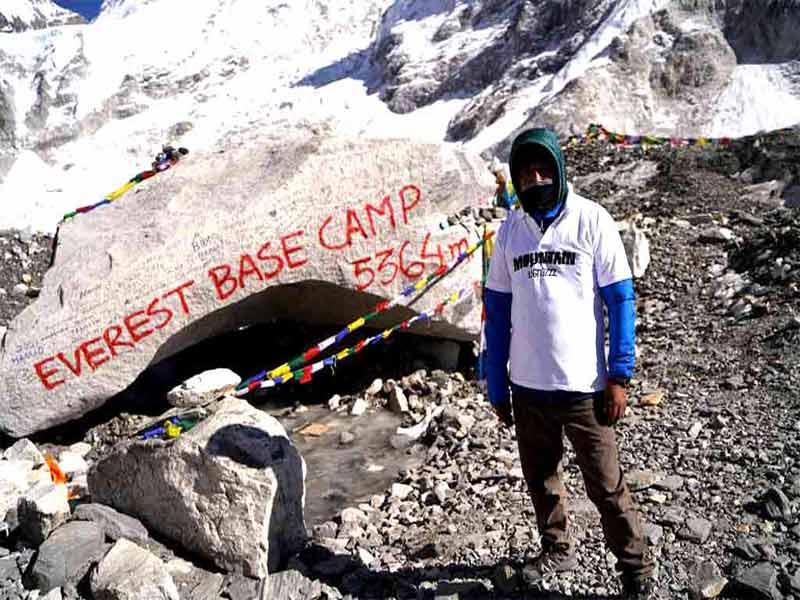
Lobuche to Everest Base Camp (5,364 m)
From Lobuche, the trail continues toward Gorak Shep. After a short break, trekkers continue toward Everest Base Camp.
The trail follows the rocky terrain beside the Khumbu Glacier. Everest Base Camp is one of the most iconic destinations in the Himalayas.
During climbing seasons, expedition camps can be seen around the base camp area. The surrounding peaks and glacier landscape create an unforgettable Himalayan experience.
Kala Patthar (5,545 m)
Kala Patthar is one of the major highlights of the Everest Base Camp journey. The early morning hike provides an opportunity to see sunrise over the world’s highest mountains.
From the summit of Kala Patthar, trekkers can enjoy impressive views of Mount Everest, Nuptse, Pumori, Ama Dablam, and the Khumbu Glacier.
After enjoying the mountain panorama, the trail descends toward Gorak Shep and continues toward the lower Khumbu Valley.
Return Toward Dingboche and Chhukung (4,730 m)
After completing Everest Base Camp and Kala Patthar, the route returns through Lobuche and Dingboche.
From Dingboche, the trail heads toward Chhukung, a small settlement situated at approximately 4,730 meters. Chhukung is the main access point for Island Peak climbing.
Here, the trekking journey changes into a mountaineering adventure.
Island Peak Climbing Preparation
Before climbing Island Peak, climbers receive a detailed briefing from the climbing guide.
Equipment checking at Chhukung
- Harness fitting
- Crampon practice
- Rope techniques
- Ice axe handling
- Ascending and descending fixed ropes
- Basic glacier travel
- Climbing safety procedures
- Summit-day preparation
The exact training program depends on the experience and ability of the climbing group.
Chhukung to Island Peak Base Camp (4,970m)
The trail from Chhukung to Island Peak Base Camp crosses the Imja Valley and gradually enters a more rugged glacial environment.
Island Peak becomes increasingly impressive as the route approaches the base camp. The area is surrounded by dramatic Himalayan peaks and glaciers.
At base camp, the climbing team prepares for the summit attempt. Depending on the itinerary and conditions, climbers may spend sufficient time resting and preparing before summit day.
Island Peak Summit (6,189 m)
Summit day usually begins very early. Climbers ascend gradually while following the route established by the climbing team.
The upper section involves glacier terrain and steeper climbing, where crampons, ropes and other mountaineering equipment may be required. Fixed ropes can be used on steeper sections depending on current route conditions.
The final ascent requires concentration, endurance and careful movement.
Reaching the 6,189-meter summit of Island Peak is a major achievement. From the summit, climbers can enjoy spectacular Himalayan views, including Lhotse, Nuptse, Ama Dablam, Baruntse and surrounding peaks.
After spending appropriate time at the summit, the team descends carefully toward Base Camp and then continues toward Chhukung or another suitable overnight location according to the itinerary and conditions.
Island Peak Climbing Difficulty
Island Peak is considered a challenging trekking peak rather than a simple trekking destination.
The trek to Island Peak requires the ability to walk for several hours at high altitude, while the climbing section requires additional physical and technical preparation.
High altitude Island Peak
- Long summit day
- Cold temperatures
- Steep sections
- Glacier conditions
- Use of crampons and ropes
- Variable mountain weather
Physical and mental endurance
Previous mountaineering experience is helpful but not always essential for properly prepared climbers. Beginners should undertake the climb with experienced guides and appropriate training.
Best Season for Trekking and Climbing
The best seasons for the Everest Base Camp Trek with Island Peak Climbing are generally spring and autumn.
Spring: March to May
Spring provides relatively stable weather, good visibility, and suitable climbing conditions. April and May are particularly popular for Himalayan expeditions.
Autumn: September to November
Autumn is another excellent season. The monsoon normally clears the atmosphere, producing excellent mountain visibility and relatively stable trekking conditions.
Winter Season
Winter is possible for experienced and well-equipped climbers, but temperatures can be extremely cold, and some sections may be affected by snow and difficult weather.
Monsoon Season
June to August is generally less favorable because of rain, clouds, and possible flight disruptions. However, the Everest region can still be visited by experienced trekkers who are prepared for changing weather.
Permits Required
The Everest Base Camp and Island Peak journey requires appropriate trekking and climbing permits.
Sagarmatha National Park entry permit
Khumbu Pasang Lhamu Rural Municipality permit
Island Peak climbing permit from Nepal Mountaineering Assocaition (NMA)
Applicable local and expedition documentation
Permit fees and regulations can change, so the exact costs should be confirmed for the current climbing season.
Accommodation during the Trek & Expedition
Accommodation during the trek is generally provided in local teahouses and lodges.
Rooms are normally basic and may include twin beds, mattresses, blankets, and shared bathroom facilities. Higher in the mountains, accommodation becomes more basic.
At Island Peak Base Camp, accommodation is generally provided in expedition-style tents.
A sleeping bag suitable for high-altitude conditions is strongly recommended.
Food During the Trek & Climbing
- Dal bhat
- Rice
- Noodles
- Pasta
- Potatoes
- Soup
- Tibetan bread
- Eggs
- Vegetables
- Porridge
- Pancakes
- Tea and coffee
Dal bhat is particularly popular because it provides a substantial combination of rice, lentils, and vegetables.
During the climbing section, the food arrangements may be different and can include specially prepared expedition meals.
Equipment List for Trek & Expedition.
- Trekking backpack
- Daypack
- Trekking boots
- Trekking poles
- Sleeping bag
- Headlamp
- Water bottles or hydration system
- Sunglasses
- Sunscreen
- Personal first-aid kit
- Water purification tablets or treatment system
- Duffel bag
- Clothing
- Base layers
- Thermal underwear
- Fleece jacket
- Down jacket
- Waterproof jacket
- Waterproof trousers
- Trekking trousers
- Warm hat
- Sun hat
- Gloves
- Warm socks
- Buff or neck warmer
- Climbing Equipment
- Mountaineering boots suitable for the route
- Crampons
- Ice axe
- Climbing harness
- Climbing helmet
- Ascender
- Carabiners
- Prusik sling
- Descender
- Climbing gloves
- Mountaineering sunglasses or goggles
The exact climbing equipment required should be confirmed with the climbing operator because equipment requirements can vary according to current route conditions and the climbing team’s system.
Physical Fitness and Preparation
Good physical preparation is highly recommended.
Training should include regular walking, hiking, stair climbing, cardiovascular exercise, and strength training. Long uphill hikes with a backpack are particularly useful.
The most important preparation is not simply speed but endurance. Climbers should be comfortable walking for several hours on consecutive days.
Mental preparation is equally important because high-altitude climbing can be physically demanding and weather conditions can change quickly.
Altitude and Acclimatization
Altitude is one of the biggest challenges of this journey.
The route gradually increases from Lukla at approximately 2,840 meters to Everest Base Camp at approximately 5,364 meters and Island Peak at 6,189 meters.
The itinerary should include appropriate acclimatization and rest periods. Climbers should communicate immediately with their guide if they experience symptoms such as severe headache, unusual weakness, dizziness, vomiting, or difficulty breathing. The climbing guide may change the itinerary or stop an ascent when conditions are unsafe.
Island Peak Climbing with Professional Guides
An experienced climbing guide plays an important role throughout the expedition.
- Route navigation
- Altitude management
- Climbing techniques
- Equipment checks
- Rope systems
- Weather assessment
- Summit planning
- Safety management
- Communication with the expedition team
Professional support makes the journey more organized and allows climbers to focus on the experience while following appropriate safety procedures.
Everest Base Camp Trek with Island Peak Cost
The total cost depends on the itinerary, group size, season, permits, accommodation, guide and porter services, climbing equipment, domestic flights, and other services.
A package commonly includes trekking permits, climbing permits, guide and porter services, accommodation during the trek, meals according to the selected package, domestic flights or transportation, climbing equipment, and logistical support.
Because government fees, flight prices, and local operating costs can change, the exact package price should be confirmed before booking.
- Airport arrival and departure arrangements
- Kathmandu hotel accommodation according to the package
- Kathmandu-Lukla-Kathmandu flight
- Experienced trekking guide
- Experienced Island Peak climbing guide
- Porter service
- Sagarmatha National Park permit
- Local trekking permit
- Island Peak climbing permit
- Teahouse accommodation during the trek
- Tent accommodation during the climbing section
- Meals according to the package
- Climbing equipment provided by the company where specified
- Guide and porter insurance
- Necessary trekking and climbing logistics
- Government taxes and service charges
This combined adventure offers much more than a standard Everest Base Camp trek.
It provides the opportunity to experience the cultural and natural highlights of the Everest region while also gaining practical high-altitude climbing experience.
The itinerary allows trekkers to progressively adapt to altitude before attempting Island Peak. Visiting Everest Base Camp and Kala Patthar first also makes the climbing experience more meaningful because participants have already experienced the demanding high-altitude environment of the Khumbu.
For adventure travelers who want to challenge themselves beyond trekking, Island Peak provides an excellent introduction to Himalayan peak climbing.
Conclusion Trekking -Climbing
The Everest Base Camp Trek with Island Peak Climbing is an unforgettable Himalayan adventure combining legendary trekking with a challenging peak ascent. From the exciting flight to Lukla and the colorful streets of Namche Bazaar to the peaceful Tengboche Monastery, the dramatic Everest Base Camp landscape and the summit of 6,189-meter Island Peak, every stage offers a unique experience.
With proper acclimatization, physical preparation, quality equipment, professional guides, and careful attention to mountain conditions, the journey can become one of the most rewarding adventures in Nepal.
The combination of Everest Base Camp, Kala Patthar and Island Peak is particularly suitable for adventurous trekkers who want to experience both the cultural richness of the Khumbu and the excitement of Himalayan mountaineering.
Frequently Asked Questions
1. How high is Island Peak?
Island Peak, also known as Imja Tse, is approximately 6,189 meters high.
2. Is Island Peak harder than Everest Base Camp Trek?
Yes. Island Peak requires additional physical endurance and basic mountaineering skills because it involves higher altitude and technical climbing sections.
3. Do I need previous climbing experience?
Previous climbing experience is beneficial, but a properly prepared and physically fit trekker can attempt Island Peak with professional climbing support and appropriate training.
4. How difficult is the Everest Base Camp with Island Peak itinerary?
It is a challenging adventure involving long trekking days, high altitude, and a demanding summit attempt.
5. What is the best season for Island Peak climbing?
Spring and autumn are generally considered the best seasons because of more favorable weather and visibility.
6. How high is Everest Base Camp?
Everest Base Camp is approximately 5,364 meters above sea level.
7. How high is Kala Patthar?
Kala Patthar is approximately 5,550 meters high.
8. Where is Island Peak located?
Island Peak is located in the Imja Valley of the Everest region, close to Chhukung.
9. Do I need climbing equipment?
Yes. Depending on current route conditions, equipment such as crampons, harness, helmet, ice axe, and ascender may be required.
10. Is a guide necessary for Island Peak?
Professional climbing support is strongly recommended for safety, route management, equipment use, and summit planning.
11. What kind of accommodation is available?
Teahouse accommodation is normally used during the trek, while tents are used for the Island Peak climbing section.
12. What food is available?
Teahouses provide meals such as dal bhat, noodles, pasta, rice, potatoes, soup, eggs, vegetables, bread, and hot drinks. Climbing meals are arranged according to expedition requirements.
13. Can the summit attempt be canceled because of weather?
Yes. Mountain safety takes priority. The climbing guide may delay or cancel the summit attempt if weather, snow, route, or other conditions are unsafe.
14. What fitness level is required?
A good level of cardiovascular fitness and endurance is required. Regular hiking, uphill walking, and strength training before the trip are recommended.
15. Can I combine Everest Base Camp and Island Peak in one trip?
Yes. Combining Everest Base Camp with Island Peak is a popular way to experience both high-altitude trekking and Himalayan peak climbing in a single expedition.
| Day | Destination | Altitude | Walking Hour | Accommodation |
|---|---|---|---|---|
| 1 | Arrival Kathmandu and transfer to hotel | 1300 | One hour drive from airport to hotel | Hotel in Kathmandu |
| 2 | Trekking & Climbing Trip preparation day in Kathmandu | 1300 | Kathmandu | Hotel in Kathmandu with B&B Service |
| 3 | From Kathmandu flight to Lukla and trek to Phakding | 2610 | 3-hours | Lodge service in Pakding |
| 4 | Phakding to Namche Bazaar | 3440 | 5-hours | Lodge Service in Namche |
| 5 | Visit to Everest view hotel and back to Namche | 3440 | 3-4-hours | Lodge Service in Namche |
| 6 | Namche- Tengboche | 3860 | 5-hours | Lodge Service in Tengboche |
| 7 | Tengboche -Dingboche | 4410 | 5-hours | Lodge Service in Dingboche |
| 8 | Dingboche-Lobuche | 4910 | 4-5-hours | Lodge Service in Lobuche |
| 9 | Lobuche -Gorakshep-Visit to Everest Base Camp (6364),and back to GorakShep | 5140 | 6-7-hours | Lodge Service in Gorakshep |
| 10 | Gorakshep High up to Kalapather and back to Lobuche | 4930 | 6-hours | Lodge Service in Lobuche |
| 11 | Lobuche -Chhukung via Kongmala Pass (5535m) | 4730 | 7-8-hours | Lodge Service in Chhukung |
| 12 | In Chhukung you are preparation for Mountain climbing Equipment | 4730 | Chhukung | Lodge Service in Chhukung |
| 13 | Chhukung -Island Peak Base Camp | 4970 | 5-6-hours | Tent Camping Service in Base camp |
| 14 | Base Camp to Climbing Island Peak and back to Chhukung | 6189 Meters Summit | 10-11-hours | Lodge Service in Chhukung |
| 15 | Chhukung- Deboche | 3820 | 5-6-hours | Lodge Service in Tengboche |
| 16 | Tengboche-Namche | 3440 | 6-hours | Lodge Service in Jorsale |
| 17 | Namche-Lukla | 2800 | 5-hours | Lodge Service in Lukla |
| 18 | Flight Back to Kathmandu from Lukla | 1300 | 35 Minutes fly from Lukla | Hotel in Kathmandu |
| 19 | Free day at Kathmandu | 1300 | Kathmandu | Hotel includes with breakfast services |
| 20 | After Breakfast Drive to airport from Hotel | Depature | Flight to Country | Your Home |
Everest base camp Trek with island Peak cost 2370 $ Per person
Cost Includes
- Pickup from Kathmandu International Airport according to your arrival date and time.
- 4 nights' accommodation in Kathmandu, including breakfast.
- 16 nights' teahouse accommodation during the trek.
- 1 night of accommodation in a tented camp (Island Peak Base Camp).
- Flight ticket to Lukla from Kathmandu or Ramechhap, including airport transportation.
- Three meals (breakfast, lunch, and dinner) during the trek and climbing.
- Tea or coffee during the trek to Everest Base Camp with Island Peak climbing.
- An English-speaking professional trekking guide and his expenses for salary, food, accommodation, insurance, and so on (Lukla to Lukla).
- Comprehensive first aid kit.
- All necessary permits for the trekking.
- Island Peak climbing permit.
- Climbing guide and other necessary staff for Island Peak (Island Peak Base Camp to Base Camp).
- One climbing guide and one porter from Lukla to Lukla, with the guide coming from Kathmandu.
- Equipment for climbing, such as tents, mattresses, climbing rope, ice screws, and snow bars for Island Peak climbing.
- Equipment fees for the climbing guide.
- The entire set of camping gear, including the toilet tent, cooking tent, and dining tent.
- Personal climbing gear per person, such as crampons, harness, ice axe, screw gate, karabiners, climbing boots, sleeping bag, and helmet from Chhukung.
- Garbage deposit 500 USD.
Everest base camp Trek with island Peak Cost Excludes
- International airfare, visa, and travel insurance.
- Extra nights’ accommodation, as well as lunch and dinner in Kathmandu.
- Accommodation in Kathmandu or on the trek for any reason (early arrival or delay, early return from the trek for any reason).
- Personal expenses for snacks, boiling water for bottles, hot and cold beverages, alcohol, hot showers, Wi-Fi, phone calls, and battery recharge fees.
- Personal trekking equipment.
- Extra expenses resulting from delays or consequences due to events outside of our control, such as landslides, bad weather, changes in the schedule due to safety concerns, illness, changes in governmental regulations, strikes, etc.
- Tips for the guide and porter are expected from trekkers involved in Island Peak climbing with Everest Base Camp trek.
Everest base camp (5,364m) and Island peak (6,189m)
From September 10 to November 10 and March 1 to June 10
Daytime temperatures are normal and nighttime temperatures are 5-15 degrees.
Everest base camp to Island peak climbing depending of the season.
The fixe rope, the main rope, the ice hummer, the Jummer,climbing boots and other equipment are included.
During the trek, we walked five to seven hours per day
You can rent climbing equipment at Chhukung,
Passport photocopy (should be very clear with color scan) and validity minimum 6 months. 2 passport size photo. Occupation. Home details address. Insurance copy
Kitchen Equipment: Trekking tents, Dining tent, Kitchen Tent, Toilet Tent, Table and chairs, Mattresses during the trekking & Peak climbing period. Climbing Rope, Ice screws, Snow bag. Staff: 1 Cook, 1 Kitchen, one climbing guide and helper Base Camp Base insurance for Nepalese teams. Our service charge. Equipment Fees for the climbing guide Climbing peak permit meals from Base Camp to Base Camp. Day 11: Meeting with our climbing guide at Chhukung and he will be a briefing about Island peak climbing how to go base camp and how to use the mountaineering equipment | Stay overnight at lodge.meals your own. Day 12: Breakfast, Pack Lunch and dinner Base camp. Day 13: Breakfast & pack Lunch Climbing day. One poter from Lukla to Lukla. Plane ticket from Kathmandu,Lukla to Kathmandu.
Feels like you have a hangover & feeling ill / Headache / Shortness of Breath / Loss of appetite / Sleep not good / Vomiting / Fever / etc.
Women are welcome to travel alone to Nepal, but you must hire a guide or porter from an authorized trekking agency since these companies are fully responsible for trekking and mountain climbing. While on the tea house trek and during the climbing trek, the agency staff will provide you with a single room tent.
Namaste, Frist inquiry from your trip you will have direct access to experienced and professional climbing guides advice or to ask questions on your arrival Kathmandu meet with us we will brief you how to climbing Nepal trekking peaks. If you travel with us then, of course, we will provide qualified Guides who have experience high altitude trekking and climbing guides. We provide all the trekking and climbing staff insurance as well. You can speak directly with us about your proposed climbing Nepal Trekking peaks the will brief you on our experience climbing guide who has many times summit Nepal Trekking peaks
Altitude Chart