Upper Dolpo Circuit trek -
Introduction to the Upper Dolpo Circuit Trek
The Upper Dolpo Circuit Trek is one of the most remote, adventurous, and culturally fascinating trekking experiences in Nepal. Located in the far-western region of the Himalayas, Upper Dolpo offers spectacular mountain landscapes, ancient Tibetan Buddhist culture, traditional villages, turquoise alpine lakes, deep valleys, high mountain passes, and vast wilderness areas. This trek is ideal for experienced trekkers who want to explore an isolated Himalayan region far from the busy trails of Everest and Annapurna.
Upper Dolpo is famous for its untouched natural beauty, traditional Tibetan-style settlements, centuries-old monasteries, and the unique lifestyle of local people. The region lies within Shey Phoksundo National Park, Nepal’s largest national park, which protects diverse wildlife, forests, dramatic landscapes, and the beautiful Phoksundo Lake.
The Upper Dolpo Circuit Trek is more than a mountain journey. It is an opportunity to discover ancient traditions, experience authentic Himalayan hospitality, cross challenging high passes, and explore a region where traditional lifestyles remain closely connected to the Tibetan plateau.
During the trek, travelers can visit places such as Dunai, Chhepka, Phoksundo Lake, Saldang, Yangjer Gumba, and Shey Gompa, depending on the selected itinerary. The route may also include remote settlements such as Dho Tarap and High Mountain passes connecting the inner valleys of Dolpo.
Because of its remoteness, restricted-area regulations, high altitude, and limited accommodation facilities, the Upper Dolpo Circuit Trek requires careful planning, an experienced trekking team, and sufficient time for acclimatization.
Location of the Upper Dolpo Circuit Trek
Upper Dolpo lies in Dolpa District in Karnali Province, northwestern Nepal, near the Tibetan border. Much of the trekking region is protected by Shey Phoksundo National Park, which contains dramatic Himalayan terrain, high-altitude plateaus, forests, rivers, and alpine lakes.
The journey generally begins in Kathmandu, followed by a flight to Nepalgunj and another flight to Juphal, subject to flight operations and weather conditions. From Juphal, trekkers walk toward Dunai, the district headquarters of Dolpa, before entering the remote valleys of Dolpo.
The route passes through isolated settlements, narrow river valleys, high mountain passes, and traditional villages where Tibetan-influenced culture remains strong. Depending on the itinerary, the circuit may connect the Phoksundo Lake area with Dho Tarap, Saldang, Shey Gompa, and other settlements before returning toward Juphal.
The exact route depends on trail conditions, available camping locations, restricted-area permit arrangements, and the trekking duration.
Major Highlights of the Upper Dolpo Circuit Trek
The Upper Dolpo Circuit Trek offers a remarkable combination of natural beauty, cultural discovery, and challenging Himalayan adventure.
Major highlights include:
Exploring one of Nepal’s most remote trekking destinations.
Visiting the beautiful turquoise waters of Phoksundo Lake.
Discovering traditional Tibetan-influenced villages and ancient monasteries.
Crossing High Mountain passes with spectacular Himalayan views.
Exploring Shey Gompa and the surrounding sacred landscapes.
Visiting remote settlements such as Saldang and Dho Tarap, depending on the route.
Experiencing the traditional lifestyle of Dolpo communities.
Walking through Shey Phoksundo National Park.
Enjoying dramatic landscapes of the Rocky Mountains, deep valleys, and high-altitude plateaus.
Observing the region’s distinctive Buddhist traditions and ancient Bon cultural heritage.
Camping beneath clear Himalayan skies in isolated mountain valleys.
Experiencing a challenging trek away from crowded commercial trekking routes.
Phoksundo Lake – The Jewel of Dolpo
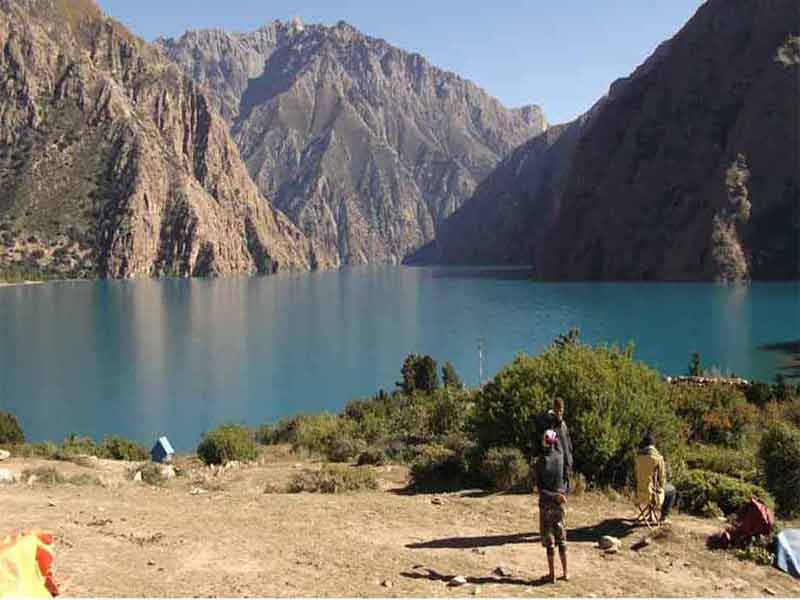
Phoksundo Lake is one of the most beautiful natural attractions in Nepal and a major highlight of the Upper Dolpo trekking region. Its striking turquoise-blue water contrasts with the surrounding cliffs, barren mountains, and forested slopes.
The lake lies at approximately 3,611 meters above sea level and is considered sacred by local communities. Its peaceful atmosphere and extraordinary colors make it one of the most memorable places along the trekking route.
The trail toward Phoksundo passes through forested areas, traditional villages, and dramatic landscapes. Nearby, trekkers may visit traditional settlements and observe local cultural practices.
The lake area also offers opportunities to appreciate the natural environment of Shey Phoksundo National Park. Trekkers should respect local religious customs and avoid activities that could disturb the sacred landscape.
Shey Gompa and Crystal Mountain
Shey Gompa is an important spiritual destination in Upper Dolpo. Located in a remote high-altitude landscape, the monastery is associated with Tibetan Buddhist traditions and the religious history of the region.
The surrounding area is known for its rugged mountains and sacred sites. Crystal Mountain, locally associated with spiritual pilgrimage traditions, is particularly important to visitors who follow Buddhist practices.
Depending on the itinerary, trekkers may explore the Shey Gompa area, visit nearby settlements, and learn about the religious traditions preserved by local communities.
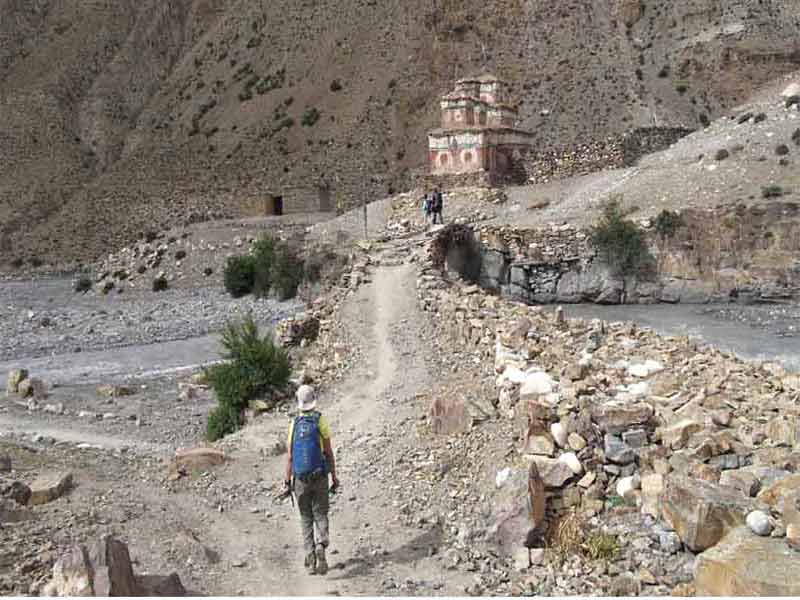
The region’s monasteries, prayer flags, mani walls, and traditional architecture provide valuable insight into the cultural identity of Upper Dolpo.
Traditional Villages and Local Culture
Upper Dolpo is home to communities whose culture has strong historical connections with Tibet. Many villages preserve traditional architecture, Buddhist monasteries, local festivals, and agricultural practices adapted to the high-altitude environment.
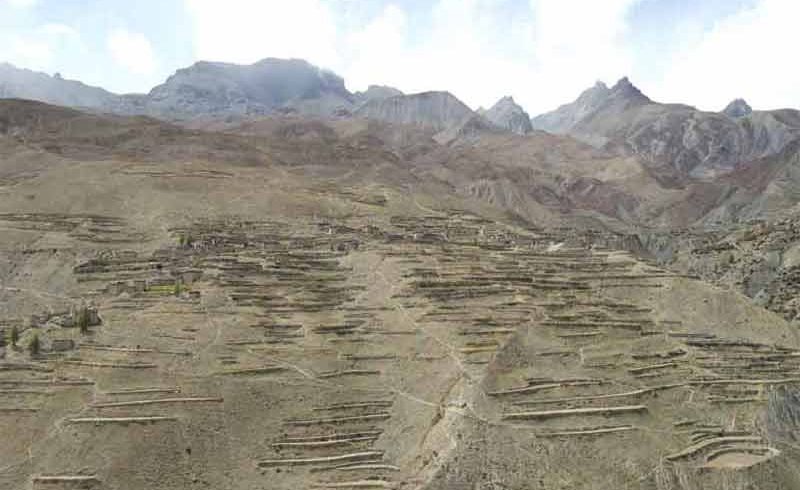
Saldang is one of the best-known settlements in Upper Dolpo. It is surrounded by dry mountain landscapes and traditional fields, with houses built in a style suited to the region’s climate.
Dho Tarap is another important settlement, known for its traditional culture and distinctive high-altitude valley environment. Depending on the selected circuit, trekkers may pass through Dho Tarap or nearby villages.
Local people traditionally depend on agriculture, livestock, trade, and seasonal activities. Barley, buckwheat, and other crops suited to the short growing season are important in some settlements.
Visitors can learn about local customs, Buddhist practices, traditional food, and the challenges of living in remote Himalayan communities. Travelers should always ask permission before photographing people, religious ceremonies, or private property.
Difficulty of the Upper Dolpo Circuit Trek
The Upper Dolpo Circuit Trek is considered a strenuous and challenging high-altitude trek. It is best suited to experienced trekkers who are comfortable walking for several hours each day on uneven trails and steep mountain terrain.
The main challenges include high altitude, long walking days, remote trails, limited accommodation, cold nights, and unpredictable mountain weather. Some routes cross passes above 5,000 meters, where snow and strong winds can make walking more difficult.
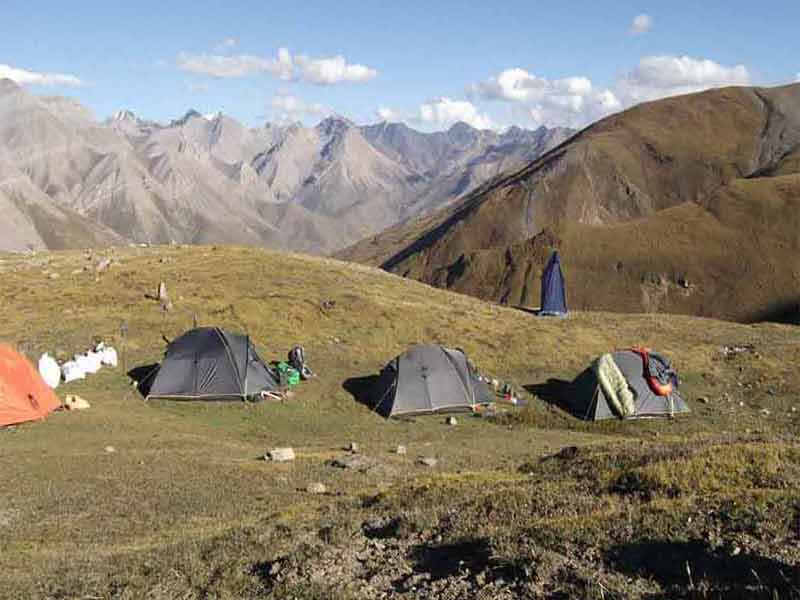
Unlike popular lodge-based trekking routes, Upper Dolpo requires camping on many sections. Trekkers must be prepared for basic facilities and limited access to shops, medical services, and communication networks.
Previous high-altitude trekking experience is strongly recommended. A gradual itinerary, adequate rest, and appropriate acclimatization days are essential.
Maximum Altitude and Mountain Passes
The highest altitude depends on the route chosen for the Upper Dolpo Circuit Trek. Many itineraries include high mountain passes above 5,000 meters.
- Kang La: approximately 5,350 meters,
- Jeng La: approximately 5,090 meters.
These elevations should be checked against the exact trekking map and itinerary before the package is published or booked.
High-pass crossings require suitable equipment, good weather planning, and an experienced guide. Snow, strong winds, and poor visibility can affect travel, so the trekking team should be prepared to adjust the schedule when necessary.
Best Time for the Upper Dolpo Circuit Trek
Spring (May–June): Spring offers longer daylight hours and beautiful mountain scenery. Some high passes may still have snow, especially early in the season.
Summer (July–August): Upper Dolpo lies in the Himalayan rain-shadow region, making it a useful destination during Nepal’s monsoon period. However, domestic flights may be delayed by poor weather, and rain or snow can still affect particular trails.
Autumn (September–October): Autumn is another excellent season, often offering clear mountain views and suitable trekking conditions. It is a popular period for exploring the remote valleys of Dolpo.
Winter (November–April): Winter is generally unsuitable for the full circuit because of severe cold, snow-covered passes, and difficult travel conditions.
For most trekkers, May to October provides the main trekking window, but exact departure dates should be selected according to current weather, trail conditions, and flight availability.
Permits Required for Upper Dolpo Circuit Trek
Upper Dolpo is a restricted trekking region, and visitors must obtain the required permits before entering the designated areas.
The main permits and arrangements generally include:
Upper Dolpo Restricted Area Permit: Required for designated sections of Upper Dolpo.
Lower Dolpo Restricted Area Permit: May be required if the selected route enters the applicable restricted area.
Shey Phoksundo National Park Entry Permit: Required for access to the national park.
The permits needed depend on the route, entry and exit points, and current government regulations. Restricted-area trekking generally requires an authorized trekking agency and a licensed guide.
Permit fees and requirements may change, so trekkers should confirm the current rates and documentation requirements with their trekking agency before departure.
Accommodation during the Trek
Accommodation varies throughout the Upper Dolpo Circuit Trek. Kathmandu and Nepalgunj offer hotels ranging from standard tourist accommodation to more comfortable properties.
Some villages in Dolpo have simple local lodges or guesthouses, but accommodation is limited in many remote sections of Upper Dolpo. Camping is therefore an essential part of most full-circuit itineraries.
A camping package usually provides tents, sleeping arrangements, kitchen equipment, dining facilities, and a support team. Camps are established at suitable locations along the route.
Trekkers should bring or rent a sleeping bag suitable for cold mountain conditions. Nights can be very cold at high elevations, even during the main trekking seasons.
Food and Drinking Water
Food is prepared by the trekking kitchen team on camping sections, while simple local meals may be available in villages with lodges.
- Dal Bhat,
- Rice, lentils, and vegetables.
- Noodles and noodle soup.
- Fried rice and potato dishes.
- Tibetan-style bread and soups.
- Porridge, eggs, and other breakfast foods.
- Tea and coffee.
Drinking water should be boiled, filtered, or treated with a reliable purification method. Carrying reusable water bottles helps reduce plastic waste and supports responsible trekking practices.
Transportation to Upper Dolpo
The standard access route generally involves a flight from Kathmandu to Nepalgunj, followed by a connecting flight to Juphal, and then Nepalgunj to Kathmandu.
Flights are subject to weather, airline schedules, and operational conditions. Because Juphal is located in a mountainous region, delays and cancellations are possible.
Trekkers should allow additional days for possible disruptions and confirm whether domestic flights are included in their package price.
Guide and Porter Services
A licensed and experienced guide is essential for a well-organized Upper Dolpo Circuit Trek. The guide assists with navigation, route planning, cultural interpretation, camping arrangements, and communication with local communities.
Porters and camping staff can transport food supplies, tents, and group equipment, depending on the package arrangement. Larger expeditions may also require a cook and kitchen assistants.
A professional trekking agency should arrange appropriate staff insurance, fair wages, suitable equipment, and reasonable loads. These measures help protect both trekkers and the local trekking crew.
Wildlife and Natural Environment
Shey Phoksundo National Park protects an extraordinary range of Himalayan environments, including forests, alpine meadows, rocky cliffs, rivers, and High Mountain plateaus.
Wildlife in the wider region includes blue sheep, Himalayan marmots, and various bird species. Snow leopards also inhabit parts of the broader Himalayan ecosystem, although sightings are rare.
The remote setting makes Upper Dolpo attractive to nature lovers and photographers. Trekkers should respect park regulations, avoid disturbing wildlife, and carry out all non-biodegradable waste.
Responsible trekking helps preserve the region’s natural beauty and supports the long-term protection of its cultural heritage.
Equipment and Packing List
Proper equipment is essential for the cold temperatures and changing weather conditions of Upper Dolpo.
- Strong trekking boots with good grip.
- Warm insulating jacket and waterproof outer layers.
- Thermal base layers and trekking trousers.
- Warm gloves, hat, and sun hat.
- Sunglasses and high-SPF sunscreen.
- Cold-weather sleeping bag.
- Daypack and waterproof pack cover.
- Trekking poles.
- Headlamp with spare batteries.
- Reusable water bottles and purification supplies.
- Personal toiletries and quick-drying towel.
- First-aid supplies and personal medication.
- Power bank and charging equipment.
- Camp footwear and warm socks.
- Snacks for long walking days.
Your trekking agency should confirm which camping equipment, sleeping mats, tents, and duffel bags are supplied in the package.
Health, Safety, and Acclimatization
Altitude is one of the main risks during the Upper Dolpo Circuit Trek. Trekkers should follow a gradual ascent, take appropriate acclimatization days, and report any symptoms to their guide.
Headache, nausea, dizziness, and unusual fatigue may indicate altitude-related illness. Severe or worsening symptoms require prompt medical assessment and descent when necessary.
Because Upper Dolpo is far from major hospitals, comprehensive travel insurance covering high-altitude trekking and emergency helicopter evacuation is strongly recommended.
Trekkers should consult a qualified healthcare professional before departure regarding altitude travel and individual medical considerations.
Frequently Asked Questions (FAQs)
How long does the Upper Dolpo Circuit Trek take?
It generally takes around 22–30 days, depending on the route and acclimatization schedule.
Is Upper Dolpo a restricted trekking area?
Yes. Designated sections require restricted-area permits and compliance with current government regulations.
Do I need a guide?
A licensed guide and authorized trekking agency are generally required for restricted-area trekking.
What is the highest altitude?
The highest point depends on the selected route, with some passes exceeding 5,000 metres.
Is camping necessary?
Yes, camping is required on many sections because accommodation is limited.
What is the best season?
May to October is generally the main trekking window, subject to weather and trail conditions.
Is the trek suitable for beginners?
It is generally better suited to experienced trekkers who have prepared for remote, high-altitude walking.
Can I visit Phoksundo Lake?
Yes, many Upper Dolpo itineraries include Phoksundo Lake. Confirm the exact route when booking.
Are flights included in the package?
This depends on the agency’s quotation. Confirm whether Kathmandu–Nepalgunj–Juphal flights and return flights are included.
Conclusion
The Upper Dolpo Circuit Trek is an extraordinary journey through one of Nepal’s most remote Himalayan regions. From the turquoise waters of Phoksundo Lake to traditional villages, ancient monasteries, and spectacular high mountain passes, the trek offers a unique combination of wilderness adventure and cultural discovery.
Although the journey requires careful preparation, restricted-area permits, camping support, and appropriate acclimatization, it rewards experienced trekkers with remarkable landscapes and authentic Himalayan experiences.
With a well-planned itinerary, responsible local guides, suitable equipment, and enough time for unexpected delays, the Upper Dolpo Circuit Trek can become one of the most memorable trekking adventures in Nepal.
| Day | Destination | Altitude | Walking Hour | Accommodation |
|---|---|---|---|---|
| 1 | Arrival Kathmandu and transfer to hotel | 1300 | one hour drive from airport to hotel | Hotel in Kathmandu |
| 2 | Permit issuing day in Kathmandu. | 1300 | one hour drive from airport to hotel | Hotel in Kathmandu with B& B Service |
| 3 | Flight to Nepalgunj | 492 | 0ne hour flight | Hotel in Nepalgunj with Dinner |
| 4 | Nepalgunj to Juphal flight | 2200 | 2-3-hours | tent Camping |
| 5 | Extra day | Extra day | Extra day | Tent Camping |
| 6 | Dunai to Chhepka | 2678 | 6-hours | Tent Camping |
| 7 | Chhepka to Amchi Hospital | 3100 | 6-hours | Tent Camping |
| 8 | Amchi Hospital to Phoksundo Lake | 3600 | 6-hours | Tent camping |
| 9 | Visit to Lake & Village | 3600 | 3-4-hours | Tent camping |
| 10 | Phoksundo Lake to Phoksundo Khola | 3740 | 5-hours | Tent camping |
| 11 | Phoksundo Khola to Nangdala Base camp | 4717 | 5-hours | Tent camping |
| 12 | Nagdala pass and Shey Gompa | 4126 | 6-hours | Tent camping |
| 13 | Shey Gompa to Num Gaun | 4360 | 6-hours | Tent Camping |
| 14 | Num Gaun to Saldang | 3770 | 5-hours | Tent Camping |
| 15 | Rest day | 3770 | Visit | Tent Camping |
| 16 | Saldang to Yangzer Gompa | 3855 | 6-hours | Tent Camping |
| 17 | Yangzer Gompa to Sibu | 3942 | 6-hours | Tent Camping |
| 18 | Sibu to Jyangtala Base camp | 4700 | 6-hours | Tent Camping |
| 19 | Jyangtala pass and Tokyu | 4240 | 6-7-hours | Tent Camping |
| 20 | Tokyu to Dho trap | 3944 | 5-6-hours | Tent Camping |
| 21 | Dho trap to Kama Kharka | 3800 | 5-6-hours | Tent Camping |
| 22 | Kama Kharka to Khani Gaun | 2550 | 5-6-hours | Tent Camping |
| 23 | Khani Gaun to Tarakot | 2281 | 5-6-hours | Tent Camping |
| 24 | Tarakot to Dunai | 2200 | 5-hours | Tent Camping |
| 25 | Dunai to Juphal | 2502 | 2-3-hours | Tent Camping |
| 26 | Juphal to Nepalgunj flight | 1300 | Nepalgunj to Kathmandu flight | Hotel in Kathmandu |
| 27 | Free day at Kathmandu | 1300 | Free day | Hotel in Kathmandu with B&B Service |
| 28 | Departure Day | After breakfast drive to Kathmandu international airport for your final departure. | Flight out from Nepal | At your home |
Upper Dolpo circuit trek cost $ 4100 Per person
cost includes
- Arrival and departure Transport Car/Van/ Hiace.
- Hotel in Kathmandu 4 Nights with bed and breakfast.
- Dining Tent, Toilet tent, Two Men Tent, Mattress, and Kitchen Equipment.
- BREAKFAST/ Eggs Items, Toast or Tibetan bread or Pancakes or Chapati, with honey, jam, or butter.or Muesli.Cornflakes with hot Milk.
- LUNCH/ Nepali Dalbhat, Momo, or other (Items).
- DINNER/ (Soup Items) Vege or Mushroom or Tomato or Chicken or Noodles with papad or popcorn, Dinner, Spaghetti, Sandwich or Chips, Pizza or Macaroni or Chwmen or spring roll.
- HOT DRINKS/ Balck tea with milk, Black coffee with milk, Lemon tea, or hot chocolate.
- Licenses ‘holder Trekking Guide, Cook and Necessary Porters insurance, food, Salary, and accommodation.
- Hotel in Nepalgunj 2 Nights with dinner.
- Lower Dolpo Trekking Permit 20: US$ per person.
- 10 Days Upper Dolpo Special Trekking Permit 500: US$ per person.
- Dolpo National park Permit.3500 Nepali RS Per person..
- Kathmandu-Nepalgunj Juphal-Kathmandu -470-US$ per person.
- Lower and Upper Dolpo Trekking Cost Excludes 2587 $ per person
- Lunch, Dinner in Kathmandu
Upper Dolpo Circuit trek cost excludes
- Your Travel Insurance Policy encase if the accident or high altitude sickness.
- Your Trekking Equipment.
- Nepal entry visa fee 15 Days 30 US$ and for the 30 Days 50 US$, you can obtain your visa in Kathmandu airport if you have not taken from your country.
- Soft and hard drinks Such as Beer, Coke, Fanta and Mineral waters.
- Tips for guide and Porters.
- We require you 3 Passport size pictures
June to September
Daytime normal and during Night 3-12 degree.
No, you need a guide and porter, and camping gear then a very safe trip for the Upper Dolpo Circuit trek. It is better to book your trip with an agency if something happens then easy to solve any problem and full responsibility from Trekking agency.
Chinese, Nepali, Tibetans, Indian and Italian dish with coffee and Tea
5/7 hours of walking per day.
Passport photocopy (should be very clear with color scan) and validity minimum 6 months. 2 passport-size photos. Occupation. Home details address. Insurance copy
Normally, you need to bring with you flowing equipment. +, walking boot If possible Gore tax boot is better. + Warm socks and Gaiters in case of rain or snow. + Day carry bag and Down Jacket over 4,000 meters. + Sleeping bag and others which are not mansions here.
Feels like hangover & Feeling not good/ Headache/ Shortness of Breath/ Loss of appetite/ Sleep not good/ vomiting/ fevers etc.
Altitude Chart