Annapurna base camp trek -
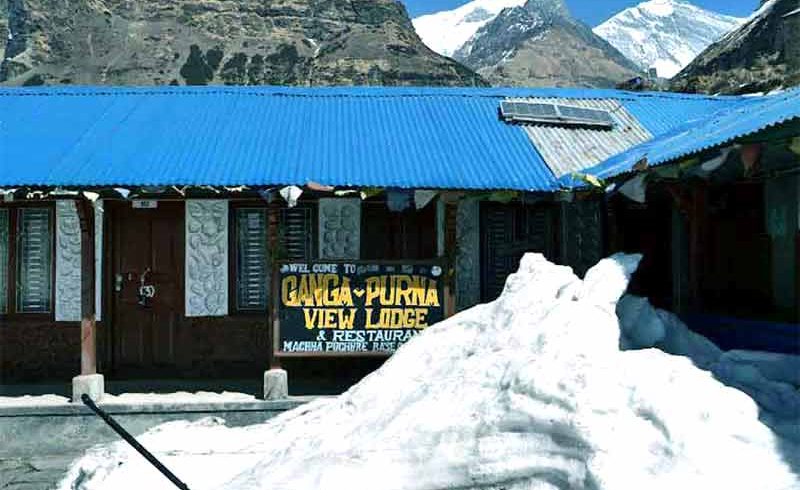
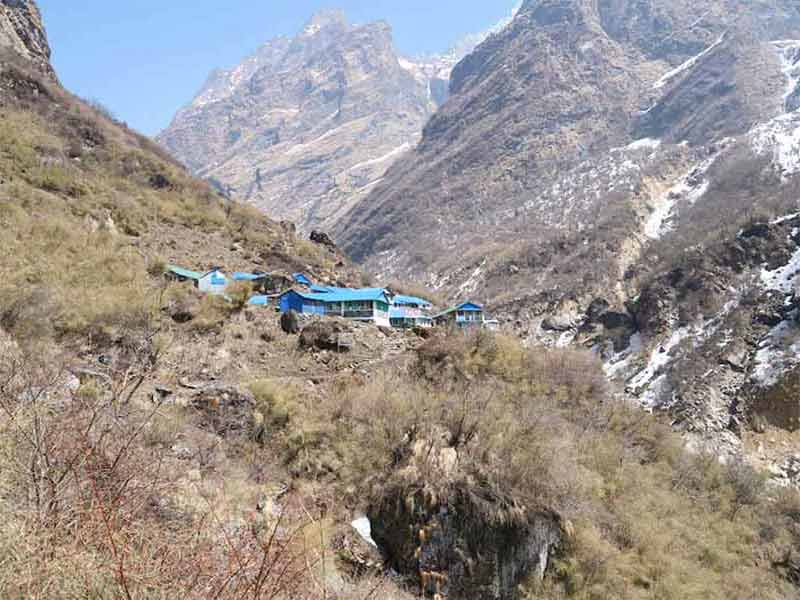
The Annapurna Base Camp Trek is one of the most popular and rewarding trekking adventures in Nepal. This spectacular journey takes you deep into the heart of the Annapurna mountain range, surrounded by some of the most impressive peaks in the Himalayas. The trek combines beautiful mountain scenery, traditional villages, lush forests, terraced farmland, rivers, waterfalls, natural hot springs, and rich Himalayan culture.
Annapurna Base Camp, commonly known as ABC, sits at an altitude of approximately 4,130 meters (13,550 feet). From the base camp, trekkers can enjoy an extraordinary 360-degree mountain panorama, including Annapurna I (8,091 m), Annapurna South (7,219 m), Hiunchuli (6,441 m), Machhapuchhre or Fishtail (6,993 m), Gangapurna (7,455 m), and other surrounding peaks.
Unlike many high-altitude Himalayan treks, the Annapurna Base Camp Trek can be completed in a relatively short period while still offering an impressive variety of landscapes and cultural experiences. The route passes through Gurung and Magar villages, making it an excellent opportunity to experience traditional mountain life.
Annapurna Base Camp Trek Location
The Annapurna Base Camp Trek takes place in the Annapurna region of central Nepal. The main trekking area lies within the Annapurna Conservation Area, one of Nepal’s important protected regions.
The trek commonly begins after a drive from Pokhara toward the trekking trailhead, depending on the selected route. Popular starting points include Nayapul, Siwai, Ghandruk, Jhinu Danda, or other road-accessible villages. The exact starting and ending points can be adjusted according to road conditions, trekking duration, and the preferences of trekkers.
Pokhara is the main gateway to the Annapurna region. It is easily accessible from Kathmandu by road or domestic flight and is also an excellent place to relax before or after the trek.
Highlights of Annapurna Base Camp Trek
The Annapurna Base Camp Trek offers a combination of natural beauty, cultural heritage, and Himalayan adventure.
Major highlights of Annapurna Base Camp Trek
- Spectacular views of Annapurna I and Annapurna South
- Close-up views of Machhapuchhre (Fishtail)
- Trekking through the Annapurna Sanctuary
- Traditional Gurung and Magar villages
- Beautiful terraced farmland
- Rhododendron, oak, and bamboo forests
- Modi Khola river valley
- Waterfalls and mountain streams
- Natural hot springs at Jhinu Danda
- Sunrise and sunset over the Himalayas
- Machhapuchhre Base Camp
- Annapurna Base Camp at 4,130 meters
- Local Himalayan food and hospitality
- Peaceful mountain landscapes
- Diverse flora and wildlife
- Opportunity to experience traditional mountain culture
Annapurna Sanctuary and Base Camp
One of the most special aspects of this trek is entering the Annapurna Sanctuary, a natural amphitheater surrounded by high Himalayan peaks.
As the trail progresses beyond Chhomrong toward the upper Modi Khola valley, the landscape gradually changes. The surrounding mountains become larger, and the valley becomes narrower and more dramatic.
The final section leads toward Machhapuchhre Base Camp and then Annapurna Base Camp. Standing at Annapurna Base Camp, trekkers are surrounded by enormous Himalayan peaks. The feeling of being inside this natural mountain amphitheater is one of the major attractions of the trek.
At sunrise, the first rays of sunlight illuminate the surrounding mountains, creating an unforgettable Himalayan landscape.
Mountain Views of this trek
The Annapurna region is famous for its diverse mountain scenery. During the trek, trekkers can see several major Himalayan peaks.
Annapurna one
Annapurna I reaches 8,091 meters and is the highest mountain in the Annapurna massif. Its enormous presence becomes particularly impressive from the upper sanctuary and base camp.
Annapurna South
Annapurna South rises to approximately 7,219 meters. It is one of the most prominent mountains visible from several sections of the trekking route.
Machhapuchhre
Machhapuchhre, 6,997 meters, meaning Fishtail in Nepali, is one of Nepal’s most recognizable mountains. Its distinctive double summit gives it a unique appearance. The mountain is considered sacred by local communities, and climbing it is restricted.
Hiunchuli
Hiunchuli stands at approximately 6,441 meters and forms part of the impressive mountain scenery around the Annapurna Sanctuary. The combination of these mountains creates spectacular views throughout the trek.
Villages and Local Culture
The Annapurna Base Camp Trek is not only a mountain adventure but also a cultural journey. The trail passes through traditional villages where local people continue to practice customs and lifestyles influenced by generations of Himalayan heritage.
Gurung and Magar communities are especially prominent in many parts of the Annapurna region. Trekkers can observe traditional houses, stone-paved paths, terraced fields, Buddhist and Hindu religious traditions, local festivals, and village life.
The warm hospitality of local people is another memorable part of the trek. Tea houses and lodges along the route provide accommodation and opportunities to interact with local families.
Ghandruk Village
Ghandruk is one of the most famous villages in the Annapurna region. Surrounded by mountains and terraced hillsides, it is a popular destination for trekkers.
Traditional stone houses, narrow village paths, cultivated fields, and views toward Annapurna South and Machhapuchhre make Ghandruk an important cultural and scenic attraction.
Depending on the chosen itinerary, the trek may start from or pass through Ghandruk.
Chhomrong Village
Chhomrong is an important settlement on the Annapurna Base Camp route. Located on a hillside above the Modi Khola valley, the village provides excellent mountain views.
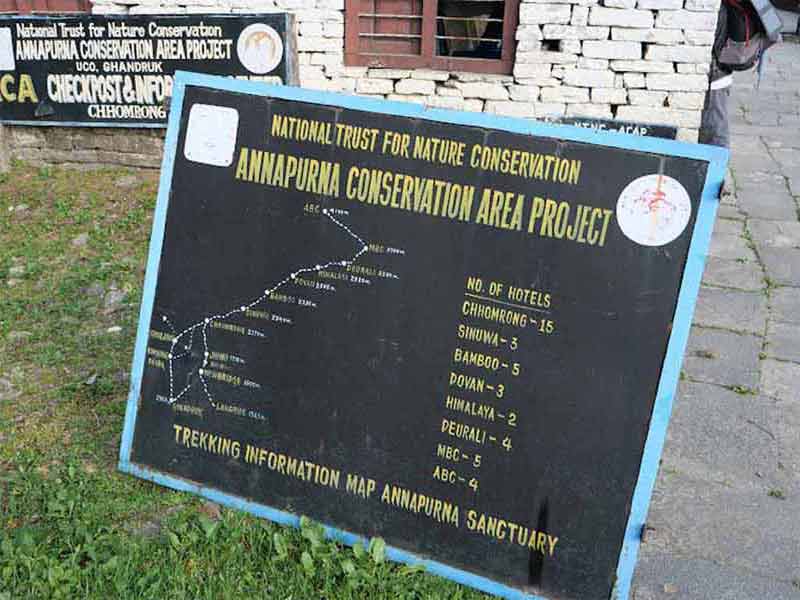
It is also an important overnight stop before entering the higher section of the Annapurna Sanctuary. From Chhomrong, the trail continues toward Sinuwa, Bamboo, Dovan, Deurali, Machhapuchhre Base Camp, and finally Annapurna Base Camp.
Jhinu Danda and Natural Hot Springs
Jhinu Danda is well known for its natural hot springs. After completing a demanding section of the trek, trekkers can descend toward the hot springs and enjoy a relaxing experience beside the river.
The hot springs provide an excellent opportunity to rest and enjoy the surrounding natural environment.
Forests and Biodiversity
The Annapurna Base Camp trail passes through a wide variety of forests. Lower sections may contain subtropical vegetation, while higher sections feature rhododendron, oak, pine, and bamboo forests.
During spring, rhododendron flowers add beautiful colors to the landscape. The region is also home to a variety of birds and wildlife.
The changing vegetation is one of the reasons the Annapurna Base Camp Trek feels so diverse despite taking place within a relatively compact geographical area.
Annapurna Base Camp Trekking Difficulty
The Annapurna Base Camp Trek is generally considered a moderate-level trek. It does not require technical mountaineering skills, but trekkers need reasonable physical fitness and preparation.
The difficulty comes mainly from trek
- Long walking days
- Numerous stone steps
- Continuous ascents and descents
- High-altitude trekking
- Changing weather
- Cold temperatures at higher elevations
- Walking on uneven mountain trails
The highest point of the trek is approximately 4,130 meters at Annapurna Base Camp. Although this is not an extreme altitude compared with some Himalayan expeditions, altitude-related problems can still occur.
A gradual pace, proper hydration, sufficient rest, and an appropriate itinerary are important.
Altitude and Acclimatization
Altitude is an important consideration during the Annapurna Base Camp Trek. Trekkers begin at relatively low elevations and gradually move toward the high mountain environment.
A sensible itinerary allows the body enough time to adapt. Trekkers should walk at a comfortable pace and avoid rushing.
Common symptoms of altitude-related illness can include headache, unusual tiredness, dizziness, nausea, and difficulty sleeping. If symptoms become serious or worsen, descending to a lower altitude and seeking appropriate medical assistance are important.
Accommodation during the trek
Accommodation during the Annapurna Base Camp Trek is generally provided in local tea houses and trekking lodges.
- Private or shared rooms
- Beds and mattresses
- Blankets
- Dining rooms
- Hot meals
- Tea and coffee
- Basic toilet and bathroom facilities
Facilities become more basic as the trail reaches higher elevations. Hot showers may be available in some lower villages but can become limited or more expensive at higher elevations.
Trekkers should be prepared for simple accommodation in the upper sanctuary.
Food item during the Trek
Tea houses provide a variety of meals suitable for trekkers. The most common meal
- Dal bhat,
- Lentil soup,
- Vegetables,
- Noodles,
- Fried rice,
- Pasta,
- Momos,
- Sherpa or Tibetan-style dishes,
- Soups,
- Eggs,
- Potatoes,
- Bread,
- Pancakes,
Dal bhat is particularly popular because it provides a filling meal for long trekking days.
Trekkers should maintain adequate food and water intake throughout the journey.
Best Time for Annapurna Base Camp Trek
The best seasons for the Annapurna Base Camp Trek are generally spring and autumn.
Spring Season
Spring generally covers March, April, and May. The weather is usually suitable for trekking, and the hills are particularly attractive because rhododendron flowers bloom across many sections of the route.
Mountain views are often excellent, especially during clear mornings.
Autumn Season
September, October, and November are traditionally popular trekking months. The monsoon season has generally ended, and the atmosphere can become clearer.
October is particularly popular because of generally favorable trekking conditions and good mountain visibility.
Winter Season
December, January, and February can also be suitable for experienced trekkers who are prepared for cold temperatures. Snow can affect the higher sections of the route, and temperatures at Annapurna Base Camp can become very low.
Monsoon Season
June, July, and August bring monsoon conditions to much of Nepal. Rain, clouds, slippery trails, and leeches in lower forest sections can make trekking more challenging. However, conditions vary, and some trekkers still visit during this period.
Permits Required
Trekkers visiting the Annapurna region generally need the appropriate trekking permits and conservation-area documentation required by the authorities.
The Annapurna Conservation Area Permit (ACAP) is commonly required for trekking within the Annapurna Conservation Area. Trekkers may also need a Trekkers’ Information Management System (TIMS) registration according to the current regulations.
Permit requirements and fees can change, so trekkers should confirm the latest requirements before departure.
Transportation
Pokhara is the principal access point for the Annapurna Base Camp Trek.
Trekkers can reach Pokhara from Kathmandu by domestic flight or road transportation. From Pokhara, private vehicles, tourist buses, or local transportation can be used to reach the trailhead.
Road access has changed several trekking itineraries in the Annapurna region, allowing trekkers to shorten the walking portion of some routes. The exact transportation arrangements depend on the selected itinerary.
Guide and Porter Service
Hiring a professional guide and porter can make the Annapurna Base Camp Trek more comfortable and organized.
- Route navigation
- Accommodation arrangements
- Trekking permits
- Local cultural information
- Communication with tea houses
- Altitude awareness
- Emergency coordination
A porter can carry the main luggage, allowing trekkers to walk with a lighter daypack.
For trekkers unfamiliar with the Himalayan environment, local support can also make it easier to understand trail conditions, weather changes, and local customs.
What You Will Experience
The Annapurna Base Camp Trek provides much more than a destination at 4,130 meters. The entire journey is an experience.
You will walk through green valleys, forests, mountain villages, terraced farmland, and narrow Himalayan trails. You will cross bridges over mountain rivers and pass waterfalls along the Modi Khola valley.
You will experience local tea-house hospitality and have opportunities to learn about Gurung and Magar culture.
As you move higher, the landscape becomes increasingly alpine. Forests gradually become thinner, the air becomes colder, and the enormous Himalayan peaks dominate the horizon.
Reaching Annapurna Base Camp provides a strong sense of achievement after several days of walking.
Trek Preparation
Good preparation is important for a successful trek.
Before departure, trekkers should prepare through regular walking, hiking, stair climbing, or other forms of moderate physical activity.
Important preparation equipment
- Comfortable trekking boots
- Layered clothing
- Warm jacket
- Waterproof jacket and trousers
- Sleeping bag suitable for cold conditions
- Sun protection
- Water bottle or hydration system
- Personal medication
- First-aid supplies
- Headlamp
- Trekking poles
- Sunglasses
- Sunscreen
- Personal hygiene items
The exact equipment required depends on the season and itinerary.
Responsible Trekking
The Annapurna region is an environmentally and culturally important destination. Trekkers should help protect the area by following responsible trekking practices.
Visitors should avoid littering, use designated waste facilities, minimize unnecessary plastic use, respect local traditions, and follow conservation guidelines.
Trekkers should also respect local people, religious sites, monasteries, prayer flags, and cultural practices.
Supporting locally operated tea houses, guides, porters, and other services can contribute to the local mountain economy.
Why Choose Annapurna Base Camp Trek
The Annapurna Base Camp Trek is an attractive option for trekkers who want to experience the Himalayas without undertaking a technical climbing expedition.
- High Himalayan scenery
- Cultural experiences
- Traditional villages
- Diverse landscapes
- Forest trails
- Mountain rivers
- Natural hot springs
- Comfortable tea-house accommodation
- Accessible trekking routes
- A spectacular Himalayan base camp
The trek can also be customized according to available time and fitness level.
Conclusion during the trek
The Annapurna Base Camp Trek is a memorable Himalayan journey that brings trekkers into the heart of the Annapurna Sanctuary. From the traditional villages of the lower hills to the dramatic mountain scenery surrounding Annapurna Base Camp, every section of the trail offers something different.
The journey combines natural beauty, local culture, mountain adventure, and the warm hospitality of the Himalayan communities. The views of Annapurna I, Annapurna South, Hiunchuli, Machhapuchhre, and surrounding peaks make the final approach to base camp particularly spectacular.
Whether you are an experienced trekker or preparing for your first Himalayan adventure, the Annapurna Base Camp Trek offers an opportunity to experience the mountains, culture, landscapes, and communities of Nepal in one remarkable journey.
With proper preparation, a suitable itinerary, responsible trekking practices, and professional local support when needed, the Annapurna Base Camp Trek can become one of the most rewarding experiences in Nepal.
| Day | Destination | Altitude | Walking Hour | Accommodation |
|---|---|---|---|---|
| 1 | Arrival Kathmandu and transfer to hotel | 1300 | One hour drive from airport to hotel | Hotel in Kathmandu |
| 2 | Kathmandu to Pokhara by tourist bus | 900 | 7-8 hours drive | Hotel haven o Ganga |
| 3 | Pokhara to Ghandruk | 1940-Meters | 4 hours Jeep drive to Kimche & 2 hours walk to Ghandruk | Lodge |
| 4 | Ghandruk to Chhomrung | 2170 | 6-hours | Lodge |
| 5 | Chhomroung to Hilaya Hoter | 2920-Meters | 7 hours | Lodge |
| 6 | Himalya to Annapurna Base Camp, via Macchapucchare Base Camp | 4130-Meters. | 6-7-hours | Lodge |
| 7 | 5-6 hours | 2340-Meters | 5-6 hours | Lodge |
| 8 | Bamboo to Jhunu Danda | 1780-Meters | 5-hours | Lodge |
| 9 | Jhinu to Pokhara | 900 Meters | 4-hours Jeep drive | Hotel Haven o Ganga |
| 10 | Pokhara to Kathmandu | 1300 Meters | 7-8-hours | Hotel in Kathmandu |
| 11 | Kathmandu | 1300-Meters | Free day at Kathmandu | Hotel in Kathmandu |
| 12 | Departure | After breakfast drive to the international airport | Flight out from Nepal | At Your home |
Annapurna base camp trek 12 days $ 570 Per Person
cost incules
- Airport Transfers: Airport pickup and drop-off in Kathmandu by private vehicle are included according to the agreed itinerary.
- Transportation: Ground transportation between Kathmandu and the trekking starting and ending points is included according to the package. Depending on the itinerary, this may involve a bus, jeep, or private vehicle.
- Hotel accommodation with breakfast is provided for the nights specified in the itinerary. Twin-sharing rooms are generally arranged.
- Teahouse Accommodation During the Trek: Accommodation in local teahouses and mountain lodges is included throughout the trekking route. Rooms are generally basic, with facilities varying by location.
- Meals During the Trek: Breakfast, lunch, and dinner are included on the trekking days specified in the package. Meals usually include dal bhat, noodles, soups, rice, potatoes, and other locally available dishes.
- Professional Trekking Guide: An experienced, licensed trekking guide accompanies you throughout the trek, assisting with navigation, cultural information, daily arrangements, and altitude awareness.
- Porter Services: Porter services are included if specified in your package. Porters carry your main luggage within the agreed weight limit. Their wages, meals, accommodation, and insurance are covered according to the package terms.
- Trekking Permits: The Annapurna Conservation Area Permit (ACAP) and any other required permits or applicable entry fees are included when stated in the package.
- Two-night hotels in Pokhara including breakfast service
- Guide and Porter Expenses: Staff wages, meals, accommodation, transportation, and insurance are included according to the agreed services.
- First-Aid Kit and Taxes: A basic first-aid kit is carried during the trek. Applicable government taxes and company service charges are included as specified.
Annapurna base camp trekking Cost Excludes
- International Airfare: International flights to and from Nepal are not included.
- Nepal Visa Fees: Visa fees must be paid separately by travelers.
- Travel Insurance: Personal travel insurance is excluded. You should arrange insurance covering high-altitude trekking, medical treatment, and emergency helicopter evacuation.
- Meals in Kathmandu & Pokhara: Lunch and dinner in Kathmandu & Pokhara are not included unless mentioned in the itinerary.
- Personal Expenses: Snacks, chocolates, soft & Hot drinks, alcoholic beverages, bottled water, and additional food or drinks are paid for personally.
- Personal Trekking Equipment: Trekking boots, warm clothing, sleeping bags, backpacks, gloves, sunglasses, and other personal equipment are excluded unless agreed upon.
- Extra Lodge Services: Hot showers, Wi-Fi, laundry, and electronic device charging may require additional payment.
- Tips and Gratuities: Tips for guides and porters are not included and are given at your discretion.
- Extra Accommodation and Transportation: Additional hotel nights, extra vehicle services, and expenses caused by delays, illness, bad weather, or itinerary changes are excluded unless otherwise agreed.
- Emergency Expenses: Rescue costs, medical expenses, and other emergency services not covered by insurance or the package are the trekker's responsibility.
- Important Note
- The exact inclusions and exclusions depend on your itinerary, group size, transportation arrangements, and package price. Confirm all services with your trekking agency before booking your Annapurna Base Camp Trek to avoid unexpected expenses and enjoy a safe, memorable Himalayan adventure.
March to June and September to December
It was a cold night with a temperature of 4 to 5 degrees
840 dollars per trekker for Anannapurna base camp trekking
Tims card and Annapurna Conservation park permit.
Taking a guide and porter will keep you safe during your entire trek in Nepal. If something goes wrong, it is easier to solve any problem, and the Trekking agency takes full responsibility.
During the trek to the Annapurna Base Camp, there are excellent lodges to stay
Chinese, Nepali, Tibetan, Indian, and Italian dishes.
Walking for five to six hours a day.
It is possible to see Annapurna! 8,091m), Annapurna !! (7,555m), Annapurna South (7,647m), Gangapurna (7,454m), Tharpu Chuli (Ten peak) (5,695m), Gandharva Chuli (6,248m), Hiunchuli (6,434m) Singuchuli (6,501m). And the closest view of the Mt Machhapucure (Fish Tail) (6,997m).
The maximum height (4,100m) is 13,545 feet,
Normally, you need to bring with you flowing equipment. + walking boot If possible Gore tax boot is better. + Warm socks and Gaiters in case of rain or snow. + Day carry bag and Down Jacket over 4,000 meters. + Sleeping bag and others which are not mansions here.
Arrival & departure transport service. Hotel in Kathmandu with bed and breakfast as per itinerary. Two-night hotel in Pokhara at Lakeside with breakfast. Annapurna Conservation Park permits 3,500 rs and Tims card 1000. A day three times meals-Breakfast, Lunch and Dinner during the trek. 2,900 rs per member per day for meals and lodge accommodations. Tourist bus ticket Kathmandu Pokhara to Kathmandu. English- speaking –Government licensed holder trekking guide & porter salary and insurance. Over the 6 Pax group, we will provide you experience mountain Leader, who has the best trained Hotel Management (NATHM) Mountain Leader Course, Component 1-2, Navigation Course, Rock climbing Course, Mountain rescue Training and Basic Mountaineering training, etc. Necessary porters-Insurance, Salary and they are accommodation during the trek. Company paper working and Government taxes etc. Local transports during the trek.
You feel hungover / you are short of breath / have a headache / you feel nauseated / you sleep poorly / you are vomiting / you have a fever etc.
If a woman travels alone to Nepal, there is no problem as long as she takes a guide or porter from a registered trekking agency, since the trekking agency is responsible for trekking and Mountain climbing. During the tea house trek and climbing trek, our agency staff will provide you with a single-room tent. But if you contact a freelance Guide then you get many problems they try to make a chit for a single woman. Therefore if you book guide porter with un agency then it is good safe your Holyday travel to Nepal.
Altitude Chart
Reviews

ABC et Tengboche pour le CAF de La Crau Mar 2023 Nous...
Read More
Moments de partage et de découverte splendidr Apr 2023 Membres du Club...
Read More
Moments de partage et de découverte splendidr Apr 2023 Membres du Club...
Read More
10 jours de trek vers le camp de base de l'Annapurna Mar...
Read More
No better way to experience Nepal Mar 2017 • Friends When I...
Read More