Gokyo Lake Everest base camp trek -
The Gokyo Lake and Everest Base Camp Trek is one of the most spectacular trekking adventures in the Everest region of Nepal. This remarkable journey combines the turquoise glacial lakes of the Gokyo Valley with the legendary Everest Base Camp, offering trekkers an unforgettable experience of Himalayan scenery, Sherpa culture, high mountain passes, and some of the world’s highest peaks.
The trek takes you through the beautiful Khumbu region, home to Mount Everest (8,849 m), Lhotse (8,516 m), Cho Oyu (8,188 m), Makalu (8,485 m), and numerous other spectacular Himalayan peaks. Compared with the traditional Everest Base Camp route, the Gokyo route provides a quieter and more scenic alternative before joining the main trail toward Everest Base Camp.
One of the greatest attractions of this trek is the opportunity to visit the beautiful Gokyo Lakes and climb Gokyo Ri, while also reaching Everest Base Camp and hiking to Kala Patthar for an extraordinary panoramic view of Mount Everest.
Gokyo Lake and Everest Base Camp Trek Highlights
- Scenic flight from Kathmandu to Lukla
- Trek through the traditional Sherpa villages of the Khumbu region
- Explore the famous Namche Bazaar
- Visit the beautiful Gokyo Valley
- Explore the turquoise Gokyo Lakes
- Hike to Gokyo Ri for spectacular mountain views
- Cross the Ngozumpa Glacier
- Visit Everest Base Camp
- Hike to Kala Patthar for sunrise and Everest views
- Magnificent views of Everest, Lhotse, Nuptse, Makalu and Cho Oyu
- Visit ancient Buddhist monasteries
- Experience Sherpa culture and hospitality
- Walk through Sagarmatha National Park
- Enjoy dramatic Himalayan landscapes throughout the trek
Where Is the Gokyo Lake and Everest Base Camp Trek?
The trek is located in the Khumbu region of northeastern Nepal, inside and around Sagarmatha National Park. The journey normally begins at Lukla after a short flight from Kathmandu and follows the Dudh Koshi Valley toward Namche Bazaar.
From Namche, the trail separates from the main Everest Base Camp route and heads toward the Gokyo Valley. After exploring Gokyo and climbing Gokyo Ri, trekkers continue toward Thangnak and cross the Cho La Pass before reaching Dzongla and joining the Everest Base Camp trail.
Depending on the itinerary, trekkers can visit Everest Base Camp, hike Kala Patthar, and then descend through the traditional Everest route toward Namche Bazaar and Lukla.
Gokyo Lake with Everest Base Camp Trekking Route
Kathmandu –Lukla-Phakding -Namche Bazaar-Dole-Machhermo -Gokyo -Gokyo Ri-Thangnak-Cho La Pass-Dzongla-Lobuche- Everest Base Camp-Gorak Shep-Kala Patthar-Pheriche-Namche Bazaar -Lukla to Kathmandu
The itinerary can be adjusted according to weather, acclimatization requirements, flight schedules, and trekkers’ preferences.
Lukla to Phakding (2,610 m)
After flying to Lukla, the trek begins with a relatively short walk toward Phakding. The trail passes through small villages, forests, suspension bridges, and beautiful sections of the Dudh Koshi River.
Phakding is an excellent first overnight stop because the walking distance is moderate and it allows trekkers to begin their gradual acclimatization.
Phakding to Namche Bazaar (3,440 m)
The trail follows the Dudh Koshi River through pine and rhododendron forests. Several suspension bridges provide exciting river crossings before the trail climbs toward Namche Bazaar.
Namche Bazaar is the commercial and cultural center of the Khumbu region. It is surrounded by impressive Himalayan mountains and is an important acclimatization point.
Acclimatization in Namche Bazaar
A rest day in Namche is an important part of the trek. Rather than remaining completely inactive, trekkers can take a short acclimatization hike around the surrounding hills.
Popular activities include visiting the Everest View Hotel, exploring Khumjung village, visiting the Sherpa Museum, and enjoying views of Everest, Ama Dablam, Thamserku, and Kongde.
Proper acclimatization significantly improves the chances of completing the high-altitude sections comfortably.
Namche Bazaar to Dole (4,200 m)
After Namche, the trail toward Gokyo follows a quieter route through the Dudh Koshi Valley. The landscape changes as the trail climbs higher.
The route passes through rhododendron and juniper forests and small settlements such as Phortse Tenga before reaching Dole.
Dole to Machhermo (4,470 m)
The trail continues toward Machhermo through a beautiful high-altitude landscape. The route passes through small settlements and yak grazing areas.
Machhermo is an important overnight stop before reaching Gokyo and provides another opportunity for gradual acclimatization.
Trekkers can enjoy impressive views of Cho Oyu and surrounding peaks from this area.
Machhermo to Gokyo (4,790 m)
The trail from Machhermo to Gokyo is one of the most beautiful sections of the trek. The route follows the Dudh Koshi toward its glacial origins.
As you approach Gokyo, the landscape becomes more alpine, with rocky terrain, glaciers, and magnificent mountains surrounding the valley.
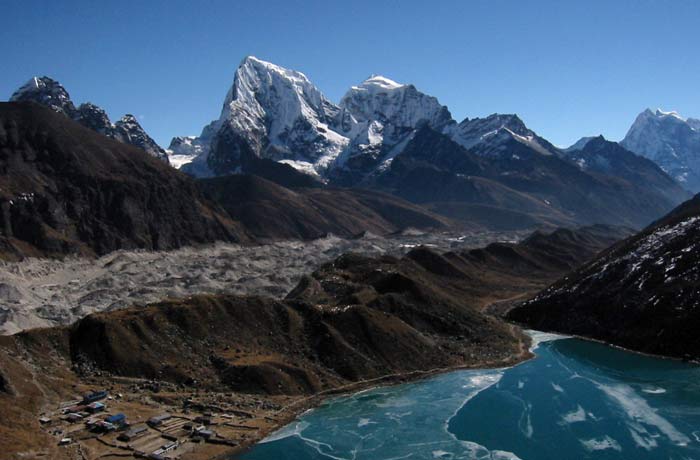
The turquoise Gokyo Lakes are the main attraction. The sight of the lakes against the Himalayan peaks creates one of the most memorable scenes of the entire trek.
Gokyo Lakes
The Gokyo Lakes are a series of glacial lakes located at high altitude in the Gokyo Valley. Their striking blue and turquoise colors contrast beautifully with the surrounding snow-covered mountains.
The lakes have significant religious importance for both Hindus and Buddhists. During certain festivals, pilgrims visit the area for religious activities.
Gokyo is also an excellent place to relax, explore the surrounding valley, and appreciate the enormous Ngozumpa Glacier.
Gokyo Ri (5,357 m)
One of the major highlights of the trek is the early-morning hike to Gokyo Ri, which rises to approximately 5,357 meters.
The climb is demanding because of the altitude, but the panoramic views from the summit make the effort worthwhile.
From Gokyo Ri, trekkers can see Mount Everest, Lhotse, Makalu, Cho Oyu, Cholatse, Taboche, and numerous other Himalayan peaks.
The sunrise from Gokyo Ri is particularly spectacular when the first rays of sunlight illuminate the surrounding mountains.
Crossing Cho La Pass (5,420 m)
For the combined Gokyo Lake and Everest Base Camp trek, the route commonly crosses the Cho La Pass, which is approximately 5,420 meters high.
Cho La is a challenging high-altitude pass connecting the Gokyo Valley with the Everest Base Camp region. The trail involves steep sections, rocky terrain, and potentially icy conditions depending on the season.
Good physical preparation, appropriate equipment, an experienced guide, and proper acclimatization are especially important for this section.
The pass provides magnificent views of glaciers and surrounding Himalayan peaks.
Dzongla to Lobuche (4,970 m)
After crossing Cho La, trekkers descend toward Dzongla before continuing toward Lobuche.
The scenery becomes increasingly rugged as the trail approaches the Everest Base Camp area. Mountains such as Cholatse, Taboche, Lobuche Peak, Nuptse, and Pumori dominate the landscape.
Lobuche is an important overnight stop before the journey to Everest Base Camp.
Lobuche to Everest Base Camp (5,364 m)
The trek from Lobuche to Everest Base Camp is one of the most exciting days of the journey.
The trail follows the Khumbu Glacier toward Gorak Shep and then continues along the rocky moraine toward Everest Base Camp.
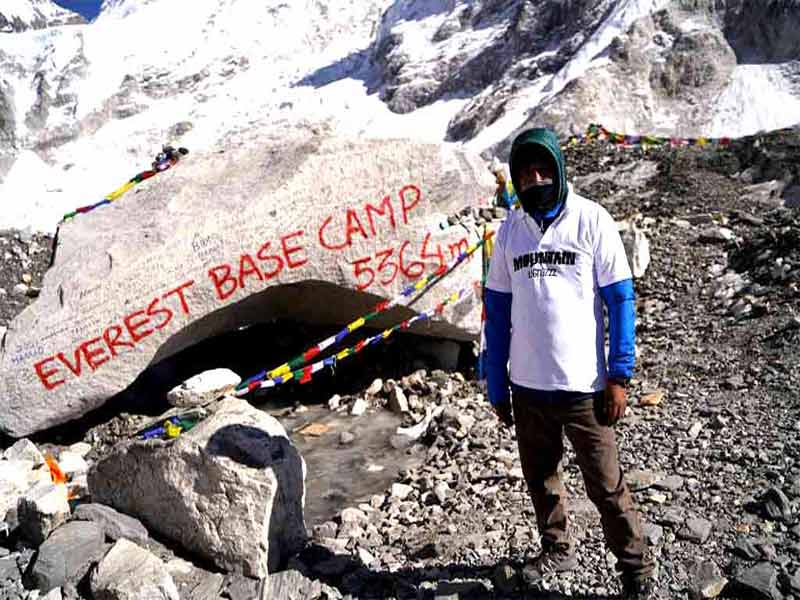
Everest Base Camp is located at approximately 5,364 meters. During the climbing season, the area becomes a busy expedition base filled with mountaineers preparing for Everest and other Himalayan peaks.
Although Mount Everest itself is not always visible from Base Camp, the surrounding glaciers, icefalls, and enormous Himalayan peaks create an unforgettable experience.
Gorak Shep and Kala Patthar (5,545 m)
Gorak Shep is the final settlement before Kala Patthar and Everest Base Camp.
An early-morning hike to Kala Patthar is one of the most popular activities on the trek. At approximately 5,545 meters, Kala Patthar provides one of the best accessible viewpoints of Mount Everest.
From the viewpoint, trekkers can see Everest, Nuptse, Pumori, Lhotse, and the Khumbu Glacier.
The sunrise over Everest from Kala Patthar is one of the defining moments of the trek.
Sherpa Culture and Local Villages
The trek is not only about mountains. It also provides an opportunity to experience the unique culture of the Sherpa people.
Villages such as Namche Bazaar, Khumjung, Dole, Machhermo, Gokyo, Thangnak, and other settlements provide opportunities to observe traditional Himalayan lifestyles.
Buddhist monasteries, prayer wheels, mani stones, prayer flags, and traditional houses are common throughout the region.
Local people are known for their hospitality and their long history of supporting Himalayan expeditions and trekking.
Sagarmatha National Park
Much of the trek passes through Sagarmatha National Park, a UNESCO World Heritage Site.
The park protects important Himalayan ecosystems and provides habitat for wildlife such as Himalayan thar, musk deer, snow leopard, pheasants, and other mountain species.
Trekkers can also experience beautiful forests of pine, fir, birch, rhododendron, and juniper at lower elevations.
Trek Difficulty
The Gokyo Lake and Everest Base Camp Trek is considered challenging because of the long duration, high altitude, steep ascents and descents, and the crossing of Cho La Pass.
No technical climbing skills are normally required for the trekking route, but trekkers need good physical fitness and mental preparation.
The highest points are Gokyo Ri, Cho La Pass, Everest Base Camp, and Kala Patthar. Altitude sickness is one of the major concerns, so gradual acclimatization and a sensible walking pace are essential.
Best Time for the Trek
The best seasons are generally spring and autumn.
Spring -March to May
Spring offers stable weather, clear mountain views, and blooming rhododendrons at lower elevations. April and May are also important months for Everest expeditions.
Autumn-September to November
Autumn is another excellent season. The weather is generally stable, skies are often clear, and mountain visibility is excellent.
Winter- December to February
Winter can be very cold, particularly at higher elevations. Heavy snowfall may affect the Cho La Pass and other high sections.
Monsoon -June to August
The monsoon season brings rain, clouds, and potentially difficult trail conditions at lower elevations. However, the Everest region can still be visited with appropriate planning.
Permits Required
Trekkers generally need the required permits for the Khumbu region, including:
Sagarmatha National Park entry permit Khumbu Pasang Lhamu Rural Municipality permit
Permit requirements and fees can change, so trekkers should confirm the current regulations before departure.
Accommodation during the Trek
Accommodation is mainly provided in comfortable local teahouses and lodges.
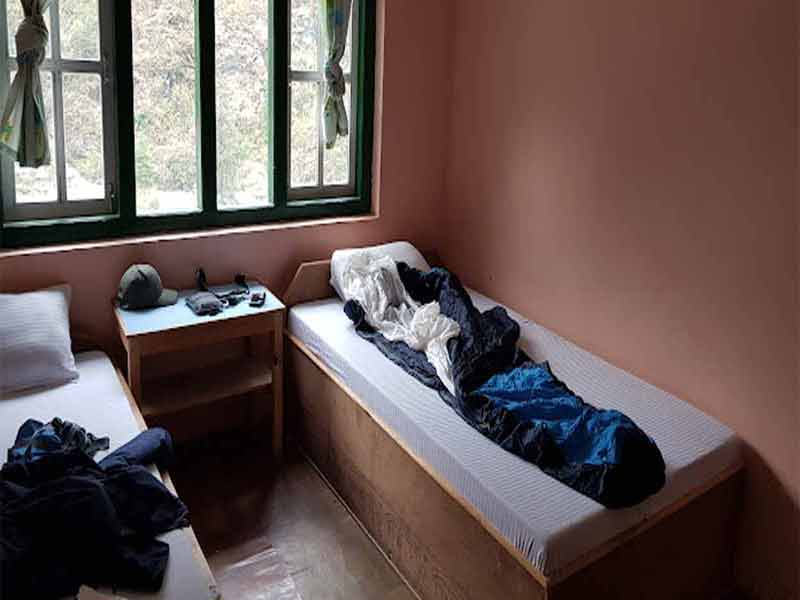
Rooms are generally simple and may have twin beds with shared bathroom facilities. Some lodges offer attached bathrooms at lower elevations, while facilities become more basic at higher elevations.
Common dining areas provide a warm place to eat, rest, and socialize with other trekkers.
Food During the Trek
Teahouses provide a variety of meals, including:
Dal Bhat, Rice and vegetables, Noodles, Pasta, Soup, Momos, Tibetan bread, Potatoes, Eggs, Porridge, Pancakes, tea, and coffee
Dal Bhat is particularly popular because it provides a filling combination of rice, lentils, vegetables, and other side dishes.
At higher elevations, maintaining good hydration and eating sufficient food are important for energy and acclimatization.
Gokyo Lake and Everest Base Camp Trek Cost
The total trek cost depends on the itinerary, number of trekking days, group size, guide and porter services, accommodation, meals, permits, domestic flights, insurance requirements, and other services.
A package organized by Nepal Alsace trekking agency may include airport transfers, Lukla flights, accommodation, meals, guide, porter, permits, and necessary logistical support.
Trekkers should always check exactly what is included and excluded before booking.
Important equipment for the Trek
- Trekking boots
- Warm sleeping bag
- Down jacket
- Waterproof jacket and trousers
- Thermal base layers
- Trekking trousers
- Warm gloves
- Woolen hat
- Sunglasses
- Sun protection
- Headlamp
- Water bottles
- Trekking poles
- Backpack
- Duffel bag
- Personal first-aid supplies
- Water purification tablets or filtration system
- Basic toiletries
For the Cho La section, additional equipment may be recommended depending on current trail and weather conditions.
Why Choose the Gokyo Lake and Everest Base Camp Trek?
This trek is ideal for trekkers who want more than the traditional Everest Base Camp route.
It combines the peaceful beauty of the Gokyo Valley with the famous Everest Base Camp experience. The Gokyo Lakes, Gokyo Ri, Ngozumpa Glacier, Cho La Pass, Everest Base Camp, and Kala Patthar create an exceptionally diverse Himalayan adventure.
The route also provides opportunities to explore Sherpa villages, Buddhist monasteries, mountain valleys, glaciers, and some of the world’s most spectacular peaks.
Safety and Altitude Awareness
Altitude is one of the most important considerations on this trek. Trekkers should walk slowly, stay hydrated, eat regularly, and follow the recommendations of their guide.
If someone develops significant symptoms of altitude sickness, the situation should be taken seriously. Descending to a lower elevation is often the most important response when symptoms are worsening.
Travel insurance that covers trekking at the required altitude and emergency evacuation is strongly recommended.
Why Trek With a Local Agency?
A reliable local trekking agency can arrange permits, accommodation, domestic flights, guides, porters, transportation, and other logistics.
An experienced local guide also understands the trail, weather conditions, altitude concerns, local culture, and possible route changes.
For the Gokyo–Everest Base Camp route, professional support is particularly valuable when crossing Cho La Pass and dealing with changing mountain conditions.
Conclusion on the Trek
The Gokyo Lake and Everest Base Camp Trek is a spectacular journey through one of the world’s most famous mountain regions. It combines the tranquil beauty of Gokyo Valley and its turquoise lakes with the excitement of Everest Base Camp and the breathtaking viewpoint of Kala Patthar.
From the lively streets of Namche Bazaar to the peaceful Gokyo Lakes, from the challenging Cho La Pass to the dramatic Khumbu Glacier, every section of the trek offers something special.
With proper acclimatization, good physical preparation, suitable equipment, an experienced guide, and a well-planned itinerary, the Gokyo Lake and Everest Base Camp Trek can become one of the most memorable adventures in Nepal.
Frequently Asked Questions
How long does the Gokyo Lake and Everest Base Camp Trek take?
A typical combined trek takes around 17–20 days depending on the itinerary, acclimatization days, route, and flight schedule.
What is the highest point of the trek?
Kala Patthar, at approximately 5,545 meters, is generally the highest hiking viewpoint. Cho La Pass is around 5,420 meters, and Gokyo Ri is approximately 5,357 meters.
Is the trek difficult?
Yes. It is considered a challenging high-altitude trek because of long walking days, steep terrain, high elevations, and the Cho La Pass crossing.
Do I need previous trekking experience?
Previous high-altitude trekking experience is helpful but not always essential. Good fitness, preparation, acclimatization, and a suitable pace are important.
Can beginners do the trek?
Fit beginners can undertake the trek with proper preparation and professional guide support, but they should understand that the route is considerably more demanding than a low-altitude trek.
When is the best time?
March to May and September to November are generally the best periods for favorable weather and mountain views.
Do I need a guide?
For a combined Gokyo–Cho La–Everest Base Camp itinerary, traveling with a qualified local guide is strongly recommended for navigation, safety, logistics, and high-altitude support.
Are flights to Lukla included?
This depends on the package. A full trekking package can include Kathmandu–Lukla–Kathmandu flights, while some customized packages quote flights separately.
Is travel insurance necessary?
Yes. Comprehensive travel insurance covering high-altitude trekking and emergency evacuation is strongly recommended.
Can the itinerary be customized?
Yes. The itinerary can be customized according to your available time, fitness level, acclimatization requirements, preferred route, and travel dates.
| Day | Destination | Altitude | Walking Hour | Accommodation |
|---|---|---|---|---|
| 1 | Arrival Kathmandu and transfer to hotel | 1300 | one hour drive from Airport to hotel | Hotel in Kathmandu |
| 2 | Lukla to Phakding | 2610 | 3-hours | Lodge |
| 3 | Phakting to Namche Bazaar | 3440 | 5-hours | Lodge |
| 4 | Namche Rest day | 3440 | 2-3-hours visit | Lodge |
| 5 | Namche -Dhole | 4200 | 7hoours | Lodge |
| 6 | Dhole to Machhermo | 4470 | 4-hours | Lodge |
| 7 | Machhermo to Gokyo | 4790 | 4-hours | Lodge |
| 8 | Climbing Gokyo Ri 5357-and trek Thannag | 4700 | 2-hours +2-hours | Lodge |
| 9 | Thangak to D'Zong La via Chola pass 5420 | 4830 | 6-7-hours | Lodge |
| 10 | Zongla to Lobuche | 4940 | 3-hours | Lodge |
| 11 | Lbuche to Gorakshep visit to Everest Base camp 5364m and Back to Gorakshep | 5164 | 6-7-hours | Lodge |
| 12 | Hike to Kalapathaer (5545m) and trek to Pheriche | 4240 | 6-hours | Lodge |
| 13 | Pheriche to Tengboche | 3860 | 5-hours | Ldge |
| 14 | Tengboche - Namche Bazaar | 3440 | 5-6 hours | Lodge |
| 15 | Namche to Lukla | 2800 | 7 hours | Lodge |
| 16 | Lukla- Kathmandu by plane | 1300 | 35-Minutes fling to Kathmandu | Hotel in Kathmandu |
| 17 | Free day at Kathmandu | 1300t | Free visit | Hotel include with breakfast |
| 18 | Deapature | After breakfast druve to Kathmandu airport, | Flling back to Country | At home |
Gokyo Lake and Everest base camp trek cost 1540 $ Per Person
cost Includes
- Arrival and departure transport service.
- Hotel in Kathmandu with bed and breakfast as per itinerary.
- Kathmandu-Lukla-Kathmandu domestic air tickets.
- The trekking guide's air ticket is included.
- A day three times meals-Breakfast, Lunch, and Dinner during the trek.
- Lodge accommodation during the trek.
- Everest National Park & Pasang Lhamu Village municipality fee.
- English- speaking –Government-licensed holder trekking guide.
- Duffel (Kit) Bag for the trek
- Guide and porters insurance, salary, and they are accommodation during the trek.
- Company paperwork and Government taxes, etc.
Gokyo Lake and Everest base camp trek cost Excludes
- Dinner and lunch in Kathmandu.
- Travel insurance, international air tickets, Nepal visa fees, and medical and emergency cases.
- Personal expenses, bar bills, and any drinks.
- Hot showers, telephone calls, laundry, and battery charging.
- During the trek, if you have any problems or you want to return earlier than scheduled, the balance will not be refunded.
- Tips for guides and porters.
September to November and March to May
Day time normal and during Night 5-15 degree.
Kathmandu-Lukla to Kathmandu Plane ticket cost |360 US$| P/P Gokyo Everest base camp trek cost, 1027: US$) per person for a minimum of 2 people in the Group
We sure that you can do this trek because you will reach Gokyo Ri (5,320m) then easy to cross (5,420m) Cho La then next high point of Kalapatthar (5,545m)
Sagarmatha National park permit and Pasang Lhamu VCD Permit.
Yes, If you take a Guide and porter then very safe trip all the trekking in Nepal. It is better to book your trip with an agency if something happens then easy to solve any problem and full responsibility from Trekking agency.
Every village there are good Lodge with Dining room including the best Toilet
Chinese, Nepali, Tibetans, Indian and Italian dish.
5/6 hours of walking per day.
Yes, you can see Thamserku (6,608m), Kusum Kangaru (6,367m), Amadablam (6,856m), Cho-Oyo (8,200m), Everest (8,848m), Pumori (7,165m), Nuptse (7,861m), Lhotse (8,414m), Island peak (6,189m) and many other mountains views.
Normally 16 Nights 17 Days
Normally, you need to bring with you flowing equipment. + walking boot If possible Gore tax boot is better. + Warm socks and Gaiters in case of rain or snow. + Day carry bag and Down Jacket over 3,000 meters you get very cold. + Sleeping bag and others which are not mansions here.
Arrival and departure transport service. Hotel in Kathmandu with bed and breakfast as per itinerary. Kathmandu-Lukla-Kathmandu domestic air ticket 360 US$: Per Person. For the trekking guide air ticket 11,000 Rs. A day three times meals-Breakfast, Lunch and Dinner during the trek. Lodge accommodation during the trek. 3,500 per day per client includes lodge. Everest National park entry permit 3,500: Nepali Rs and 1,000 RS Per person, Pasang Lhamu Village Tax 2000 Rs Nepali Per Person. English- speaking –Government licensed holder trekking guide. Over the 6 Pax group, we will provide you experience mountain Leader, who has the best trained Hotel Management (NATHM) Mountain Leader Course, Component 1-2, Navigation Course, Rock climbing Course, Mountain rescue Training and Basic Mountaineering training, etc. Guide and porters-Insurance, Salary and they are accommodation during the trek. Company paper working and Government taxes etc.
Feels like hangover & Feeling not good/ Headache/ Shortness of Breath/ Loss of appetite/ Sleep not good/ vomiting/ fevers etc.
Yes, if a woman travels alone to Nepal no problem but you take a guide or porter from a registered trekking agency because the trekking company is fully responsible for trekking and Mountain climbing. Our agency staff always take care of you, and they will provide you a single room single tent during the tea house trek and during the climbing trek. But if you contact freelance Guide then you get many problems they try to make chit for a single woman. Therefore if you book guide porter with un agency then it is good safe your Holyday travel to Nepal.
Altitude Chart