Tsum Valley Trek -
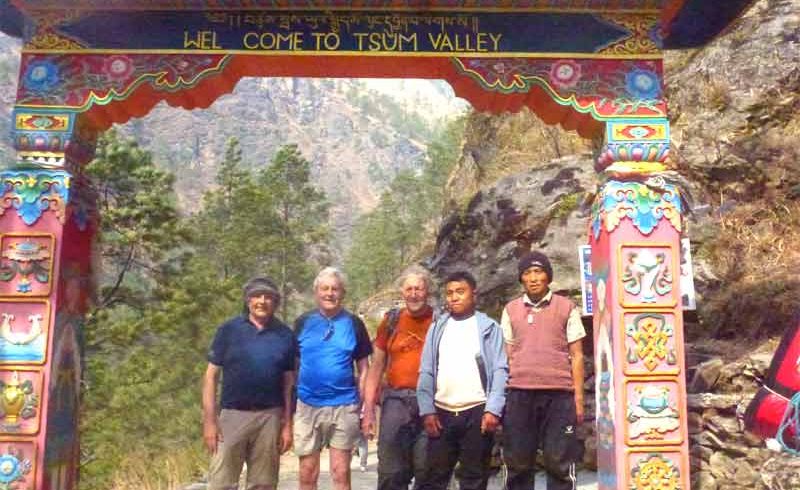


The Tsum Valley Trek is one of the most fascinating cultural and Himalayan trekking adventures in Nepal. Located in the northern part of the Gorkha district, close to the Tibetan border, Tsum Valley is a remote and culturally rich Himalayan valley surrounded by spectacular mountains, ancient monasteries, traditional villages, and dramatic landscapes.
Often known as a Hidden Valley, Tsum Valley remained relatively isolated from the outside world for generations. The valley is home to people of Tibetan origin who have preserved their distinctive language, Buddhist traditions, architecture, festivals, and way of life. Trekking through this region provides travelers with an opportunity to experience a quieter side of Nepal away from the busier trekking routes.
The Tsum Valley Trek combines beautiful Himalayan scenery with a remarkable cultural experience. The route follows the Budhi Gandaki River and gradually enters the narrow valley surrounded by high mountains. Along the way, trekkers pass through traditional settlements, Buddhist chortens, mani walls, prayer flags, monasteries, forests, waterfalls, and high mountain landscapes.
One of the most important cultural attractions is Mu Gompa, located in the upper part of the valley. Other important monasteries and religious sites include Rachen Gompa, Dhephydonma Gompa, and numerous local chortens and mani walls. The trek can be organized as a dedicated Tsum Valley journey or combined with the Manaslu Circuit Trek for a longer Himalayan adventure.
Where Is Tsum Valley?
Tsum Valley lies in the northern Gorkha region of Nepal, within the Manaslu Conservation Area. The valley is surrounded by spectacular Himalayan peaks and lies close to the Tibetan border.
The trek normally begins after traveling from Kathmandu toward the lower Budhi Gandaki Valley and reaching the trailhead around Machha Khola or another suitable starting point, depending on road conditions and the selected itinerary.
From the lower valley, the trail gradually climbs through villages and forests before reaching the culturally rich settlements of Tsum Valley. The remote geographical location has helped preserve the valley’s traditional culture and Buddhist heritage.
Why Choose the Tsum Valley Trek?
The Tsum Valley Trek is ideal for travelers who want more than mountain scenery. It provides a combination of culture, nature, spirituality, traditional villages, and Himalayan landscapes.
One of the major reasons to visit Tsum Valley is its relatively peaceful atmosphere. Compared with some of Nepal’s more heavily visited trekking destinations, Tsum Valley offers a quieter experience.
The valley’s Tibetan Buddhist heritage is another major attraction. Trekkers can visit ancient monasteries, observe prayer ceremonies when available, walk beside long mani walls, and see colorful prayer flags throughout the villages.
The landscape is equally impressive. High Himalayan peaks rise above the valley, while lower sections contain forests, rivers, waterfalls, and terraced fields.
Tsum Valley Trek Highlights
Traditional Himalayan Villages
The trek passes through numerous traditional villages where local houses are built from stone and other locally available materials. Many villages retain traditional architectural styles influenced by Tibetan culture.
Villages such as Chumling, Chhokangparo, Nile, and other settlements provide opportunities to experience local life.
Mu Gompa
Mu Gompa is one of the most important religious sites in Tsum Valley. Located at a high elevation in the upper valley, the monastery is surrounded by dramatic Himalayan scenery.
Visiting Mu Gompa provides an opportunity to learn about the area’s Buddhist heritage and the spiritual traditions of the local communities.
Rachen Gompa
Rachen Gompa is another important monastery in Tsum Valley. It is associated with the Buddhist traditions of the valley and is an important religious and cultural site.
The monastery provides an excellent opportunity to observe traditional Buddhist architecture and understand the spiritual significance of the region.
Milarepa Cave
The valley is also associated with Milarepa, the famous Tibetan Buddhist yogi and poet. Local tradition connects several caves and meditation sites in the region with his spiritual activities. These sites add an important spiritual dimension to the trek.
Mani Walls and Chortens
Long mani walls decorated with Buddhist inscriptions and prayer stones are common throughout the valley. Chortens, prayer wheels, and colorful prayer flags can also be seen along the trail. Trekkers should always walk around religious structures in the traditional clockwise direction unless local customs indicate otherwise.
Himalayan Mountain Views
The trek offers impressive views of mountains in the Manaslu region. Depending on the location, weather, and visibility, trekkers may see Ganesh Himal, Sringi Himal, Himalchuli, Buddha Himal, and other surrounding peaks. The changing landscapes from green hills to high Himalayan terrain make the journey particularly scenic.
Tsum Valley Culture
Culture is one of the most important reasons to undertake this trek.
The people of Tsum Valley have strong Tibetan Buddhist cultural traditions. Their lifestyle has developed around agriculture, livestock, trade, monasteries, and close-knit mountain communities.
Traditional Buddhist practices remain an important part of everyday life. Prayer wheels, mani stones, chortens, monasteries, and prayer flags are visible throughout the valley. Many homes are constructed from stone and feature traditional Tibetan-influenced designs.
Visitors may also have opportunities to observe local festivals and religious ceremonies if their travel dates coincide with these events.
The best way to experience the culture is to travel respectfully, communicate with local people, and spend time in the villages rather than simply passing through them.
Tsum Valley Trek Difficulty
The Tsum Valley Trek is generally considered a moderate to challenging trek, depending on the itinerary, walking pace, road conditions, and altitude.
The route involves long walking days, steep uphill and downhill sections, uneven trails, suspension bridges, and increasing altitude.
The upper valley reaches more than 3,700 meters in some sections, and trekkers should therefore take altitude and acclimatization seriously.
No technical mountaineering skills are required for the standard Tsum Valley Trek. However, good physical fitness and preparation are recommended.
Regular walking, hiking, stair climbing, and cardiovascular exercise before the trek can help prepare the body for the journey.
Altitude and Acclimatization
Altitude is an important consideration on the Tsum Valley Trek.
The lower sections begin at relatively low elevations, while the upper valley gradually rises toward Mu Gompa and other high settlements.
A properly designed itinerary should include appropriate acclimatization and rest periods. Trekkers should avoid ascending too quickly and should inform their guide if they experience symptoms associated with altitude sickness.
Walking slowly, drinking enough water, eating regularly, and getting adequate rest are important parts of high-altitude trekking.
Best Time for Tsum Valley Trek
The main trekking seasons are spring and autumn.
Spring Season
March, April, and May are popular months for trekking in Tsum Valley. The weather is generally suitable for trekking, and forests become colorful with blooming rhododendrons and other vegetation.
Mountain visibility can also be good during stable weather periods.
Autumn Season
September, October, and November are traditionally among the best months for trekking in Nepal. After the monsoon season, the landscape can be green and clean, while mountain views are often excellent.
October and November are particularly popular.
Winter Season
December, January, and February can be cold, particularly in the upper valley. Snow and freezing temperatures may affect some sections.
Experienced trekkers can still visit during winter with appropriate clothing and preparation, but accommodation and trail conditions should be confirmed before departure.
Monsoon season
June, July, and August are the monsoon months. Heavy rainfall can make lower trails muddy and affect road transportation.
Landslides and swollen rivers can also cause transportation or trail difficulties.
Accommodation during the trek
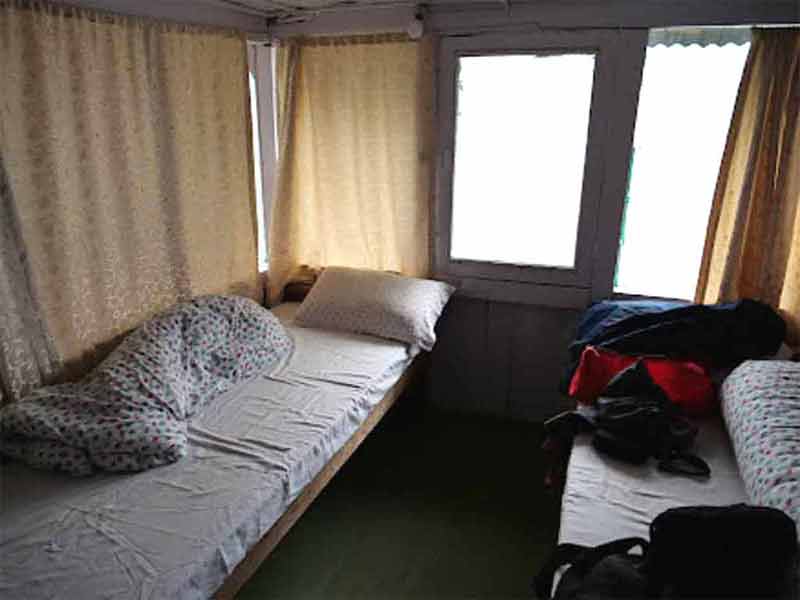
Accommodation during the Tsum Valley Trek is mainly provided by local teahouses, lodges, and basic guesthouses.
Facilities are generally more basic than those found on highly developed trekking routes such as the Everest region.
Rooms normally have simple beds and blankets. Bathrooms may be shared, particularly in smaller villages.
Hot showers may be available in some lodges for an additional fee, but facilities become more limited as trekkers travel deeper into the valley.
The simple accommodation is part of the authentic experience of trekking in a remote Himalayan region.
Food Items During the Trek
Local teahouses provide a range of meals suitable for trekkers.
- Dal Bhat
- Rice
- Vegetable curry
- Noodles
- Fried rice
- Pasta
- Momo
- Soups
- Potatoes
- Eggs
- Tibetan bread
- Pancakes
- Tea
- Coffee
Dal Bhat is a particularly popular trekking meal because it provides substantial energy for long walking days.
In remote sections, food choices may be more limited than in larger trekking destinations. Trekkers should be prepared for simple meals and local ingredients.
Transportation
The journey to Tsum Valley normally involves road transportation from Kathmandu toward the Gorkha and Budhi Gandaki region.
Depending on the itinerary and current road conditions, trekkers may travel by public bus, shared jeep, or private vehicle.
Road conditions can change, particularly during the monsoon season, so transportation arrangements should remain flexible.
A local trekking agency can organize transportation according to the group size and selected itinerary.
Permits for Tsum Valley Trek
The Tsum Valley Trek requires the appropriate trekking permits and conservation-area documentation.
The route lies within the Manaslu Conservation Area, and trekkers also require a Tsum Valley restricted-area permit. The applicable fees can vary according to the season and the number of days spent in the restricted area.
Trekkers should check current permit regulations and fees before departure because government requirements can change.
Permits are normally arranged through a registered trekking agency, and independent travel may be subject to additional requirements.
Guide and Porter Service
A licensed local guide is strongly recommended for the Tsum Valley Trek.
The region is remote, and a guide can assist with navigation, accommodation, permits, communication, cultural interpretation, and emergency support.
A local guide can also explain the meaning of Buddhist monuments, monasteries, traditional customs, and local history.
Porters can carry the main luggage, allowing trekkers to walk with a lighter daypack.
Hiring local guides and porters also provides direct economic benefits to communities in the trekking region.
What You Will See on this trek
The Tsum Valley Trek provides a diverse collection of natural and cultural attractions:
Traditional Tibetan-influenced villages
- Buddhist monasteries
- Mu Gompa
- Rachen Gompa
- Mani walls
- Chortens
- Prayer wheels
- Prayer flags
- Milarepa-associated sites
- Budhi Gandaki River
- Waterfalls
- Suspension bridges
- Rhododendron and pine forests
- Terraced farmland
- Ganesh Himal
- Sringi Himal
- Himalchuli
- Other Himalayan peaks
The combination of culture and nature makes Tsum Valley particularly attractive to photographers, hikers, cultural travelers, and people seeking a quieter Himalayan experience.
Packing List for the Trek
A suitable packing list for Tsum Valley includes:
- Trekking boots
- Trekking trousers
- Thermal underwear
- Fleece jacket
- Down or warm jacket
- Waterproof jacket
- Warm hat
- Gloves
- Sunglasses
- Sunscreen
- Water bottle
- Headlamp
- Personal medication
- Basic first-aid supplies
- Trekking poles
- Sleeping bag
- Small daypack
- Duffel bag for porter
- Personal toiletries
- Power bank
- Camera or mobile phone
The exact equipment required depends on the season and itinerary.
Health and Safety
Although the Tsum Valley Trek does not involve technical climbing, it takes place in a remote Himalayan environment.
Trekkers should maintain a steady pace and avoid unnecessary physical exhaustion.
Because the upper valley reaches high elevations, altitude awareness is essential. Trekkers should recognize unusual symptoms and immediately inform their guide if they feel unwell.
Weather can change quickly, so warm and waterproof clothing should always be accessible.
Good trekking boots are especially important because the trail can be rocky, muddy, or slippery in some sections.
Travel insurance covering trekking and emergency evacuation is recommended.
Responsible Tourism
Tsum Valley is culturally and environmentally sensitive. Responsible tourism is therefore very important.
Trekkers should avoid leaving plastic waste along the trail and should use reusable bottles whenever possible.
Visitors should respect monasteries, religious objects, local customs, and private homes. Photography inside monasteries or during religious ceremonies should only be done with permission.
Trekkers are encouraged to support local businesses by staying in local lodges, eating local food, and purchasing locally produced products.
Respect for the environment and local culture helps preserve the valley for future generations.
Tsum Valley and Manaslu Circuit Combination
Tsum Valley can also be combined with the Manaslu Circuit Trek.
This longer journey allows trekkers to experience both the culturally rich Tsum Valley and the spectacular high mountain landscapes of the Manaslu region.
After exploring Tsum Valley, trekkers can return toward the Budhi Gandaki Valley and continue toward the Manaslu Circuit, eventually crossing Larkya La Pass depending on the selected itinerary.
The combined trek is suitable for travelers who have more time and want a longer Himalayan adventure.
Tsum Valley Trek for First-Time Trekkers
The Tsum Valley Trek can be completed by first-time Himalayan trekkers who have a reasonable level of fitness and are properly prepared.
However, because the route is remote and reaches significant altitude, it is more demanding than many short lower-altitude treks.
Beginners should prepare by walking regularly before coming to Nepal. Gradually increasing walking distance and including uphill and downhill training can be useful.
Traveling with an experienced local guide is particularly helpful for first-time trekkers.
Photography and Nature
Tsum Valley provides excellent opportunities for nature and cultural photography.
The combination of mountain peaks, forests, traditional villages, monasteries, prayer flags, suspension bridges, rivers, and local lifestyles creates a wide variety of subjects.
Spring can provide colorful forest landscapes, while autumn often provides clear mountain views.
Photographers should always respect local culture and ask permission before taking close photographs of people or religious activities.
Why Book Tsum Valley Trek With a Local Agency?
A local trekking agency can help make the journey more organized and secure by arranging permits, transportation, accommodation, guides, porters, meals, and other trekking services.
Local agencies also understand the practical conditions of the route and can adjust plans when weather, road conditions, or trail conditions change.
For a remote trek such as Tsum Valley, local knowledge can be especially valuable.
Conclusion during the trek
The Tsum Valley Trek is a remarkable Himalayan journey combining dramatic mountain landscapes, traditional villages, Tibetan Buddhist culture, ancient monasteries, and peaceful remote trails.
The valley’s unique cultural heritage and relatively isolated environment make it different from many of Nepal’s more established trekking destinations. From the lower Budhi Gandaki Valley to the high settlements around Mu Gompa, every section provides opportunities to experience the natural and cultural richness of the Himalayas.
The trek is suitable for travelers who want a meaningful cultural experience as well as mountain scenery. With proper preparation, a well-planned itinerary, an experienced guide, and appropriate equipment, the Tsum Valley Trek can become one of the most memorable trekking experiences in Nepal.
For travelers with additional time, combining Tsum Valley with the Manaslu Circuit provides an even more extensive Himalayan adventure, including the opportunity to experience the high mountain landscapes and Larkya La Pass.
Whether your main interest is Himalayan scenery, Buddhist culture, traditional villages, photography, or remote trekking, Tsum Valley offers a unique opportunity to discover one of Nepal’s most culturally fascinating mountain valleys.
| Day | Destination | Altitude | Walking Hour | Accommodation |
|---|---|---|---|---|
| 1 | Arrival Kathmandu and transfer to hotel | 1300 | One hour drive from airport to hotel | Hotel in Kathmandu |
| 2 | Day Free in Kathmandu | 1300 | Free visit | Hotel in Kathmandu with B&B Service |
| 3 | Kathmandu-Machhe Khola Jeep Drive | 890 | 7-hours | Lodge |
| 4 | Machhe Khola- Jagat | 1440 | 5-6-hours | Lodge |
| 5 | Jagat-Lokpa | Need Tsum valley especial trekking permit | 2240 | 5-6-hours | Lodge |
| 6 | Lokpa-Chumling | 2386 | 5-6-hours | Lodge |
| 7 | Chumling- Chhekemparo | 3010 | 5-6-hours | Lodge |
| 8 | Chhekamparo -Nile | 3361 | 5-6-hours | Lodge |
| 9 | Nile-Mu Gompa | 3700 | 4-5-hours | Lodge in Gompa Normal Lodge Normal food. |
| 10 | Visit Day | 3700 | 4-hours | Lodge |
| 11 | Mu Gompa -Chhekemparo | 3010 | 5-6-hours | Lodge |
| 12 | Chhekam Paro-Lokpa | 2240 | 5-6-hours | Lodge |
| 13 | Lokpa-Jagat | 1440 | 6-hours | Lodge |
| 14 | Jagat-Machhe Khola | 890 | 6-hours | Lodge |
| 15 | Machhe Khola Kathmandu By privet Jeep | 1300 | 6-7-hours | Hotel |
| 16 | Kathmandu-Free day | 1300 | Free day at Kathmandu | Hotel include with breakfast. |
| 17 | Departure | Your Flight | Hotel to Kathmandu airport | Your home country |
Tsum Valley Trekking cost 1150 $ Per Person
cost Includes
- Arrival & departure transport service.
- Hotel in Kathmandu with bed and breakfast as per itinerary.
- A day three times meals-Breakfast, Lunch, and Dinner during the trek.
- Lodge accommodations during the trek
- English–speaking, government-licensed trekking guide & Porter.
- Duffel (Kit) Bag for the trek.
- Tsum Valley restricted trekking permits.
- Company paperwork and Government taxes, etc.
- Bus or Jeep to Kathmandu- Machhe Khola- Kathmandu.
- Manaslu conservation fee
- Tsum Valley special trekking permit.
- Porter to carry your bags: 2 members, one porter.
- Guide and Porter salary & insurance.
Tsum Valley Trekking cost Excludes
- Hotel, Lunch, and Dinner in Kathmandu.
- Your travel insurance policy encases if the accident and high-altitude sickness Rescue.
- Nepal entry visa fee: 15 Days 30 US$ and for 30 Days 50 US$; you can obtain your visa in Kathmandu airport if you have not obtained it from your country.
- Will require 2 passport-size photos.
- Soft and hard drinks Such as Beer, Coke, Fanta, and mineral water.
- Hot drinks, battery charging, and hot showers during the trek.
- Personal Trekking Equipment.
- Tips for trekking staff.
Normally, you need to bring with you flowing equipment. + walking boot If possible Gore tax boot is better. + Warm socks and Gaiters in case of rain or snow. + Day carry bag and Down Jacket over 4,000 meters. + Sleeping bag and others which are not mansions here.
September to November and March to May
Day time normal and during Night 3-6 degree.
Tsum valley trek cost 1280: US$ per person minimum of the 2 people in the group
Manasulu National park permit and Tsum valley especial Trekking Permit.
Yes, If you take a Guide and porter, cook, and camping gear then very safe trip for this trek. It is better to book your trip with an agency if something happens then easy to solve any problem and full responsibility from the Trekking agency.
Tea house lodge
Chinese, Nepali, Tibetans, Indian and Italian dish.
5/7 hours of walking per day.
Yes, you can see Manasulu (8,163m), Sarangi Himal (7,161m), Ganesh Himal (7,429m), and many other mountain views including visits to many Gompas.
Maximum (4,040m)
Passport photocopy (should be very clear with color scan) and validity minimum 6 months. 2 passport-size photos. Occupation. Home details address. Insurance copy
Arrival & departure transport service. Hotel in Kathmandu with bed and breakfast as per itinerary. A day three times meals-Breakfast, Lunch and Dinner during the trek. 3000 rs per day per person for the meals and lodge accommodations, English- speaking –Government licensed holder trekking guide. Over the 6 Pax group, we will provide you experience mountain Leader, who has the best trained Hotel Management (NATHM) Mountain Leader Course, Component 1-2, Navigation Course, Rock climbing Course, Mountain rescue Training and Basic Mountaineering training, etc. Company paper working and Government taxes etc. Privet Jeep to Kathmandu-SutiKhola-Kathmandu 40,000 Rs Manaslu park fees 2,000 rs. Tsum valley special trekking permit 50 $ per week per person. Porter to carry your bag 2 Member one porter. Experience trekking guide salary & insurance.
Feels like hangover & Feeling not good/ Headache/ Shortness of Breath/ Loss of appetite/ Sleep not good/ vomiting/ fevers etc.
Yes, if a woman travels alone to Nepal no problem but you take a guide or porter from a registered trekking agency because the trekking company is fully responsible for trekking and Mountain climbing. Our agency staff always take care of you, and they will provide you a single room single tent during the tea house trek and during the climbing trek. But if you contact freelance Guide then you get many problems they try to make chit for a single woman. Therefore if you book a guide porter with un agency then it is good safe your Holyday travel to Nepal.
Altitude Chart