Dhaulagiri Pass and Thapa Peak climbing - 20 Nights 21 Days
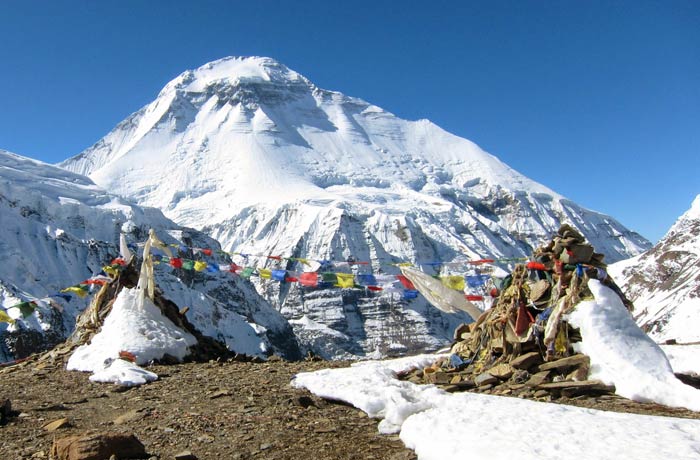


Dhaulagiri Pass and Thapa Peak Climbing is an adventurous trekking and mountaineering journey in the remote western Himalayas of Nepal. This combined expedition offers an exciting opportunity to explore the spectacular Dhaulagiri region, cross challenging high mountain passes, walk across glaciers, experience remote Himalayan landscapes, and climb Thapa Peak, also known as Dhampus Peak.
The adventure is ideal for experienced trekkers and mountaineers who want to explore a less crowded region of Nepal. Unlike popular trekking routes such as Everest Base Camp and the Annapurna Circuit, the Dhaulagiri region offers a wilder environment, remote camping locations, dramatic mountain scenery, and a greater sense of exploration.
The journey typically follows part of the Dhaulagiri Circuit Trek, passing through traditional villages, forests, alpine valleys, glaciers, and high mountain terrain. Depending on the selected itinerary, trekkers may cross French Pass and Dhampus Pass before or after climbing Thapa Peak.
The expedition provides magnificent views of Dhaulagiri I, Tukuche Peak, Nilgiri, Annapurna, and numerous surrounding Himalayan summits. The route also introduces trekkers to the geographical and cultural diversity of western Nepal.
Thapa Peak is approximately 6,012 meters high, making it an attractive climbing objective for mountaineers seeking a challenging Himalayan summit without attempting an 8,000-metre mountain. However, the combination of high passes, remote camps, glacier travel, and peak climbing requires careful preparation, suitable equipment, experienced guides, and proper acclimatization.
Where Are Dhaulagiri Pass and Thapa Peak Located?
The Dhaulagiri region lies in western Nepal, mainly within the Myagdi and Mustang areas. The Dhaulagiri massif contains some of the world’s highest mountains, including Dhaulagiri I at 8,167 meters.
Thapa Peak, commonly called Dhampus Peak in mountaineering itineraries, is located near the Dhaulagiri and Kali Gandaki mountain region. It offers impressive views of the surrounding Himalayan ranges and is often combined with a Dhaulagiri Circuit expedition.
The journey commonly begins in Kathmandu, followed by travel to the Beni or Darbang area. From there, trekkers follow a remote trail through villages and valleys before entering the high alpine landscape.
As the expedition progresses, the landscape changes from terraced farmland and forest to rocky moraines, glaciers, snow-covered passes, and broad mountain valleys.
The remoteness of this region makes the journey particularly attractive to adventurous travelers who want to experience a demanding Himalayan expedition away from busy trekking routes.
Thapa Peak Climbing
Thapa Peak, also known as Dhampus Peak, stands at approximately 6,012 meters above sea level. It is a popular climbing objective for trekkers exploring the Dhaulagiri Circuit and the surrounding high mountain region.
The peak offers an excellent viewpoint over the Dhaulagiri massif, Tukuche Peak, the Annapurna range, and other surrounding mountains. The climbing route involves high-altitude walking, rocky terrain, snow slopes, and potentially glaciated sections depending on the route and current conditions.
Although Thapa Peak is sometimes described as a trekking peak, it should not be underestimated. Climbers need good physical fitness, previous experience at altitude, and appropriate mountaineering preparation.
A typical climbing program includes time to acclimatize, establish a suitable high camp, review equipment, and receive a technical briefing from the climbing guide.
The summit attempt normally begins early in the morning when conditions may be more favorable. The duration depends on the selected route, snow conditions, weather, and the climbers’ pace.
After reaching the summit, climbers return carefully to high camp or a lower camp. The guide may adjust the summit plan if visibility, wind, snow, or other conditions create unacceptable risks.
Dhaulagiri Passes: French Pass and Dhampus Pass
The high passes are among the most memorable parts of the expedition. Crossing them requires stamina, acclimatization, and careful attention to weather and terrain.
French Pass (5,360 m)
French Pass is approximately 5,360 meters high and is one of the major crossings on the Dhaulagiri Circuit. The ascent usually involves rocky trails, glacial moraine, and high-altitude terrain.
From the pass, trekkers can enjoy impressive views of the Dhaulagiri massif and surrounding peaks. The route descends towards Hidden Valley, a remote and spectacular part of the expedition.
Snow, ice, strong winds, and low temperatures can affect the crossing. The guide assesses the conditions before proceeding, and the itinerary should include flexibility for weather delays.
Dhampus Pass (5,200 m)
Dhampus Pass, also referred to as Thapa Pass in some trekking descriptions, is approximately 5,200 metres high, although reported elevations vary by source and route.
The crossing provides access towards the Kali Gandaki Valley and the Jomsom area. It is an important part of many Dhaulagiri Circuit itineraries.
The trail may include loose stones, snow, ice, and steep descents. Trekking poles, sturdy boots, and appropriate layering are helpful, while technical equipment may be required depending on the conditions.
Important: Thapa Peak and Dhampus Pass are different objectives. Thapa Peak is the mountain summit, while Dhampus Pass is a high mountain crossing. A properly planned itinerary should specify which passes and climbing routes are included.
Thapa Peak Summit (6,012 m)
Thapa Peak Summit is an exciting mountaineering adventure in Nepal’s Dhaulagiri region, offering breathtaking panoramic views of Dhaulagiri, Tukuche Peak, and surrounding Himalayan mountains. The summit climb requires good physical fitness, proper acclimatization, and basic mountaineering skills. Climbers travel across glaciers, snowy slopes, and rugged alpine terrain with the support of an experienced climbing guide. Reaching the summit provides an unforgettable Himalayan experience and spectacular mountain scenery. Spring and autumn are generally the best seasons for Thapa Peak climbing, depending on weather and snow conditions.
Difficulty Level
Dhaulagiri Pass and Thapa Peak Climbing is a strenuous and technically demanding expedition. It is more challenging than most standard teahouse treks because of the altitude, remote camps, glacier travel, long walking days, and climbing objective.
Trekkers should be comfortable walking for several hours a day on uneven ground and carrying a daypack at altitude. Some days involve steep ascents and descents, while others require movement across rocky moraine and potentially snow-covered terrain.
The expedition is best suited to people with previous multi-day trekking experience and a good understanding of high-altitude travel. Previous experience with crampons, ice axes, ropes, and glacier safety is strongly recommended for the climbing section, according to the route and guide’s assessment.
A training program can include regular hiking, stair climbing, aerobic exercise, and strength training. Training should build endurance gradually rather than relying on short periods of intense exercise immediately before departure.
Best Time for Dhaulagiri Pass and Thapa Peak Climbing
Spring: March to May
Spring offers improving weather, longer daylight hours, and generally suitable conditions for Himalayan trekking and climbing. Snow conditions and temperatures vary considerably with elevation, so early-season expeditions may encounter more snow on the passes.
Autumn: September to November
Autumn is another popular season because skies are often clearer after the monsoon. October is frequently attractive for mountain views, although conditions can change rapidly at high altitude.
Winter is generally unsuitable for many standard itineraries because of extreme cold, deep snow, and potentially dangerous pass conditions. The monsoon season can bring rain, poor visibility, landslides, and difficult trail conditions at lower elevations.
The best departure date depends on current snow conditions, the climbing route, and the experience of the expedition team.
Accommodation and Camping
Accommodation varies along the route. Lower sections may offer basic lodges or teahouses, but the remote Dhaulagiri Circuit includes several locations where camping is necessary.
During camping sections, the expedition team sets up sleeping tents, dining facilities, and a kitchen. Sleeping mats, warm sleeping bags, and insulated clothing are essential because nighttime temperatures can fall well below freezing at high camps.
Facilities become increasingly basic as the route gains altitude. Trekkers should not expect private rooms, heated bedrooms, hot showers, or permanent toilets in remote glacier and high-altitude camps.
Food and Drinking Water
During the trekking section, meals may include
- Dal
- Bhat,
- Rice,
- Noodles,
- Soup,
- Potatoes,
- Vegetables,
- Porridge,
- Eggs, and other locally available foods.
At camping locations, a cook and support team prepare meals according to the expedition’s arrangements.
A balanced diet with sufficient carbohydrates, protein, and fluids helps support the physical demands of the journey. Appetite may decrease at high altitude, so eating small, regular meals can be useful.
Drinking water must be treated or purified before consumption. Water purification tablets, filters, or an appropriate treatment system should be included in the equipment plan.
Permits and Documentation
The permits required for Dhaulagiri Pass and Thapa Peak depend on the exact route, the climbing objective, and current Nepalese regulations.
Possible requirements
A Dhaulagiri-region trekking permit or other applicable conservation-area entry permit.
A climbing permit for Thapa Peak, if required under the Tourism Department.
A valid passport, Nepal entry visa, and relevant travel documentation.
Permit categories and fees can change. Before confirming a booking, the operator should verify the current rules with the relevant
Nepalese authorities and identify every permit required for the exact itinerary.
The package quotation should state which permits are included and whether any fees are payable separately.
Guide, Climbing Support, and Porter Services
A qualified trekking guide is important for navigation, daily route planning, local communication, and monitoring the group’s general condition.
For the Thapa Peak climbing section, climbers should have an appropriately qualified climbing guide with experience on the selected route. The guide should provide a technical briefing, check equipment, and assess weather and snow conditions before the summit attempt.
Porters and camping staff help transport equipment, food, and group supplies. The number of support staff depends on group size, the amount of equipment, and the operator’s arrangements.
Clients should confirm the guide-to-client ratio, emergency procedures, staff insurance, and the allocation of personal and group equipment before departure.
Equipment List for Dhaulagiri Pass and Thapa Peak Climbing
Clothing
- Moisture-wicking base layers.
- Insulating fleece or warm mid-layer.
- Down jacket suitable for high-altitude conditions.
- Waterproof and windproof jacket and trousers.
- Trekking trousers and warm thermal trousers.
- Warm gloves and insulated mittens.
- Sun hat, warm hat, and neck protection.
- Several pairs of trekking and mountaineering socks.
Footwear for Trekking & Climbing
- Sturdy trekking boots.
- Mountaineering boots compatible with the selected crampons.
- Camp shoes or lightweight sandals.
- Gaiters, if appropriate for the snow conditions.
- Climbing equipment
- Mountaineering helmet.
- Crampons compatible with the boots.
- Ice axe.
- Climbing harness.
- Suitable carabiners and other technical equipment specified by the guide.
- Trekking poles.
- Headlamp with spare batteries.
Ropes and glacier-travel equipment should be selected and managed by the qualified climbing team according to the route and conditions.
Personal equipment
- Sleeping bag suitable for expected high-altitude temperatures.
- Daypack and duffel bag.
- Sunglasses with strong UV protection.
- Sunscreen and lip protection.
- Water bottles or hydration system.
- Water purification supplies.
- Personal medication and a basic first-aid kit.
Passport copies, insurance details, and emergency contact information.
Before departure, the climbing guide should check that boots, crampons, and other essential equipment are compatible and in good condition.
Altitude Sickness and Safety
Altitude is one of the main challenges of this expedition. The route reaches elevations above 5,000 meters, and the summit of Thapa Peak is approximately 6,012 meters.
Acute mountain sickness can affect anyone, regardless of age or fitness. Symptoms may include headache, nausea, dizziness, unusual fatigue, and loss of appetite.
Proper acclimatization, a gradual ascent, and adequate rest are essential. The itinerary should allow the guide to modify the schedule when a participant is not adapting well to the altitude.
Severe symptoms require prompt descent and medical assessment. A climber should never continue towards a high pass or summit to keep to the planned schedule.
Weather changes, falling rocks, snow-covered slopes, crevasses, and cold exposure are additional hazards. Comprehensive travel insurance should cover high-altitude trekking, peak climbing to the planned elevation, and emergency helicopter evacuation where available and appropriate.
Why Choose Dhaulagiri Pass and Thapa Peak Climbing?
This combined expedition offers a distinctive way to experience Nepal’s remote western Himalayas. It brings together demanding trekking, high mountain passes, glacier scenery, remote camping, and an exciting climbing objective.
The journey is especially appealing to experienced adventurers who want more than a standard trekking holiday. It offers an opportunity to explore the dramatic Dhaulagiri landscape, challenge personal mountaineering skills, and enjoy remarkable views of some of Nepal’s most impressive mountains.
Travelling with an experienced local team also supports route planning, cultural understanding, equipment management, and practical decision-making in a remote environment.
Choosing a responsible agency that prioritizes staff welfare, environmental protection, acclimatization, and safe climbing practices helps make the expedition more organized and enjoyable.
Frequently Asked Questions
How high is Thapa Peak?
Thapa Peak, also known as Dhampus Peak, is approximately 6,012 metres above sea level.
How high is French Pass?
French Pass is approximately 5,360 metres high.
How long does the expedition take?
A combined Dhaulagiri Pass and Thapa Peak expedition commonly takes around 18–21 days, depending on the route, acclimatization schedule, climbing plan, and transport.
Is Thapa Peak suitable for beginners?
It is not recommended as a first mountaineering experience for someone without suitable preparation. Previous high-altitude trekking experience and mountaineering training are strongly recommended.
Do I need a climbing guide?
Yes. A qualified climbing guide with experience on the selected route is strongly recommended for safe planning, technical support, and summit decisions.
What is the best season?
Spring, from March to May, and autumn, from September to November, are the principal seasons, subject to current conditions.
Is camping required?
Yes. Camping is normally necessary on the remote sections of the Dhaulagiri Circuit, although lodge accommodation may be available in some lower villages.
Do I need previous experience with crampons and an ice axe?
For a climbing route involving snow or ice, familiarity with mountaineering equipment is important. The precise requirements depend on current conditions and the route selected.
Can the itinerary change because of bad weather?
Yes. Snowfall, strong winds, poor visibility, and other mountain conditions may require additional rest days, a delayed summit attempt, or changes to the route.
What insurance do I need?
You should have insurance that explicitly covers high-altitude trekking, climbing to the planned elevation, and emergency evacuation appropriate to the itinerary.
Can the trek finish in Jomsom?
Yes. Many Dhaulagiri Circuit itineraries descend towards the Kali Gandaki Valley and finish in the Jomsom area, subject to the selected route and pass conditions.
Is Thapa Peak the same as Dhampus Peak?
Thapa Peak is commonly referred to as Dhampus Peak in mountaineering itineraries. Confirm the exact peak, route, and permit requirements with the expedition operator when booking.
Conclusion
Dhaulagiri Pass and Thapa Peak Climbing is a remarkable Himalayan expedition combining remote trekking, high mountain passes, spectacular glaciers, and a summit attempt at approximately 6,012 metres. From the rugged approaches to Dhaulagiri Base Camp to the dramatic landscapes of Hidden Valley and the panoramic summit views of Thapa Peak, the journey provides an unforgettable experience for well-prepared adventurers.
With proper acclimatization, experienced guides, quality mountaineering equipment, and a flexible itinerary, this expedition offers a rewarding way to explore one of Nepal’s most spectacular mountain regions.
Book your Dhaulagiri Pass and Thapa Peak Climbing adventure with an experienced local trekking and mountaineering team, and prepare for an extraordinary journey into the heart of the Himalayas.
| Day | Destination | Altitude | Walking Hour | Accommodation |
|---|---|---|---|---|
| 1 | Arrival Kathmandu and transfer to hotel | 1300 | One hour drive from airport to hotel | Hotel in Kathmandu |
| 2 | Day Free in Kathmandu | 1300 | Free visit | Hotel in Kathmandu with B&B Service |
| 3 | Kathmandu to Beni | 899 | By Public bus to Beni 11-12-hours | Lodge |
| 4 | Beni to Muri | 1840 | 3-hours bus and 2-hours walking | Lodge |
| 5 | Muri to Bagar | 2080 | 5-6-hours | Lodge |
| 6 | Bagar to Dovan | 2880 | 5-6-hours | Lodge |
| 7 | Dovan to Forest camp | 3110 | 5-6-hours | Lodge |
| 8 | Forest camp to Italian Base camp | 3700 | 5-6-hours | Tent Camping |
| 9 | Day acclimations at Italian Base camp | 3700 | Day Free | Teng camping |
| 10 | Italian Base camp to Swiss Base camp | 3790 | 3-4-hours | Tent Camping |
| 11 | Swiss Base cam to Dhaulagiri base camp | 4750 | 5-6-hours | Tent Camping |
| 12 | Dhaulagiri base camp to Hedden valley via French pass 5360 | 5150 -Hedden valley | 5-6-hours | Tent Camping |
| 13 | Hidden valley to Elevation camp via Thapa pass 5244 | Elevation (5090 | 5-6-hours | Tent camping |
| 14 | Day Extra for climbing | 5090 | Day Extra if weather is bad | Tent Camping |
| 15 | Summit to Thapa peak | 6012 | 8-9-hours | Tent Camping |
| 16 | Elevation camp to Alubari | 3680 | 5-6-hours | Tent camping |
| 17 | Alubari to Jomsom | 2700 | 4-5-hours | Lodge |
| 18 | Jomsom to Pokhara | 900 | 25-Minutes Flight to Pokhara | Hotel in Pokhara |
| 19 | Pokhara to Kathmandu | 1300 | 7-hours by bus | Hotel in Kathmandu |
| 20 | Day Free in Kathmandu | 1300 | Free walking | Hotel in Kathmandu with B&B Service |
| 21 | Departure Day | Flight out From Nepal | After breakfast drive to the international airport for your scheduled flight back to the home. | At the Your home |
Dhaulagiri Pass and Thapa Peak climbing cost 3,100 $ Per pperson
includes
- Arrival and departure transportation by car, van, or Hiace
- The hotel in Kathmandu includes breakfast for 4 nights.
- 2 Nights' stay with breakfast at a hotel in Pokhara.
- Typical full-board meals include Nepalese and Indian food. There is a lot more European food than Chinese and Italian. While trekking, drink tea or coffee.
- One climbing guide is a highly experienced, friendly, and helpful English speaker,
- Kathmandu to Pokhara bus
- Pokhara to Beni bus transfer.
- Beni to Muri bus transfer bus.
- Pokhara to Kathmandu Tourist bus.
- For Nepali staff Jomsom to Kathmandu bus transport.
- Porters and 1 Cook.
- Sherpa climbers for the high pass and Thapa peak climbing
- Helicopter and medical insurance 10,000 US$ for Nepali staff.
- During the trip, we used a dining tent, two men's tents, a toilet tent, and kitchen equipment.
- Porters, insurance coverage, food, equipment, and lodging.
- Climbing equipment such as fixed ropes, ice screws, snow bars, and ice screws.
- Permit to enter the Annapurna National Park.
- Climbing permit for Thapa Peak.
- Fees for trash deposits to the Department of tourism.
- Plane ticket from Jomsom to Pokhara.
- Trekking maps for Dhaulagiri pass and Thapa peak.
Dhaulagiri Pass and Thapa Peak climbing Cost Excludes
- Lunch and dinner in Pokhara and Kathmandu.
- In your travel insurance policy, you're covered for accidents and high altitude sickness.
- Nepal entry visa fee is 30 US$ for 15 days and 50 US$ for 30 days. However, if you have not received your visa from your country, you can obtain it at the Kathmandu airport.
- Beverages such as beer, coke, Fanta, mineral water are soft and hard drinks.
- Tips for Nepali employees.
- The following items should be brought along: a sleeping bag, a crampon, a seat harness, an ice ax, and a lock-and-unlock karabiner.
- Make sure you bring four passport-size photographs with you.
September 10 to November 10 and March 1 to May 10
The temperature is normal during the day and 5-10 degrees at night.
There is a US$ 3100 charge per person for Dhaulagiri Pass and Thapa Peak climb.
Permits for Annapurna National Park and Thapa peak climbing.
I agree you will need a guide and porter tent for a safe journey.
From Beni to Itali camp lodge and basecamp to Yak Kharka tent service
The Dhaulagiri pass (5,500 m) and Thapa peak (6,012 m) climb
Passport photo copy (should be very clear with color scan) and validity minimum 6 months. 2 passport size photo. Occupation. Home details address. Insurance copy
Feels like you have a hangover, are feeling unwell, have a headache, breathing problems, are losing appetite, have trouble sleeping, are vomiting, have fevers, etc.
Altitude Chart