Manaslu Annapurna and Upper Mustang Trek -


The Manaslu Annapurna and Upper Mustang Trek is an extraordinary three-region Himalayan adventure designed for trekkers who want to experience the diverse landscapes, cultures, mountain scenery, and traditional villages of Nepal. This journey combines three of Nepal’s most remarkable trekking areas into one extended adventure: the remote and culturally rich Manaslu region, the classic high-altitude Annapurna Circuit, and the ancient Tibetan-influenced kingdom of Upper Mustang.
This combined trek offers an exceptional opportunity to explore the contrast between lush middle-hill landscapes, dramatic Himalayan valleys, high mountain passes, traditional Buddhist settlements, arid Tibetan-style landscapes, and spectacular views of some of the highest mountains in the world.
The Manaslu section takes you around the eighth-highest mountain in the world, Mount Manaslu (8,163 meters), through the Budhi Gandaki Valley and across the challenging Larkya La Pass. The Annapurna Circuit then leads through the Marsyangdi Valley, traditional villages, alpine landscapes, and the famous Thorong La Pass, before descending toward the sacred pilgrimage destination of Muktinath. From the lower Mustang region, the journey continues into Upper Mustang, where ancient villages, monasteries, cliffs, caves, and barren Himalayan landscapes create an atmosphere unlike anywhere else in Nepal.
Rather than simply visiting popular destinations, this combined trek provides an opportunity to experience the gradual transition from subtropical forests to high alpine terrain and finally to the dry, desert-like landscapes of the trans-Himalayan region.
Adventure Across Three Himalayan Regions
The combination of Manaslu, Annapurna, and Upper Mustang creates an exceptionally diverse trekking experience.
The Manaslu Circuit is known for its remote valleys, dramatic mountain scenery, Tibetan-influenced villages, Buddhist monasteries, suspension bridges, and the spectacular Larkya La Pass (5,106 m). The trail follows the Budhi Gandaki River and gradually enters a high mountain environment surrounded by enormous peaks.
The Annapurna Circuit is one of Nepal’s classic long-distance trekking routes. It crosses a remarkable variety of landscapes, from green valleys and terraced farmland to high alpine terrain. The highlight is the crossing of Thorong La Pass, followed by the descent to Muktinath and the Kali Gandaki region.
The Upper Mustang Trek provides a completely different experience. The landscape becomes dry and rugged, with dramatic cliffs, eroded valleys, ancient settlements, whitewashed monasteries, and traditional Tibetan-style architecture. The historic walled city of Lo Manthang is one of the major cultural highlights of the region.
Together, these three treks provide a journey through some of the most geographically and culturally diverse landscapes in the Himalayas.
Manaslu Trek
The Manaslu Circuit section begins in the lower hills and gradually enters the remote Budhi Gandaki Valley. The trail passes through forests, terraced farmland, waterfalls, suspension bridges, and traditional Gurung villages before reaching the higher settlements of the Manaslu region.
As the elevation increases, the vegetation becomes thinner, and the scenery becomes increasingly dramatic. Villages such as Namrung, Lho, Samagaon, and Samdo provide important cultural and acclimatization experiences before the trail reaches the Larkya La area.
One of the most memorable experiences is approaching Manaslu Base Camp and viewing the enormous Manaslu massif from the surrounding valleys. The mountain scenery includes Manaslu, Himalchuli, Ngadi Chuli, Ganesh Himal, and numerous surrounding peaks.
Larkya La Pass (5,106 m)
The crossing of Larkya La Pass is one of the major highlights of the entire combined adventure. The pass is situated at approximately 5,106 meters and requires a long, physically demanding day of trekking.
The ascent involves walking over increasingly rugged terrain and often across snow or icy sections depending on the season. From the top, trekkers can enjoy expansive Himalayan views and appreciate the dramatic change in landscape between the Budhi Gandaki Valley and the Marsyangdi side.
After crossing Larkya La, the trail descends toward Bimthang and eventually connects with the wider Annapurna trekking region.
Cultural Experience in the Manaslu Region
Manaslu is particularly attractive for trekkers interested in Himalayan culture. Many villages retain strong Tibetan Buddhist traditions, and the influence becomes more noticeable as the trail moves toward the higher valleys.
Prayer flags, mani walls, chortens, monasteries, traditional stone houses, and prayer wheels are common features along the route. Local communities, including Gurung and Tibetan-influenced Himalayan communities, have maintained traditions that have developed over generations.
The trek is not only a mountain journey but also a cultural experience where trekkers can learn about village life, Buddhist traditions, farming practices, local architecture, and the challenges of living in high mountain environments.
Annapurna Circuit Trek
After completing the Manaslu section, the journey continues toward the Annapurna region. The Annapurna Circuit offers another remarkable transformation in scenery.
The trail follows the Marsyangdi Valley and gradually climbs through villages such as Dharapani, Chame, Pisang, Manang, and the surrounding high mountain settlements. The landscape changes from forests and cultivated hillsides to dry alpine valleys.
The Annapurna massif dominates the skyline, with views of Annapurna II, Annapurna III, Annapurna IV, Gangapurna, Tilicho Peak, and other Himalayan peaks depending on the location and weather.
Manang and High-Altitude Acclimatization
Manang is one of the most important settlements on the Annapurna Circuit. It is traditionally used as an acclimatization location because the trail reaches significant elevation before crossing Thorong La.
The surrounding landscape is spectacular, with dry valleys, glacial rivers, dramatic cliffs, and high mountains. Trekkers can spend time exploring the village and surrounding viewpoints while allowing their bodies to adapt to the altitude.
Acclimatization is especially important during this combined trek because trekkers have already completed the high-altitude Larkya La crossing and will later encounter additional high elevations in Mustang.
Thorong La Pass (5,416 m)
The crossing of Thorong La Pass, at approximately 5,416 meters, is the principal high-altitude challenge of the Annapurna Circuit.
The pass connects the Marsyangdi Valley with the Kali Gandaki side of the Annapurna region. The ascent normally begins early in the morning because weather conditions at high elevation can change quickly.
The trail climbs steadily toward the pass, where prayer flags and traditional markers welcome trekkers to the highest point of the crossing. From the top, trekkers can enjoy impressive views of the surrounding Himalayan landscape.
The descent toward Muktinath is a major transition point. The landscape becomes noticeably drier, and the influence of the trans-Himalayan environment becomes increasingly visible.
A Sacred Himalayan Destination: Muktinath (3,800 m)
Muktinath is one of the most important pilgrimage destinations in Nepal and is sacred to both Hindus and Buddhists.
The area contains temples, monasteries, natural springs, and traditional religious sites. The combination of religious significance and dramatic Himalayan scenery makes Muktinath an important cultural highlight of the combined trek.
For many trekkers, reaching Muktinath after crossing Thorong La is also an emotional moment because it represents the successful completion of one of the major high passes.
From Muktinath, the journey continues toward the Mustang region.
Upper Mustang Trek
The Upper Mustang section provides a completely different experience from both Manaslu and Annapurna. Often described as a hidden Himalayan landscape, Upper Mustang is characterized by barren mountains, deep valleys, dramatic rock formations, ancient settlements, monasteries, caves, and Tibetan-style culture.
The region lies in the rain-shadow area of the Annapurna and Dhaulagiri ranges. As a result, the landscape is much drier than the southern slopes of the Himalayas.
The journey generally begins from the lower Mustang area and progresses through traditional villages toward the historic settlements of Upper Mustang.
Kagbeni – Gateway to Upper Mustang
Kagbeni is a historic settlement and an important gateway to Upper Mustang. Located near the junction of the Kali Gandaki Valley, Kagbeni has narrow alleys, traditional stone and mud houses, monasteries, and an atmosphere strongly influenced by Tibetan Buddhist culture.
The village provides an excellent introduction to the Upper Mustang environment.
From Kagbeni, the trail gradually enters the restricted Upper Mustang region. The scenery becomes increasingly dry and dramatic, with multicolored cliffs, barren hills, and deep river valleys.
Chele, Syangboche and Ghami
The trail continues through traditional settlements such as Chele, Syangboche, and Ghami. These villages demonstrate the unique architecture and cultural heritage of Upper Mustang.
Traditional houses are constructed from local materials and designed to protect residents from the harsh Himalayan climate. Whitewashed walls, wooden windows, prayer flags, monasteries, and agricultural terraces provide strong cultural character.
The route also crosses several smaller passes, offering panoramic views over the surrounding valleys.
Tsarang and Lo Manthang
Tsarang is another culturally significant settlement, known for its traditional houses, monastery, and dramatic landscape.
The journey then continues toward Lo Manthang, the historic cultural center of Upper Mustang.
Lo Manthang is famous for its ancient walled settlement, traditional houses, monasteries, narrow streets, and centuries-old Tibetan cultural heritage. Exploring the settlement provides an opportunity to understand the historical lifestyle of the Mustang region. The surrounding area also contains important monasteries and traditional villages.
Ancient Caves and Himalayan Heritage
One of the most fascinating features of Upper Mustang is its network of ancient caves carved into cliffs.
The exact origins and historical purposes of many cave systems are complex and have been studied by archaeologists and researchers. Some caves were used as residences, meditation spaces, burial sites, or storage areas at different periods.
These cliffside caves demonstrate the long human history of the region and make the Upper Mustang experience particularly distinctive.
Yara and Traditional Mustang Villages
Depending on the selected itinerary, the journey can continue toward Yara, a remote settlement surrounded by dramatic cliffs and barren valleys.
The area provides an opportunity to experience a quieter side of Mustang away from the main trekking settlements. Traditional agriculture, ancient structures, caves, monasteries, and rugged landscapes create an unforgettable environment.
The combination of remote villages and dramatic terrain makes this section especially rewarding for trekkers interested in culture, photography, geology, and Himalayan history.
Landscapes You Will Experience
One of the greatest attractions of this combined trek is the extraordinary range of landscapes.
During the Manaslu section, trekkers encounter:
- Green forests and subtropical valleys
- Terraced farmland
- Waterfalls and rivers
- Dense pine and rhododendron forests
- Deep mountain gorges
- Alpine meadows
- Glacial valleys
- Snow-covered mountain landscapes
- The Annapurna section adds:
- Marsyangdi River valleys
- Alpine settlements
- Dry Himalayan valleys
- High mountain passes
- Glacial lakes and rivers
- Annapurna and Dhaulagiri mountain views
- Kali Gandaki landscapes
Upper Mustang then introduces:
- Barren cliffs
- Desert-like valleys
- Red, brown, yellow, and gray rock formations
- Ancient caves
- Tibetan-style villages
- High-altitude plateaus
- Traditional monasteries and chortens
Few trekking journeys in Nepal provide such a dramatic combination of environments.
Mountain Views
The trek offers opportunities to see many spectacular Himalayan peaks.
In the Manaslu region, trekkers can see Mount Manaslu, Himalchuli, Ngadi Chuli, Ganesh Himal, and surrounding peaks.
In the Annapurna region, the scenery includes Annapurna II, Annapurna III, Annapurna IV, Gangapurna, Annapurna South, Dhaulagiri, Tilicho Peak, and other mountains depending on weather and route.
From Mustang, trekkers can experience views of Dhaulagiri, Annapurna, Nilgiri, Tilicho Peak, and numerous trans-Himalayan peaks.
Mountain visibility depends strongly on weather, season, and daily trail conditions.
Difficulty of the Combined Trek
The Manaslu Annapurna and Upper Mustang Trek are long and demanding high-altitude trekking adventures. It requires good physical fitness, endurance, preparation, and the ability to walk for several hours on consecutive days.
The most demanding sections include the crossings of Larkya La and Thorong La, both above 5,000 meters.
The challenge is not only the altitude. Long walking days, steep ascents and descents, uneven trails, changing weather, cold temperatures, and remote mountain conditions require good preparation.
Trekkers should gradually build their endurance before arriving in Nepal. Regular hiking, uphill walking, stair climbing, and cardiovascular exercise can help prepare the body for long trekking days.
Altitude and Acclimatization
Altitude is one of the most important considerations on this journey.
The trek gradually increases elevation, allowing the body time to adapt. Proper acclimatization days are especially important around the higher settlements of Manaslu and Annapurna.
Trekkers should walk at a steady pace, remain hydrated, avoid unnecessary overexertion, and communicate immediately with the guide if they experience symptoms associated with altitude illness.
A responsible itinerary should include appropriate acclimatization and flexibility for weather or health-related changes.
Accommodation of three treks
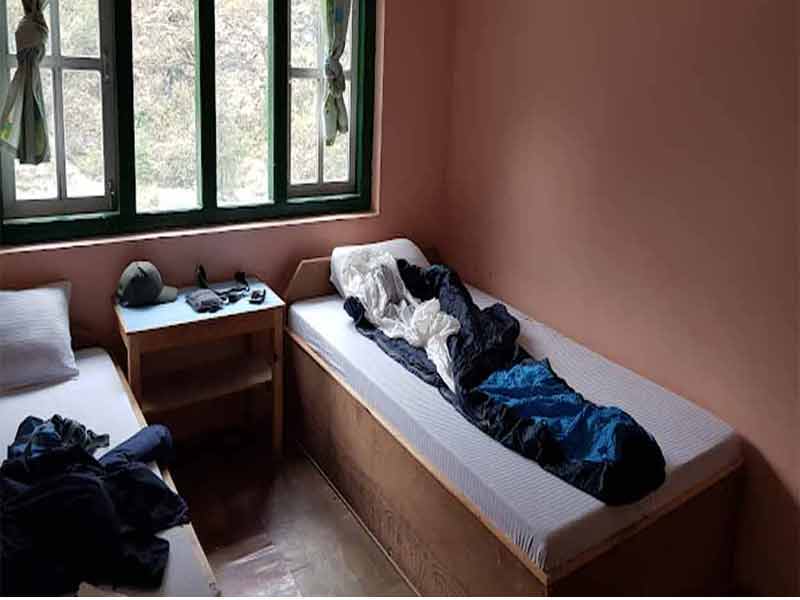
The Manaslu and Annapurna generally offer teahouses and lodges along the established trekking routes. Facilities can range from simple rooms to more comfortable lodges in larger villages.
Upper Mustang also has guesthouses and lodges in major settlements, although facilities may be simpler in remote areas.
Rooms are generally basic, and shared bathroom facilities are common, especially at higher elevations. Hot showers may be available in many places for an additional charge, while facilities become more limited in remote villages.
Trekkers should maintain realistic expectations about accommodation because this is a Himalayan trekking adventure rather than a luxury holiday.
Food items of three Trek
Common trekking foods include dal bhat, rice, vegetables, noodles, pasta, soup, potatoes, eggs, bread, pancakes, and Tibetan-style dishes.
Dal bhat is particularly popular because it provides a substantial meal suitable for long trekking days.
In higher and remote areas, food choices can become more limited. It is useful to carry personal snacks such as energy bars, dried fruit, nuts, chocolate, and other lightweight foods.
Permits and Restricted Areas
The Manaslu and Upper Mustang regions include controlled or restricted trekking areas, meaning trekkers must follow Nepal’s current permit and guide regulations.
Permits and conservation-area or national-park requirements can vary depending on the exact route and current government regulations.
Upper Mustang requires a Restricted Area Permit, and Manaslu also has specific restricted-area regulations. The Annapurna region has its own conservation and trekking permit requirements.
Because regulations and fees can change, permits should be arranged according to the current rules applicable at the time of travel.
For restricted areas, trekking with an authorized trekking agency and appropriate guide arrangements is important.
Best Time to Trek for Three Trek
Spring, especially March to May, usually provides good conditions for trekking, with improving weather and blooming rhododendrons at lower elevations.
Autumn, particularly September to November, is traditionally one of the most popular periods because of generally stable weather and good mountain visibility.
Upper Mustang can have different seasonal characteristics because it lies in the rain shadow. Its relatively dry environment means trekking conditions can be favorable during periods when other areas receive more precipitation. However, high passes can still experience snow and changing weather.
Winter can bring very cold conditions and snow at higher elevations, while monsoon conditions can affect lower sections and transportation. The exact itinerary should therefore be selected according to the season.
Guide and Porter Service
A professional guide is highly recommended for this combined trek, particularly because Manaslu and Upper Mustang involve regulated trekking areas and the journey includes several high passes.
An experienced guide helps with navigation, accommodation arrangements, local communication, permits, altitude management, and emergency coordination.
Porters can carry the majority of trekking equipment, allowing trekkers to walk with a lighter daypack. Hiring local guides and porters also contributes directly to mountain communities and provides valuable local knowledge.
Transportation
Transportation is an important part of this long journey. Road access has developed considerably in many parts of Nepal, but mountain roads can still be affected by weather, construction, traffic, and local conditions.
Depending on the final itinerary, transportation may include private vehicles, public buses, local jeeps, or other road transport.
The exact starting and ending points can be customized according to the trekker’s available time and preferred route.
What Makes This Three-Region Trek Special?
The main attraction is diversity.
The Manaslu section provides remote Himalayan scenery and traditional Buddhist culture.
The Annapurna section provides classic Himalayan trekking, high mountain passes, dramatic valleys, and the famous Muktinath pilgrimage area.
Upper Mustang provides ancient Tibetan-influenced culture, desert-like landscapes, monasteries, caves, and historic settlements.
The trek therefore combines mountains, culture, adventure, history, spirituality, and remote landscapes in one extended journey.
Recommended Equipment
Trekkers should prepare equipment suitable for both warm lower valleys and cold high-altitude conditions.
- Comfortable trekking trousers
- Thermal base layers
- Fleece jacket
- Down or insulated jacket
- Waterproof jacket and trousers
- Warm hat and sun hat
- Gloves
- Sunglasses with strong UV protection
- Sleeping bag suitable for cold mountain conditions
- Trekking poles
- Headlamp;
- Water bottles or hydration system
- Water purification method
- Sunscreen and lip balm
- Personal first-aid supplies
- Backpack and daypack
- Duffel bag for porter use
- Personal toiletries
- Power bank and charging equipment
- Lightweight towel
- Basic personal medicines
- High-altitude trekking clothing
The exact equipment requirements should be adjusted according to the season and itinerary.
Safety and Responsible Trekking
Trekkers should respect the pace of the group and avoid rushing at high altitude. Weather conditions should be monitored regularly, particularly before crossing Larkya La and Thorong La.
Travel insurance covering high-altitude trekking and emergency evacuation is strongly recommended.
Responsible trekking also means respecting local communities, monasteries, religious sites, wildlife, and the natural environment. Trekkers should avoid littering, use established trails, minimize plastic waste, and respect local customs.
Photography should be carried out respectfully, particularly around monasteries, religious ceremonies, and residents.
Journey Through Nepal’s Cultural Diversity
The Manaslu region introduces trekkers to Gurung and Tibetan Buddhist communities. Annapurna offers a mixture of Gurung, Manangi, Thakali, and other Himalayan cultures. Upper Mustang provides a particularly strong Tibetan cultural influence, visible in architecture, language, religion, clothing, monasteries, and traditional agricultural practices.
Visiting these communities provides a deeper understanding of how people have adapted to life in difficult mountain environments.
Conclusion during the trek
The Manaslu Annapurna and Upper Mustang Trek is an extensive Himalayan adventure for trekkers seeking much more than a single mountain route. It brings together three of Nepal’s most distinctive trekking regions and creates a journey across changing landscapes, cultures, altitudes, and traditions.
From the green valleys of the lower Manaslu region to the towering peaks around Larkya La, from the alpine landscapes of Manang to the high crossing of Thorong La, and from sacred Muktinath to the barren cliffs and ancient settlements of Upper Mustang, every section offers a different experience.
The journey combines challenging high passes, beautiful mountain scenery, traditional villages, monasteries, ancient caves, pilgrimage sites, and remote Himalayan landscapes.
For experienced trekkers and adventure seekers, this three-region journey offers the opportunity to experience the remarkable geographical and cultural diversity of Nepal in one continuous Himalayan adventure.
With proper preparation, experienced guide and porter support, suitable acclimatization, appropriate permits, and a flexible itinerary, the Manaslu Circuit, Annapurna Circuit, and Upper Mustang Trek can become one of the most memorable long-distance trekking experiences in Nepal.
Manaslu, Annapurna, and Upper Mustang together offer a journey from green Himalayan valleys to high mountain passes and finally into the ancient trans-Himalayan world of Mustang—an adventure that combines nature, culture, history, and Himalayan exploration.
Manaslu, Annapurna, and Upper Mustang trek cost | We require a minimum of 2 pax
| Day | Destination | Altitude | Walking Hour | Accommodation |
|---|---|---|---|---|
| 1 | Arrival Kathmandu and transfer to hotel | 1300 | One hour drive from airport to hotel | Hotel in Kathmandu |
| 2 | Trekking preparing day | 1300 | visit city | Hotel in Kathmandu with B&B Service |
| 3 | Kathmandu to Sutikhola or MachheKhola | 730 | 7-hours | Lodge |
| 4 | Sutikhola to Machhekhola | 900 | 6-hours | Lodge |
| 5 | MachheKhola to Jagat | 1300 | 6-hours | Lodge |
| 6 | Jagat to pewa | Especial Permit start from here. | 1420 | 6-hours | Lodge |
| 7 | Pewa to Namrung | Manaslu Especial Trekking permit | 2630 | 6-7-hours | Lodge |
| 8 | Namrung to Sama Gaun | Manaslu Especial Trekking permit | 3390 | 5-6-hours | Lodge |
| 9 | Rest day | and after lunch visit to valley | Manaslu Especial Trekking permit | 3390 | Visit | Lodge |
| 10 | Samagaun to Samdo | Manaslu Especial Trekking permit | 3690 | 4-hours | Lodge |
| 11 | Samdo to Dharmasala | Manaslu Especial Trekking permit | 4460 | 4-hours | Lodge |
| 12 | Dharmasala to Bhimtang | Especial Permit end from here | 5160-Larke pass | 6-7-hours | Lodge |
| 13 | Bhimtang to Telje | 2300 | 5-hours | Lodge |
| 14 | Tilije to Chame | 2670 | 7-hours | Lodge |
| 15 | Chame to Pisang village | 3100 | 4-hours | Lodge |
| 16 | Pisan to Manang | 3440 | 4-hours | Lodge |
| 17 | Manang Rest day. | 3440 | Visit to Gangpurna Glacier | Lodge |
| 18 | Manang to Yak Kharka | 4050 | 4-hours | Lodge |
| 19 | Yak Kharka to Thorong La Phedi | 4450 | 4-hours | Lodge |
| 20 | Phedi to Muktinath | 5416 Thorong pass | 6-7-hours | Lodge |
| 21 | Visit to Muktinath Temple | 3800 | Visit | Lodge |
| 22 | Muktinath to Ti-tang | Especial Mustang Trekking permit | 3300 | 6-hours | Lodge |
| 23 | Ti-tang to Tangya | Especial Mustang Trekking permit | 3550 | 7-hours | Lodge |
| 24 | Tangya to Yara | Especial Mustang Trekking permit | 3700 | 5-6-hours | Lodge |
| 25 | Yara to Lomanthang | Especial Mustang Trekking permit | 3790 | 5-6-hours | Lodge |
| 26 | Lomanthang | 3790 | Visit to Lomanthang | Lodge |
| 27 | Visit to Lhomanthang | 3790 | Visit | Lodge |
| 28 | Lhomanthang to Ghame | | Especial Mustang Trekking permit | 3100 | 5-6-hours | Lodge |
| 29 | Ghame to Samar | Especial Mustang Trekking permit | 3300 | 6-hours | Lodge |
| 30 | Samar to Chuksang | Especial Mustang Trekking permit | 3050 | 5-hours | Lodge |
| 31 | Chuksang to Kagbeni | Your Special permit end now. | 2800 | 5-6-hours | lodge |
| 32 | Kangbeni to Jomsom | 2700 | 4-hours | Loodge |
| 33 | Jomsom to Pokhara | 900 | 25 Minutes Flight from Jomsom to Pokhara | Lodge |
| 34 | Pokhara to Kathmandu | 1300 | 7-hours by Tourist bus | Lodge |
| 35 | Kathmandu | 1300 | Free visit | Hotel in Kathmandu with B&B Service |
| 36 | Departure day | After breakfast drive to the international airport | Flight out from Nepal | At your home |
Manaslu Annapurna Mustang Trek cost 3,254 $ Per Person
Cost Includes
- Arrival & departure transport.
- Hotel in Kathmandu with bed and breakfast 4 Nights.
- Accommodation at Lodge, Breakfast, Lunch Such as Nepali, Indian, Chinese, Italian and many more European foods you can choose by (Menu) during the trek.
- 3,000 Rs per member per day for meal and lodge.
- License holder Trekking Guide and Porter salary, insurance during the trek.
- Special Trekking permits Manaslu Permit one week 100 $ and Mustang 10 days Permit 500 $ Per person, Including park fee Manaslu 2000 rs and Annapurna 2000 rs.
- Bus Transport Kathmandu-Sutikhola- Pokhara –Kathmandu
- Jomsom-Pokhara Plane Ticket 125 $ Per person.
- 1 Night hotel in Pokhara with Bed and Breakfast
Manaslu Annapurna Mustang Trek Cost Excludes
- Lunch and dinner in Kathmandu.
- Your Travel Insurance Policy encase if the accident and high Altitude Sickness.
- Nepal entry visa fee 15 Days 30 US$ and for the 30 Days 50 US$you can obtain your visa in Kathmandu airport if you have not taken from your country.
- Soft and hard drinks Such as Beer, Coke, Fanta and Mineral water.
- Personal trekking Equipment.
- Tips for Trekking staff.
- Please bring with you 2 passport size pictures.
September to November and March to May
Highlight of Manaslu circuit, Annapurna, and Upper Mustang Treks in Nepal with very different experiences.
1: Manaslu Circuit trek, Remote and Raw Himalaya
Best for experienced trekkers seeking wilderness and fewer crowds. Highlight Mt, Manaslu (8,13 m). 8the world’s highest mountain dominates the route. Larkya La Pass (5,106 m) is one of the most dramatic and challenging high passes in the trek.
2: Remote villages such as
Samagaun, Samdo, Bhimtang, with a strong Tibetan culture and untouched landscapes. Deep gorges, glaciers, Alpine meadows, a Restricted area requires a special trekking Permit, with far fewer trekkers. An authentic experience limited to roads. less commercialized than the Annapurna Circuit and Base Camp Treks.
3: Annapurna region trek
Best Photographers, variety seekers. Highlight Annapurna !, !!, !!!, Dhaulagiri and many more mountains. Thorong La Pass (5,416 m) on the Annapurna Circuit is one of the highest Trekking passes in the Annapurna Region.
4: Culture and accommodation
Challenging landscapes, subtropical forest, alpine arid plateau, and comfortable infrastructure, with the best tea houses in these trekking routes. Cultural mix of Gurung, Thakali, and Magar communities,
5: Upper Mustang trek, ancient Kingdom and desert Himalaya
Best culture lovers, history buffs, and off-the-beaten-path explorers highlight. Former Kingdom of Lo -medieval Tibetan Buddhist culture. Lo Manthang is a walled city with monasteries and a royal palace. Trans-Himalayan desert-strak cliffs, caves, eroded canyons
6: Ancient cave dwellings -thousands of years old
Strong Tibetan influence -language, dress, festivals. rain shadow region -ideal during the monsoon season.
7: quick comparison
Trek best for landscapes, fewer crowds, cultural Manaslu adventure, and solitude, alpine & glaciers. Comfort, high pass, and cultural history of Upper Mustang
Manaslu And Annapurna National Park Permit. Manaslu and Mustang Especial Trekking permit
Yes, If you take a Guide and porter then very safe trip all the trekking in Nepal. It is better to book your trip with an agency if something happens than easy to solve any problem and full responsibility from the Trekking agency.
In the Tea house, there is a good computable lodge, dining room with a Toilet
Chinese, Nepali, Tibetan, Indian and Italian dishes.
5/6 hours of walking per day.
Yes, we can see Manasulu Himal, Sarangi Himal, Larke Himal, Annapurna range, and Dhaulagiri range
Manaslu Larke La (5,120m) Thorang la pass (5,416m)
Annapurna- Region.
Passport photocopy (should be very clear with color scan) and validity minimum 6 months. 2 passport-size photos. Occupation. Home details address. Insurance copy
Normally, you need to bring with you flowing equipment. +, walking boot If possible Gore tax boot is better. + Warm socks and Gaiters in case of rain or snow. + Day carry bag and Down Jacket over 4,000 meters. + Sleeping bag and others which are not mansions here.
Arrival & departure transport. Hotel in Kathmandu with bed and breakfast 4 Nights. Accommodation at Lodge, Breakfast, and Lunch Such as Nepali, Indian, Chinese, Italian, and many more European foods you can choose from (Menu) during the trek. 3,000 Rs per member per day for meals and lodges. License holder Trekking Guide and Porter salary, insurance during the trek. Special Trekking permits Manasul Permit one week 100 $ and Mustang 10 days Permit 500 $ Per person, Including park fee Manaslu 2000 rs and Annapurna 2000 rs. Bus Transport Kathmandu-Sutikhola- Pokhara –Kathmandu Jomsom-Pokhara Plane Ticket 125 $ Per person. 1 Night hotel in Pokhara with Bed and Breakfast
Feels like hangover & Feeling not good/ Headache/ Shortness of Breath/ Loss of appetite/ Sleep not good/ vomiting/ fevers etc.
Altitude Chart