Mera Peak Climbing from Khare -
Climbing Mera Peak (6,470 meters / 21,247 feet) is the ultimate Himalayan dream for adventurous trekkers looking to transition into high-altitude mountaineering. As the highest officially recognized “trekking peak” in Nepal, Mera Peak offers a true glacier-climbing experience without requiring advanced technical rock or ice-climbing skills.
While the standard expedition begins with a multi-day trek from Lukla through the remote Hinku Valley (passing through places like Kothe and Thangnak), many climbers focus on the core climbing segment starting from Khare (5,045 meters / 16,550 feet). Khare serves as the final permanent settlement, the staging ground, and the literal gateway to the high mountain.
Understanding Khare: The Gateway to Mera Peak
Khare is a rugged, bustling high-altitude settlement nestled beneath massive rock walls and glacial moraines. It serves as the expedition’s primary operational hub.
Khare High Altitude: 5,045 meters (16,550 feet)
Significance: This is where the journey shifts entirely from a standard trekking holiday into a serious mountaineering objective. Heavy trekking boots are swapped for stiff mountaineering boots, and trekking poles are traded for ice axes.
Facilities: Khare features several Basic lodges (teahouses), small bakeries, and tented camping areas. Communication (cellular/Wi-Fi) is limited and weather-dependent.
Standard 3-Day Mera Peak Climbing Itinerary from Khare
The targeted climbing itinerary from Khare typically spans 3 to 4 days, assuming you have already arrived in Khare fully acclimatized from your trek up the Hinku Valley.
Day 1: Acclimatization, Rest, and Pre-Climb Training in Khare.
Elevation: 5,045 meters (16,550 feet)
Activities: Even though you have trekked high to reach Khare, spending a dedicated day here is non-negotiable for safety and physiological adaptation.
Training Session: Your Sherpa guide will conduct a mandatory pre-climb training session. You will practice putting on crampons, walking correctly on snow and ice, handling an ice axe (self-arrest techniques), using a climbing harness, and moving efficiently while tied into a rope team.
Day 2: Khare to Mera High Camp
Elevation: ~5,780 meters (19,028 feet)
Duration: 4 to 5 hours
Terrain: Steep rocky trails leading onto the snout of the Mera Glacier.
The Climb: You leave Khare and ascend a switchback trail up a loose rock ridge before stepping directly onto the glacier. Here, you rope up with your team. The gradient is steady, winding past crevasses up to Mera High Camp.
High Camp is a dramatic, wind-swept rocky ridge perched high above the valleys. Overnight stay is typically in high-altitude expedition tents. Sleep can be elusive here due to the thin air (-15°C to -20°C temperatures are common).
Day 3: Mera Peak Summit Push and Descent to Khare
Elevation: 6,470 meters (21,247 feet)
Duration: 10 to 12 hours total
The Push: The morning begins in the dead of night, usually between 1:00 AM and 2:00 AM. Climbing under a blanket of stars in sub-zero temperatures, you ascend a gradual snow slope. The physical strain is magnified by the lack of oxygen. As dawn approaches, you reach the base of the final steep summit cone. Your guide will fix a rope if necessary, and you will use your ascender and ice axe to scale the final ridge.
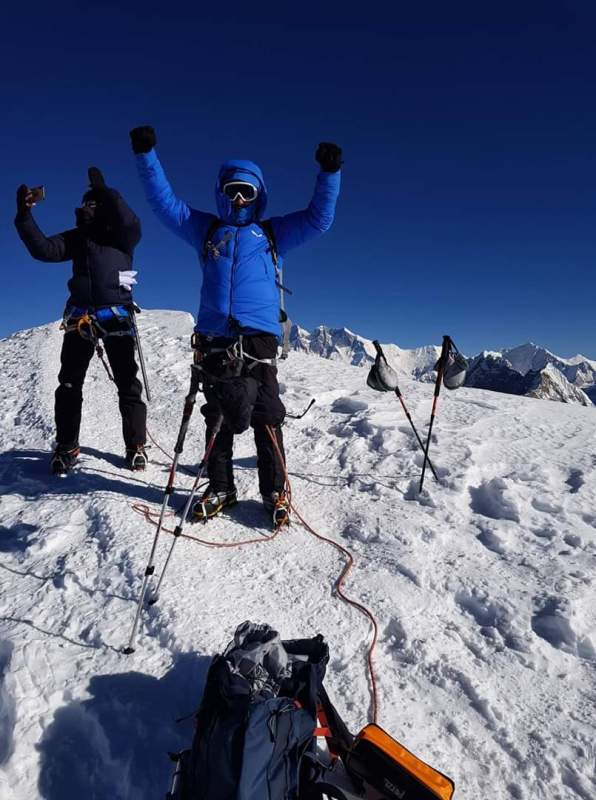
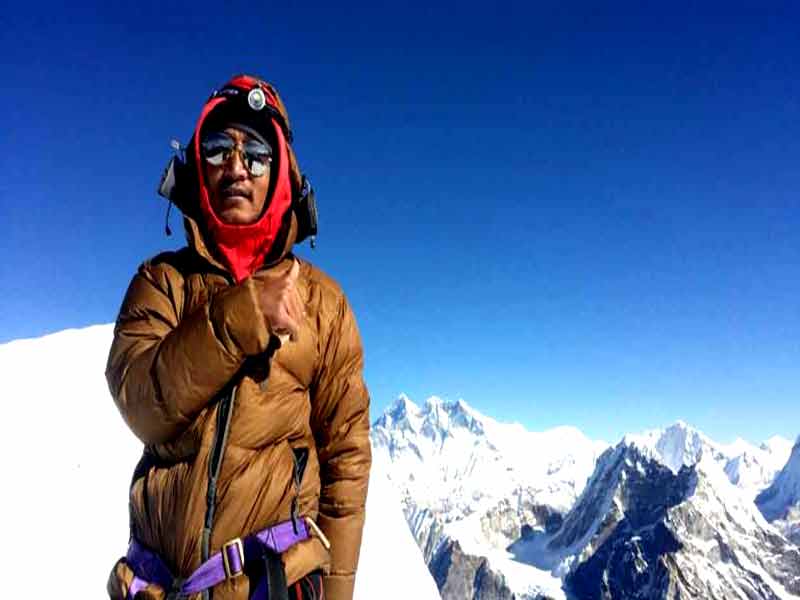
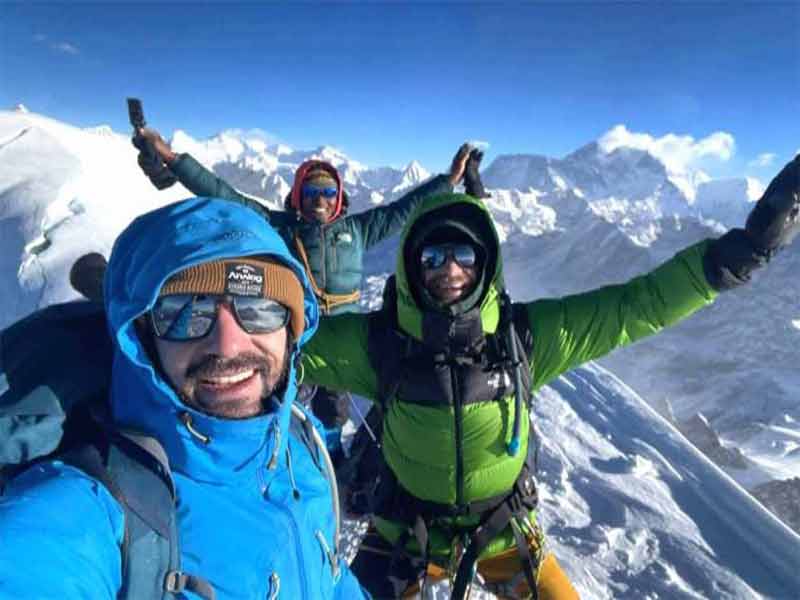
The Summit View: Standing on top of Mera Peak rewards you with one of the most astonishing panoramas on Earth. On a clear day, you can see five of the world’s six highest mountains: Mount Everest (8,848m), Lhotse (8,516m), Makalu (8,485m), Cho Oyu (8,188m), and Kanchenjunga (8,586m).
The Descent: After celebrating briefly and taking photos, you retrace your steps carefully down past High Camp, pack up your gear, and continue all the way down to the relative safety and comfort of Khare.
Route Profile and Technical Assessment
Mera Peak is categorized as a non-technical peak in terms of rock-climbing grade (typically graded Alpine PD – Peu Difficile or Slightly Difficult), but it presents severe high-altitude challenges:
Glacier Navigation: The route involves walking over glaciated terrain. While crevasses are usually bridged with snow or clearly visible, roping up is mandatory at all times.
Physical Exertion: The primary difficulty is not technical skill, but cardiovascular endurance and altitude acclimatization. At 6,470 meters, the air contains roughly 45% of the oxygen found at sea level.
The Final Ridge: The final few meters to the true summit involve a narrow, exposed snow ridge. While fixed lines are normally deployed by guides, a steady head for heights is vital.
Essential Gear Checklist for Khare Onward
Climbers starting from Khare must ensure their gear is rated for extreme alpine conditions. Equipment failures at 6,000 meters can be catastrophic.
Technical Gear: Mountaineering boots (stiff-soled, insulated), 12-point crampons (tested to fit your boots), an ice axe, a climbing harness, locking and non-locking carabiners, a descender/belay device (like an ATC or figure-eight), and an ascender. Clothing (Layering System): Moisture-wicking base layers, insulating fleece or softshell jackets, a heavy-duty down jacket rated to -20°C, windproof and waterproof hard-shell jacket and pants, and insulated mountaineering gloves plus liner gloves.
Head & Eye Protection: Glacier sunglasses (Category 4 protection against UV glare), ski goggles (for wind and blowing snow), a balaclava, a warm wool beanie, and a sun hat.
Miscellaneous: Headlamp with extra lithium batteries (batteries die quickly in the cold), a 3-liter hydration bladder or wide-mouth Nalgene bottles (insulated covers recommended to prevent freezing), high-factor sunscreen, and lip balm with SPF.
Best Seasons to Climb from Khare
Weather in the high Himalayas dictates success or failure. There are two primary windows for climbing Mera Peak:
Spring (March to May):
Characterized by warmer daytime temperatures, longer daylight hours, and blooming rhododendrons lower down on the approach trek.
Skies are generally clear in the mornings, though afternoon cloud buildups and occasional spring snowstorms can occur.
Autumn (September to November):
Widely considered the most stable climbing window. Following the summer monsoon, the air is crisp, visibility is crystal clear, and the views are immaculate.
Winds can pick up significantly late in the season (November), making the summit ridge extremely cold.
Pro-Tips for a Successful Summit from Khare
When ascending the steep snow slopes above Khare and High Camp, adopt the mountaineering rest-step—locking your rear knee with every step to give your muscles a micro-pause. Moving slowly and rhythmically conserves critical energy.
Hydration is Armor: Dehydration happens rapidly in cold, dry high-altitude air. Force yourself to drink 3 to 4 liters of fluids daily, even if you do not feel thirsty.
Protect Your Water: Keep your water bottles inside your sleeping bag at High Camp overnight; otherwise, they will freeze solid by 2:00 AM.
Listen to Your Sherpa Guide: Local Sherpa guides have intimate knowledge of changing weather patterns, crevasse shifts, and the physiological signs of Acute Mountain Sickness (AMS). Trust their instructions completely.
Are you planning to organize your trek to Khare independently or book an all-inclusive climbing package through a local agency?
Mera Peak Climbing Equipment List
1. Clothing
Waterproof and windproof jacket
Down jacket
Fleece jacket
Thermal underwear (top and bottom)
Trekking shirts
Trekking trousers
Warm climbing trousers
Waterproof trousers
Warm wool or fleece hat
Sun hat/cap
Neck warmer or buff
Inner gloves
Warm insulated gloves
Gaiters
Warm trekking socks
Thick woolen climbing socks
Underwear
2. Footwear
Comfortable trekking boots
Mountaineering boots suitable for crampons
Lightweight camp shoes or sandals
Spare shoelaces
3. Climbing Equipment
Mountaineering harness
Crampons compatible with climbing boots
Mountaineering helmet
Ice axe
Ascender (Jumar)
Descender/rappel device
Carabiners
Locking carabiners
Climbing slings
Prusik loop
Rope (usually provided by the climbing team/agency)
Crampon straps or compatible attachment system
4. Backpack and Bags
40–50 liter trekking backpack
60–70 liter duffel bag
Small daypack, if required
Waterproof backpack cover
Dry bags or waterproof packing bags
5. Sleeping Equipment
Four-season sleeping bag
Sleeping bag liner
Small pillow or inflatable pillow
6. Head and Eye Protection
UV-protection sunglasses
Glacier/snow goggles
Headlamp with spare batteries
Sun cream/high SPF sunscreen
7. Personal Items
Water bottles or hydration system
Water purification tablets/filter
Personal first-aid kit
Quick-drying towel
Toilet paper
Hand sanitizer
Wet wipes
Small repair/sewing kit
Trekking poles
8. Electronics
Mobile phone
Camera
Power bank
Charging cables
Universal travel adapter
Spare batteries
9. Documents
Passport
Nepal visa
Travel insurance covering high-altitude climbing
Permits and required documents
Emergency contact information
Copies of important documents
10. Recommended Extra Items
Lightweight down vest
Extra gloves Extra warm socks Balaclava
Small personal thermos
Energy bars and snacks
Small binoculars
Important Note
For Mera Peak, the exact climbing equipment can vary according to the season, route, weather, and climbing conditions. Technical equipment such as ropes, ice axe, crampons, harness, helmet, and ascender should be checked with your climbing with your guide in Khare before departure. Climbers should also have appropriate insurance that covers high-altitude mountaineering and emergency evacuation.
Khare to Mera Peak Climbing Cost
The cost for Khare to Mera Peak Climbing is 890 USD per person from March to May, including climbing equipment.
From September to December, 780 USD per person, including climbing equipment.
| Day | Destination | Altitude | Walking Hour | Accommodation |
|---|---|---|---|---|
| 1 | Arrival Khare meeting with our Guide | 5045 | Guide will brief for Mera peak climnbing | Lodge |
| 2 | Khare to Mera peak high camp | 5780 | 4-5 hours | Tent Camping with our climbing guide |
| 3 | High camp to Mera peak Summit and back to Khare | 6470 | 9-10-hours | Lodge at Khare |
Khare to Mera Peak Climbing Cost 780 $
cost includes
- Permit for climbing Mera Peak from Nepal Mountaineering Association (NMA)
- It is necessary to deposit 500 USD as a garbage deposit.
- English-speaking climbing guides who are professional, experienced, and equipped with all the necessary equipment.
- Insurance for climbing guides 15,0000.Rs.
- Equipment and clothing needed for the climbing Guide are included in our price
- A cook is required for High Camp.
- North Face Tent.
- Dining and Kitchen tent.
- Hot Drinking water, Tea & coffee.
- All group equipment includes Fix rope, Main rope, snow bar, Ice Crew, Rock pitting, etc.
- Meals and Accommodations from high Camp to high Camp.
- Climbing Boot, Crampons, Ice Axe, Harness, Crabinners, Ascender, Device, Jummer, Belay Device, Figure Eight,Helmed and safety rope.
Two days Mera peak climbing cost excludes
- Kathmandu Hotel Plane ticket from Kathmandu Lukla to Kathmandu.
- Breakfast Lunch and dinner during the trek.
- Any Park Fees.
- Your travel insurance policy incuse the accident and high altitude sickness for the Rescue operation
- Nepal entry visa fee is 15 Days 30 US$ and for 30 Days 50 US$, But you can obtain your visa at Kathmandu airport if you have not taken it from your country
- Soft and hard drinks Such as Beer, Coke, Mineral water
- Personal Trekking and Climbing Equipment
- Tips for trekking staff
- Please don't forget to bring 2 passport-size pictures with you
From 15 September to 10 December and from 13 March to May. Rained too much before 15 September and snowed way too much after 10 December to 13 March, making a summit peak impossible to reach.
The climbing equipment rentals at Kare are excellent, but you should bring your own Alpine climbing boots if you have them.
Before leaving Kathmandu, you need to take a permit and be briefed about Mera peak at the Kathmandu office.
I did not encounter any difficulties, the climb was easy, the slope was not too steep, but it was a long walk about 10 hours to climb Mera peak to return to Khare after.
From Khare, there is a departure every day for climbing Mera peak.
Passport photocopy (should be very clear with color scan) and validity minimum 6 months. 2 passport size photos. Occupation.
Khare to Mera peak climbing cost $ 855 to 500 US$ per person
Feeling tired, hungover, or losing your appetite/shortness of breath/ feeling unwell/ vomiting/ feeling inflamed, etc.
Yes, Peak climbing is not very easy but depends on trekking peaks the same peak is less technical same peak is very steep, and much technical climbing + but you need good mountaineering equipment. We suggest that before the climbing peak you need to do a minimum 5,000 meters high trekking pass
After summiting the peak, you cannot sleep at high camp, which causes you to get a hatch and a fever. Thus, retuning Khare would be better. Khare is like home when you are there.
Namaste, Frist inquiry from your trip you will have direct access to experienced and professional climbing guides advice or to ask questions on your arrival Kathmandu meet with us we will brief you how to climbing Nepal trekking peaks. If you travel with us then, of course, we will provide qualified Guides who have experience high altitude trekking and climbing guides. We provide all the trekking and climbing staff insurance as well. You can speak directly with us about your proposed climbing Nepal Trekking peaks the will brief you on our experience climbing guide who has many times summit Nepal Trekking peaks
Altitude Chart